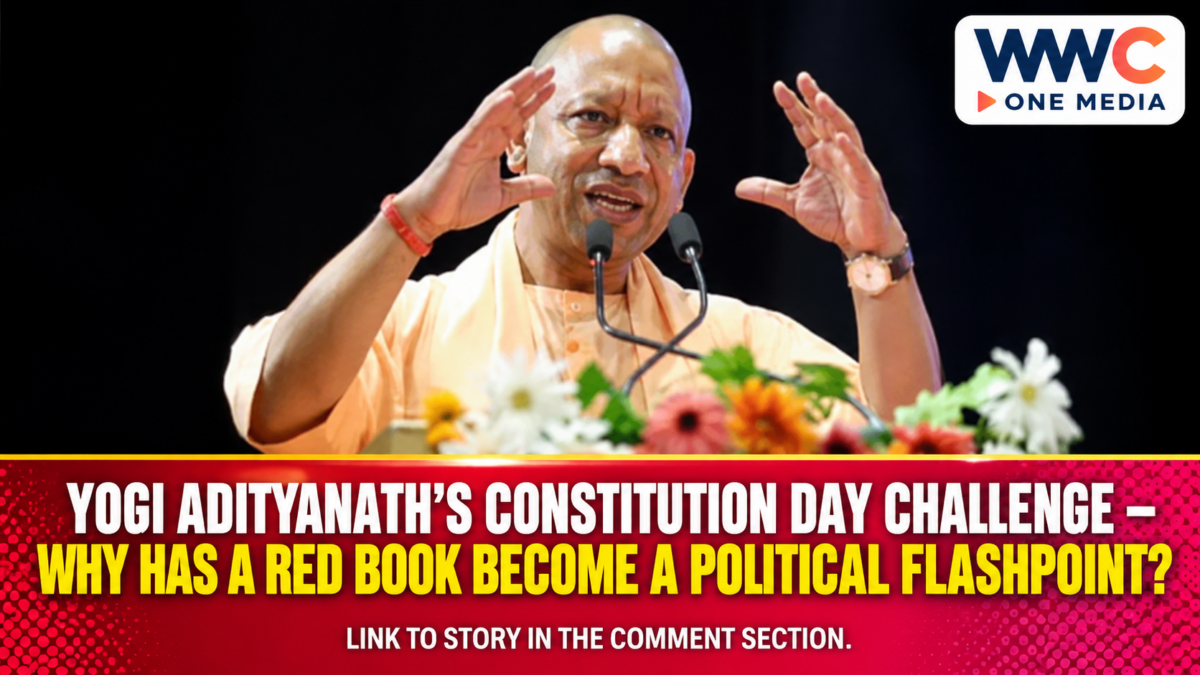
LUCKNOW, India — India Constitution Day celebrations on Nov. 26, 2026, brought constitutional rights, democratic responsibilities and the legacy of Dr Bhimrao Ramji Ambedkar into focus, with Uttar Pradesh reporting the participation of approximately 14.2 million students across 133,000 schools.
The statewide educational initiative under Chief Minister Yogi Adityanath’s administration highlighted the importance of constitutional awareness, civic responsibilities and democratic principles.
Students and teachers collectively recited the Preamble of India’s Constitution, while educational activities encouraged younger generations to understand the country’s democratic foundations.
The occasion also provided an opportunity to revisit the relationship between constitutional protections, political accountability and public institutions.
India Constitution Day marks 77 years since adoption
India adopted its Constitution on Nov. 26, 1949, establishing the framework through which the country’s democratic institutions would operate.
The Constitution subsequently came into force on Jan. 26, 1950, marking India’s transition into a republic.
In 2015, the Indian government formally designated November 26 as Constitution Day, also known as Samvidhan Diwas.
The annual observance commemorates the contributions of the Constituent Assembly and recognises the role of Ambedkar in developing India’s constitutional framework.
The Constitution’s Preamble establishes justice, liberty, equality and fraternity as foundational national objectives.
Understanding these principles is particularly relevant to contemporary discussions surrounding India’s parliamentary delimitation debate and electoral representation.
Uttar Pradesh brings constitutional education into classrooms
The Uttar Pradesh government expanded its Constitution Day observance through school-based educational activities.
Approximately 14.2 million students from 133,000 schools participated in the initiative, which included collective readings of the Preamble and discussions about democratic values.
Students explored the history of India’s Constitution through creative activities, including posters, paintings, collages and classroom discussions.
The initiative also introduced learners to the relationship between individual rights and civic duties.
Rather than treating the Constitution solely as a legal document, the educational programme encouraged students to understand its relevance to everyday citizenship.
Constitutional rights remain central to India’s political debate
The Constitution provides the framework against which government decisions, legislative proposals and institutional responsibilities can be evaluated.
Political parties may offer competing interpretations of constitutional priorities, but their claims must be distinguished from established legal findings.
The Indian National Congress outlined its constitutional policy commitments in its 2024 election manifesto, including proposals concerning freedom of expression, parliamentary procedures, electoral transparency and institutional independence.
These commitments represent the party’s stated political programme rather than proof that its objectives have been implemented.
Questions concerning democratic participation also extend to India’s ongoing voter-roll revision controversy.
Why Ambedkar’s constitutional legacy remains relevant
Ambedkar’s contribution to India’s constitutional development remains central to the country’s annual observance.
The principles expressed in the Preamble provide a framework for discussing equal opportunity, individual dignity, religious freedom and social justice.
Political disagreements over constitutional history should therefore be assessed separately from the actual protections and responsibilities established by the document.
A political declaration does not automatically establish that a constitutional violation has occurred. Such questions require examination of the relevant legislation, government decisions and judicial findings.
The distinction is particularly important when examining electoral eligibility, as explored in WWC’s coverage of India’s Supreme Court and voter-roll citizenship questions.
What happens next?
The wider challenge is translating constitutional awareness into meaningful civic participation.
For educational institutions, the question is how constitutional literacy can remain part of everyday learning rather than being limited to annual ceremonies.
For political institutions, constitutional accountability requires attention to the legality of government decisions, the protection of citizens’ rights and the implementation of established democratic procedures.
For international observers, India’s Constitution Day provides an opportunity to examine how constitutional principles interact with public policy, representative government and political competition.
Across the Asia-Pacific region, the subject is relevant to broader discussions about institutional stability and democratic governance.
Ultimately, the significance of Constitution Day extends beyond ceremonial readings. It lies in how constitutional principles are understood, protected and applied throughout the year.