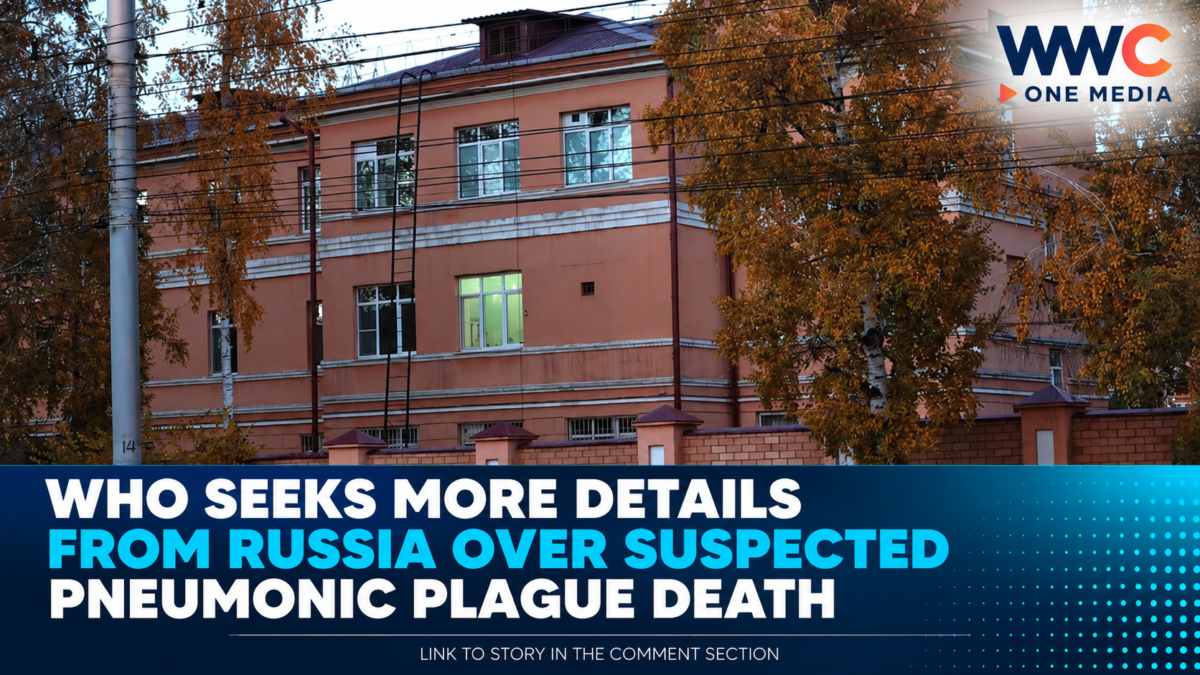
The World Health Organization is pressing Russia for more information about the death of a laboratory worker in Siberia amid concerns that she may have contracted pneumonic plague.
Maria Van Kerkhove, WHO’s director of epidemic and pandemic preparedness and prevention, said on Wednesday (Oct. 7) that the UN health agency still does not know what caused the woman’s illness or death.
Russian authorities have described the case as pneumonia of unknown origin and have not confirmed that the woman had plague. WHO said it has repeatedly asked Moscow for additional information about laboratory testing, the circumstances of the illness and the monitoring of people who had contact with the woman.
The uncertainty has attracted international attention because the woman worked at the Irkutsk Anti-Plague Research Institute of Siberia and the Far East, a facility that studies dangerous pathogens including plague.
WHO Says It Still Does Not Have the Full Picture
Van Kerkhove said WHO has been communicating with Russian health authorities since the case came to its attention.
“We don’t understand how she was infected,” she said, according to the Associated Press.
WHO said Russia has responded to some of its questions, but the agency has returned with additional requests for information. The questions include what caused the woman’s illness, what laboratory testing has shown and whether there are any potential implications for public health beyond the immediate area.
The WHO’s initial assessment found the public-health risk to be moderate to low in the affected area, low for Russia overall and very low for the WHO European region. The assessment could change if additional evidence becomes available.
The European Centre for Disease Prevention and Control has similarly said there are currently no reports of secondary cases or evidence of sustained human-to-human transmission.
Russian Authorities Have Not Confirmed Plague
Russia’s public health watchdog, Rospotrebnadzor, has repeatedly avoided identifying plague as the cause of the woman’s death.
The agency said she developed pneumonia of “unknown” origin and that extensive testing had found no evidence that her illness was caused by pathogens she worked with at the research institute.
Russian authorities have also said preventive measures were implemented, including contact tracing, medical observation and laboratory testing.
According to information relayed through WHO, around 200 people who had contact with the woman were placed under observation. No contacts had reportedly developed symptoms. Russian authorities later said testing had not detected dangerous infectious pathogens among those contacts.
Russia has also rejected reports suggesting that a second plague case had been confirmed.
The Death Has Triggered International Scrutiny
The woman, identified by Russian independent media as 28-year-old Darya Shipilova, reportedly died on Oct. 2 after becoming ill several days earlier.
The circumstances surrounding her infection remain unclear.
Reuters reported that Russian authorities have not linked her death to plague, laboratory work or exposure to live bacteria. It also reported that several explanations circulating online — including claims involving laboratory exposure and overseas travel — have not been supported by official evidence.
The lack of confirmed information has nevertheless fueled speculation because of the woman’s workplace.
The Irkutsk institute was established to study plague, which remains naturally present among wildlife in parts of Siberia. The fact that the deceased worked at a facility handling dangerous pathogens has made the case particularly sensitive, even though there is currently no confirmed evidence that she contracted plague there.
What Is Pneumonic Plague?
Pneumonic plague is a severe form of plague caused by the bacterium Yersinia pestis.
Unlike bubonic plague, which primarily affects the lymph nodes, pneumonic plague affects the lungs. It can be transmitted between people through respiratory droplets, particularly through close contact with someone who is symptomatic.
The disease can be extremely serious if treatment is delayed, but plague is treatable with antibiotics when diagnosed promptly. Health authorities therefore emphasise rapid identification, isolation and treatment of suspected cases.
Despite the alarming name and history of plague, modern outbreaks do not automatically mean a large-scale epidemic is developing.
The ECDC said transmission generally requires close and prolonged contact with an infected person who is already showing symptoms. It also noted that there has not been a plague case in the European Union for decades.
No Evidence of Wider Spread So Far
For now, international health agencies say there is no evidence that pneumonic plague is spreading beyond the immediate situation under investigation in Irkutsk.
WHO has stressed that all identified contacts are being monitored and that none had shown symptoms at the time of its latest assessment.
The agency has also assembled technical experts specialising in high-threat pathogens to assess the available information.
The initial risk assessment is deliberately cautious because the underlying diagnosis has not been established.
“If more information comes in, we will update the risk assessment,” WHO said in its briefing.
Russia Says Preventive Measures Are Underway
Russian officials have sought to reassure the public that the situation is under control.
Kremlin spokesman Dmitry Peskov urged people to rely on statements from Rospotrebnadzor rather than rumours and speculation.
Rospotrebnadzor has said the sanitary and epidemiological situation in Irkutsk and nearby Shelekhov remains stable and that preventive measures and medical monitoring have been carried out.
Russia has also said it properly informed WHO about the death through established channels, pushing back against suggestions that it failed to notify the international health agency.
Reuters reported that Russian officials criticised media coverage of the incident and said authorities had followed the required procedures.
WHO, however, continues to seek additional information to establish exactly what happened.
Transparency Remains a Major Concern
The uncertainty surrounding the case has raised questions about how much information Russian authorities are making publicly available.
Some Russian media outlets initially reported on the case before later removing or reducing their coverage. The limited official information has contributed to speculation about whether the illness could be linked to the laboratory.
Public-health experts have cautioned that a lack of clear information can itself create problems during a potential infectious-disease event because rumours can spread faster than verified information.
At the same time, there is currently no confirmed evidence that the woman died from pneumonic plague, and health authorities have not reported sustained person-to-person transmission.
What Happens Next
WHO is expected to continue seeking laboratory results and other information from Russian authorities before determining whether the incident represents a confirmed plague case or another form of pneumonia.
For now, the agency’s assessment remains that the broader public-health risk is low.
The situation is being watched closely because of the severity of pneumonic plague and the woman’s work at a facility specialising in the disease. But until laboratory testing establishes the cause of her illness, the case remains a suspected pneumonic plague event rather than a confirmed outbreak.
The immediate priority for health officials is therefore to establish the cause of death, monitor the woman’s contacts and determine whether there is any evidence of transmission beyond the original case.
So far, no such wider spread has been confirmed.