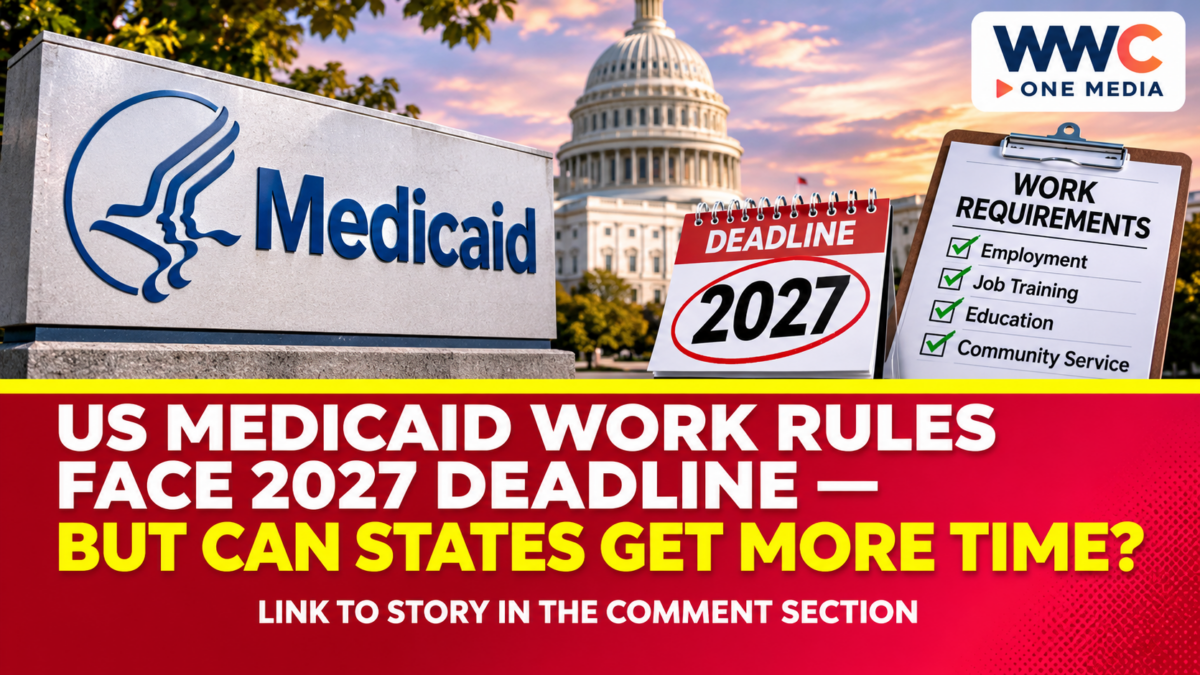
WASHINGTON, Nov. 14, 2026 — American states are approaching a Jan. 1, 2027 deadline to introduce federal Medicaid community-engagement requirements for certain adults, under a law enacted in 2025 and regulations issued in June 2026. The rules establish an 80-hour monthly activity standard but also permit the federal government to grant qualifying states temporary exemptions when they demonstrate genuine implementation difficulties.
The distinction matters for millions of people navigating a public insurance system administered by states under federal rules. A postponed implementation obligation, a temporary exemption and a decision not to terminate coverage immediately are different legal mechanisms; none should be confused with repeal of the underlying requirement.
What the Medicaid work rules actually require
The federal framework generally applies to nonpregnant adults aged 19 to 64 covered through the Medicaid adult expansion group or certain demonstration programmes, subject to exemptions and other eligibility provisions. It does not impose the same requirement on every person receiving Medicaid.
Covered adults can satisfy the monthly standard through at least 80 hours of employment, qualifying work programmes or community service, or combinations of qualifying activities. Enrolment in an educational programme at least half-time is another qualifying route. The June regulation also provides an earnings-based pathway: monthly income at least equal to 80 times the federal hourly minimum wage.
The law requires relevant states to implement the framework by Jan. 1, 2027 unless permitted relief applies. A state can also choose earlier implementation through authorised procedures. That makes the deadline a national benchmark, not proof that every state will begin applying identical checks to every beneficiary on the same day.
Medicaid is jointly financed by federal and state governments, so implementation also affects public budgets.
Why implementation is more than checking work hours
Before a state can make an accurate eligibility decision, it must identify who falls within the rules, who is exempt and what information it can verify from existing records. States must notify affected people and provide mechanisms to correct an incomplete or mistaken determination.
The regulation requires a notice when an agency cannot confirm compliance and provides a 30-calendar-day opportunity for an individual to demonstrate compliance or show that the requirement does not apply. The administrative question is therefore not simply whether someone works. It is whether the government can reliably establish that person’s status before changing insurance coverage.
Federal rules also require outreach before implementation.
For state governments, reliable data matching and understandable notices are central to implementation. In this respect, the debate is connected to broader fiscal questions already covered by WWC ONE MEDIA, including New York’s Medicaid spending pressures, although the spending and eligibility issues are distinct.
Which beneficiaries are exempt?
The June CMS framework identifies exempt groups that include pregnant people and those in the postpartum period, medically frail individuals, certain people with disabilities, American Indians and Alaska Natives, and qualifying parents or caregivers of young children or people with disabilities.
Other provisions recognise participation in certain existing assistance or rehabilitation arrangements. The rule also allows states to offer limited hardship exceptions in specified circumstances, including certain medical treatment needs, qualifying emergencies or unusually high local unemployment.
Missing paperwork does not necessarily mean someone fails the substantive requirement.
Medicaid is also different from private insurance purchased through Affordable Care Act marketplaces. WWC’s earlier discussion of changes in US marketplace premium subsidies concerns a separate coverage and financing arrangement; the two programmes should not be treated as interchangeable.
Can states receive an extension?
Yes, but the published federal mechanism is conditional. The June 2026 regulation allows CMS to grant a state a temporary good-faith effort exemption when the state documents steps taken towards implementation, significant barriers, and a detailed work plan for achieving compliance.
The regulation says initial approvals are limited to six months. It allows extensions when a state continues to demonstrate meaningful progress, but no exemption under that provision may run beyond Dec. 31, 2028. The maximum possible end date is not an automatic entitlement for any state.
Approval depends on documented progress and barriers. States receiving relief must report progress and can lose an exemption.
Another primary record illustrates how temporary administrative discretion can operate differently: CMS’s November approval documentation for Montana describes an earlier hold-harmless arrangement during which compliance was assessed without immediately denying or ending eligibility for failing the activity requirement. That example documents Montana’s treatment; it does not by itself establish a new nationwide policy.
Why the political and financial debate continues
On Nov. 12, two senior congressional Democrats, Frank Pallone Jr. and Ron Wyden, publicly urged CMS to give states additional time to prepare reporting systems and protections for eligible beneficiaries. Their published request shows an active policy disagreement over how quickly agencies can safely administer the new requirements.
The administration’s previously published CMS statements present the framework as a way to encourage employment, education and community participation while strengthening programme integrity. Opponents argue that complicated verification systems may interrupt coverage even for people who qualify for exemptions or otherwise meet the conditions.
What this could mean: The practical test is not just how many hours are required, but how accurately states distinguish eligible people from those who do not qualify. Faster determinations may reduce administrative backlogs; inaccurate ones may require corrections and create avoidable disruption. These are implementation risks, not proven outcomes for any particular state.
The wider healthcare debate includes WWC’s coverage of the administration’s international prescription-drug pricing push. The pricing proposals are separate from Medicaid eligibility.
What happens next
The key dates remain Jan. 1, 2027 for general implementation and Dec. 31, 2028 as the outer limit for an approved good-faith exemption under the published regulation. Between those dates, individual state filings, approvals, notices and actual eligibility procedures will determine what residents experience.
A state request is not federal approval, and temporary non-enforcement is not a statutory repeal.
For households, the safest reading of the official framework is that eligibility depends on personal circumstances and state procedures. No one should assume a blanket postponement or automatic exemption without checking the applicable state Medicaid agency’s current notices.
Frequently asked questions
When do Medicaid work rules start? The general federal implementation deadline is Jan. 1, 2027, although authorised earlier implementation or approved exemptions can change how the rules apply in a state.
How many hours must an affected Medicaid adult complete? The standard is generally 80 hours per month of qualifying activity, with alternative education and earnings pathways and exemptions.
Can a state delay Medicaid work requirements? A state may request a good-faith effort exemption. CMS evaluates the request and determines whether, and for how long, relief is justified.
Are all Medicaid beneficiaries subject to the rules? No. The requirements focus on specified adult eligibility groups and include exemptions for several medical, family and other circumstances.
Could someone lose coverage because documentation is missing? The regulation establishes notice and an opportunity to demonstrate compliance or exemption before denial or termination under the community-engagement process.