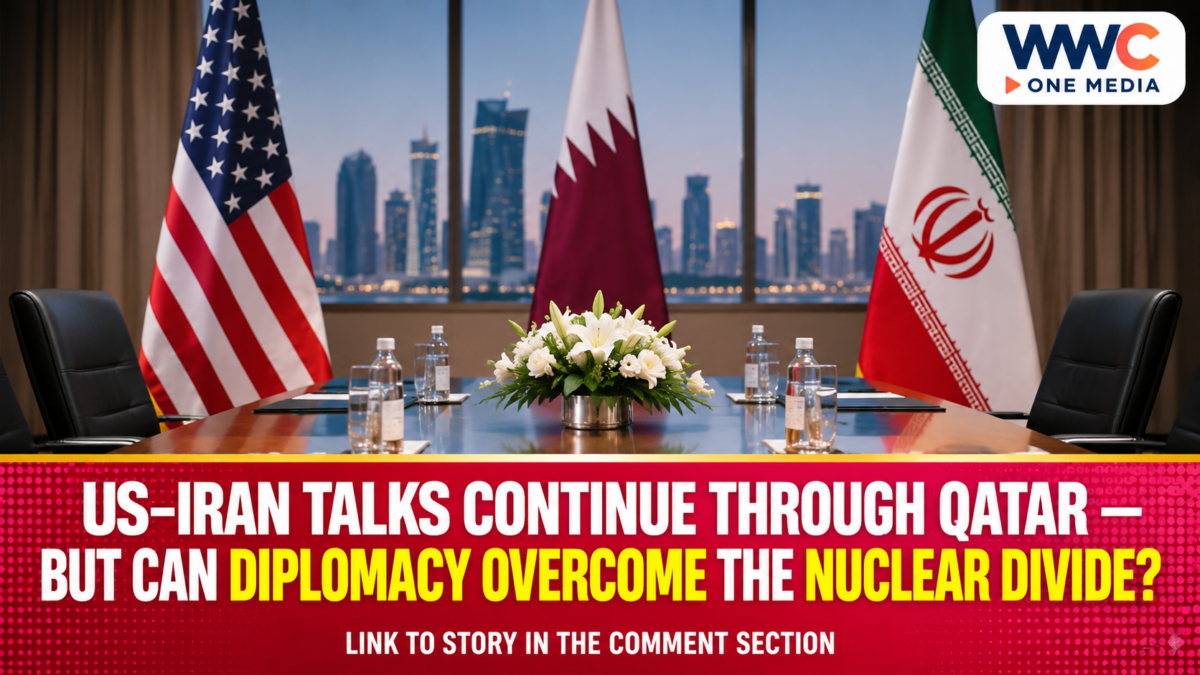
DOHA, Qatar — Qatar reaffirmed its commitment to diplomatic mediation between the United States and Iran on Nov. 19, 2026, following its earlier announcement of planned discussions with Iranian representatives. The US–Iran talks remain an important avenue for resolving tensions in the Gulf, although the detailed terms of a potential agreement have yet to be publicly established in the official statements reviewed.
The diplomatic effort carries consequences extending far beyond Washington and Tehran. Regional security, international shipping, energy supplies and nuclear non-proliferation all depend, to varying degrees, on whether diplomatic commitments can be translated into meaningful and enforceable arrangements.
For governments and businesses watching developments in the Middle East, the central question is no longer simply whether negotiations can continue, but whether they can produce lasting stability.
US–Iran talks remain a diplomatic priority
During a Nov. 17 foreign ministry briefing, Qatar announced that its mediation initiative was continuing and that discussions with Iranian representatives were scheduled for later that day.
Majed bin Mohammed Al Ansari, adviser to Qatar’s prime minister and official spokesperson for the Ministry of Foreign Affairs, explained that the planned engagement formed part of a broader series of diplomatic contacts involving the negotiating parties.
Two days later, during the Mediterranean Dialogues 2026 forum in Naples, Italy, Al Ansari reiterated Qatar’s preference for a negotiated resolution.
The diplomatic process does not necessarily indicate that an agreement is imminent. Negotiations can remain active even when governments have substantial differences over the terms of a settlement.
Earlier developments surrounding the conflict were examined in WWC ONE MEDIA’s coverage of regional concerns about a lasting US–Iran peace agreement.
The distinction between maintaining diplomatic contact and reaching an enforceable agreement remains particularly important.
Why nuclear verification matters
Iran’s nuclear programme presents a broader challenge for international diplomacy because political assurances and technical verification serve different purposes.
The International Atomic Energy Agency (IAEA) maintains a safeguards framework designed to assess whether countries are observing their obligations concerning the peaceful use of nuclear material.
Iran’s comprehensive safeguards agreement with the agency entered into force on May 15, 1974.
That longstanding agreement provides important institutional context for any discussion concerning Iranian nuclear activities.
In practical terms, a diplomatic undertaking concerning nuclear material would be more credible if supported by clear verification arrangements. Such arrangements could help distinguish political commitments from measurable compliance.
However, the existence of a safeguards agreement should not be interpreted as confirmation that every outstanding nuclear question has been resolved.
Nor does the continuation of mediation establish that Washington and Tehran have agreed on the future treatment of Iran’s enriched uranium.
The precise nuclear provisions of a prospective settlement remain an essential area for public clarification.
The Strait of Hormuz raises the economic stakes
At the Naples forum, Qatar highlighted the international economic consequences of disruption involving the Strait of Hormuz.
Its diplomatic assessment connected maritime instability with energy security and difficulties affecting international supply networks.
For commercial operators, uncertainty creates challenges that extend beyond the immediate movement of vessels.
Businesses must consider whether delivery schedules can be maintained, whether alternative supply arrangements are necessary and whether additional expenses can be absorbed without passing them on to customers.
WWC ONE MEDIA previously examined shipping restrictions and navigation concerns in the Strait of Hormuz, highlighting another dimension of the wider regional crisis.
A diplomatic settlement could potentially improve commercial confidence, but the extent of any recovery would depend on its implementation and the actual conditions facing maritime operators.
An announcement alone would not guarantee an immediate return to normal trading conditions.
What a diplomatic agreement could mean for the Philippines
WWC analysis: For Philippine businesses and households, the significance of Middle Eastern diplomacy lies partly in its potential influence on energy-related expenses.
Should regional uncertainty continue to affect international shipping and petroleum markets, businesses could face additional pressure on transportation and procurement budgets.
Manufacturers, logistics companies and retailers would have to evaluate whether higher operating expenses could be managed without increasing consumer prices.
Conversely, a credible reduction in regional tensions could improve the environment for commercial planning.
The relationship between diplomatic developments and commodity markets was explored in WWC ONE MEDIA’s previous coverage of oil price movements amid US–Iran peace negotiations.
Nevertheless, diplomatic progress does not automatically translate into cheaper fuel. Exchange rates, commercial inventories, production decisions and other market conditions could influence the eventual outcome.
For Philippine consumers, actual changes in domestic fuel prices would be a more meaningful indicator than diplomatic announcements alone.
What happens next
The next significant development would be the publication of concrete commitments agreed upon by the negotiating governments.
From an analytical standpoint, three areas deserve particular attention: nuclear verification, arrangements intended to prevent renewed escalation and measures that could restore confidence in commercial navigation.
These are indicators for evaluating a possible settlement, not confirmed provisions of an existing agreement.
A durable diplomatic arrangement would need to address implementation as well as political intent. Questions concerning compliance, the responsibilities of participating governments and procedures for handling future disagreements would remain important.
Until those arrangements are publicly established, expectations of an immediate resolution should remain measured.
Qatar’s continuing involvement preserves an avenue for dialogue. Whether that avenue can deliver a comprehensive settlement will depend on the decisions of Washington and Tehran and their willingness to implement mutually accepted commitments.