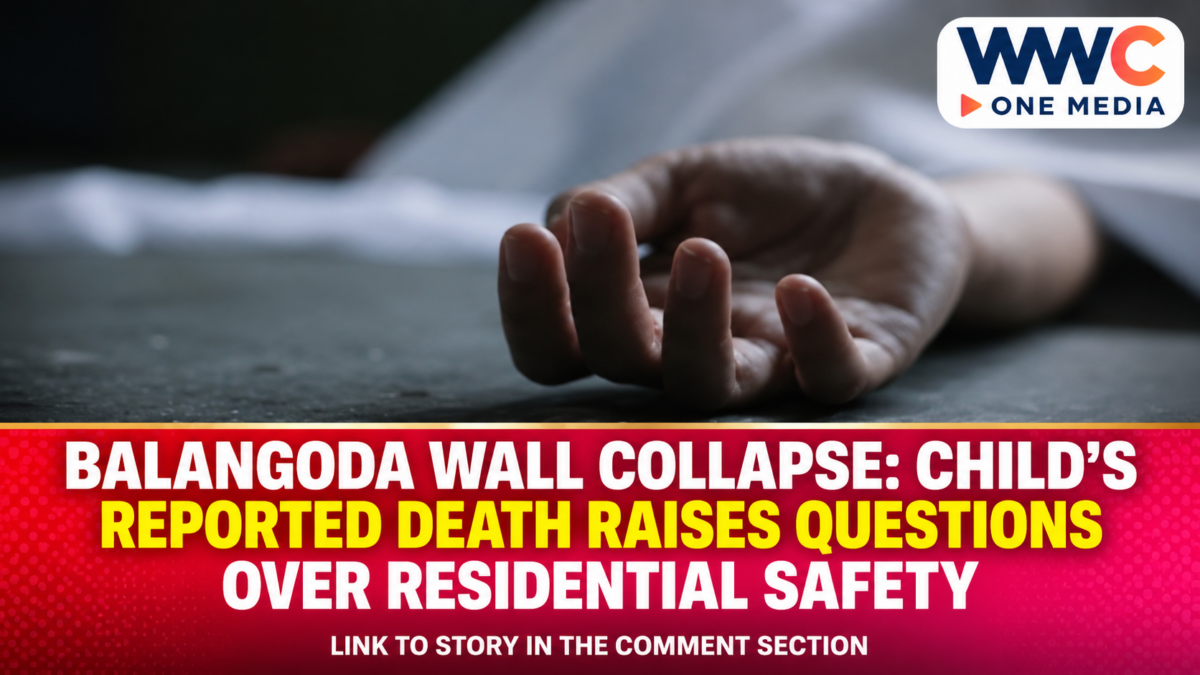
BALANGODA, SRI LANKA — A seven-year-old child was reportedly killed after a wall collapsed in the Bankiyawatte area of Balangoda, in an incident reported on Nov. 21, 2026.
The reported Balangoda wall collapse highlights the importance of maintaining safe residential structures, particularly in areas where children spend time playing and carrying out everyday activities.
The precise cause of the collapse has yet to be independently established from an accessible official investigation record.
Balangoda wall collapse highlights structural safety concerns
Residential safety extends beyond the buildings in which families live. Boundary walls, fences and other structures surrounding homes also deserve attention when assessing potential hazards.
Unlike major construction projects, smaller structures may attract less public attention. Their condition, however, should not be overlooked simply because they stand outside a residential building.
The reported incident underscores the importance of identifying potential structural hazards before an accident occurs.
Why residential walls deserve closer attention
Property owners should consider professional assessments when walls show visible deterioration, movement or other indications of instability.
The appropriate response depends on the type of structure, its construction and surrounding conditions. A qualified professional can determine whether repairs, reinforcement or replacement are necessary.
WWC ONE MEDIA’s previous coverage of structural safety questions following the Brooklyn building collapse examines the wider importance of identifying potential hazards.
However, no specific structural defect has been independently confirmed in the Balangoda incident.
Protecting children in residential communities
The safety of children should be a central consideration when communities assess their residential environments.
Areas used for recreation, pedestrian access and household activities should be kept away from structures suspected of being unstable.
Parents and guardians should discourage children from playing near damaged walls while property owners arrange professional inspections.
These precautions should be viewed as general preventive measures rather than conclusions about the circumstances surrounding the reported Balangoda tragedy.
Accountability must follow evidence
Determining why a structure collapsed requires more than examining the consequences of an accident.
Relevant questions include its construction history, maintenance condition and any technical findings established through an inspection.
WWC’s coverage of the Ruatoria collapse and the questions facing investigators similarly highlights the importance of distinguishing established facts from unresolved technical questions.
Responsibility for an accident should not be assigned to any individual without sufficient evidence.
Prevention should remain a priority
Residential safety deserves attention even when no major construction activity is taking place.
Property owners, community representatives and relevant authorities can contribute to safer environments by encouraging the reporting and professional assessment of potentially hazardous structures.
The importance of infrastructure maintenance also features in WWC’s previous reporting on the Subic Freeport landslide and slope protection investigation.
These incidents involve different circumstances, but they offer a broader opportunity to discuss preventive safety measures without assuming that their causes are identical.
What happens next
An official police statement or technical assessment would help establish the circumstances surrounding the reported Balangoda wall collapse.
Until such documentation becomes available, the cause of the accident, possible structural defects and questions of responsibility should remain open.
The immediate public-interest priority is protecting children and other residents from potentially unsafe structures while respecting the privacy of the affected family.