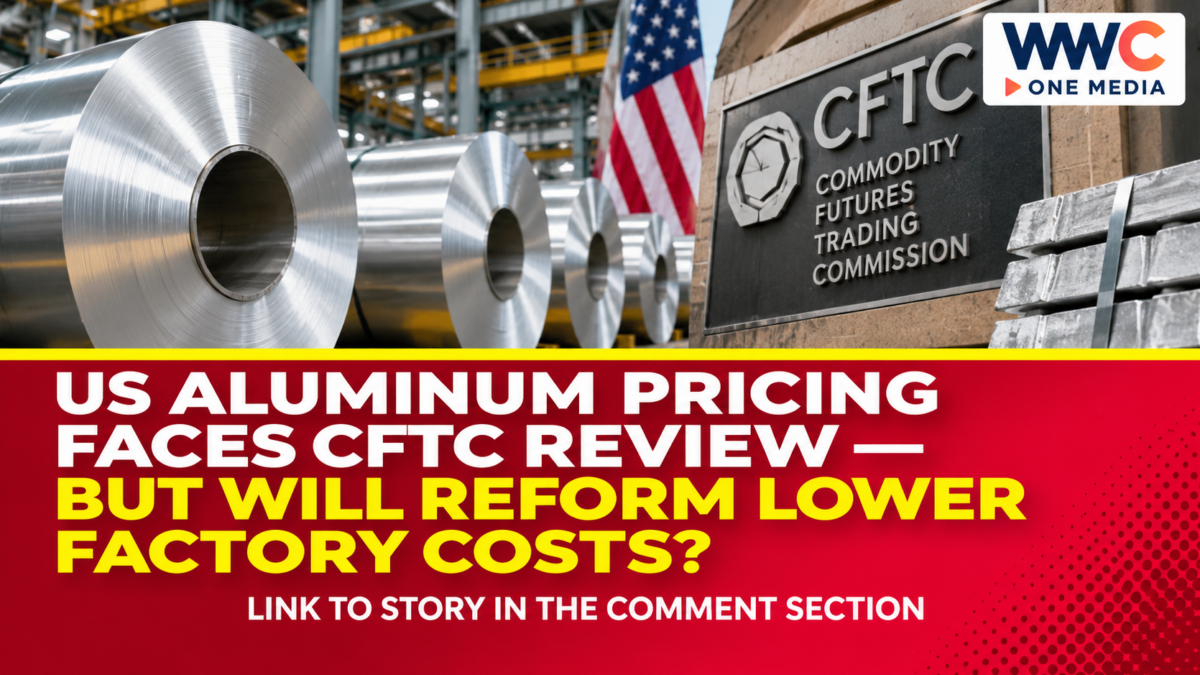
WASHINGTON, Nov. 14, 2026 — US Commodity Futures Trading Commission Chairman Michael S. Selig has directed agency staff to examine aluminium pricing mechanisms and identify possible reforms after highlighting the gap between international benchmark prices and the costs faced by American manufacturers. In remarks delivered on Nov. 13, he raised the prospect of additional US-based derivatives contracts, but did not announce a new pricing rule.
The US aluminum pricing debate matters because manufacturers buy physical metal, not simply a benchmark quotation. A producer of cans, vehicles or building materials may face a regional surcharge even when the quoted international metal price appears manageable. The official record outlines a market-design review, not a government promise to make aluminium cheaper.
US Aluminum Pricing: Why the Midwest Premium Matters
The London Metal Exchange benchmark is widely used as a reference for aluminium contracts. US buyers may also pay a Midwest premium reflecting conditions associated with physical delivery in the American market. The premium is a separate assessment, not a tax automatically collected by the CFTC.
Selig cited a London benchmark of about $1.40 per pound and an assessed Midwest premium of about $1.10 per pound. Together, those figures imply an illustrative price of roughly $2.50 per pound. The premium alone equals approximately 79% of the benchmark price by straightforward arithmetic; the chairman described the extra burden as about 75%.
CME Group’s published explanation of regional premium products confirms that international metal prices and local supply conditions are separate sources of price risk. For a manufacturer, managing one without the other can leave a substantial gap in its purchasing budget.
What the CFTC Chairman Actually Proposed
Selig instructed his global markets team to evaluate existing pricing mechanisms and prepare reform options. He also identified a possible role for more US-based contracts that could improve domestic price discovery and help commercial buyers manage exposure.
That is an exploratory regulatory direction, not a finalized rulemaking, a replacement reference price or a finding that the current assessment is unlawful. The chairman explicitly acknowledged that the commission does not determine physical aluminium prices, transport charges or the quantity of metal produced.
The Nov. 13 remarks also stressed that any new contract would need participation by producers, consumers and traders. A technically sound instrument may fail as a risk-management tool if too few firms use it to establish reliable prices and trading liquidity.
Existing Futures Contracts Already Offer Some Protection
The market is not starting from zero. CME Group already offers aluminium futures and regional premium contracts, including a cash-settled Midwest US Transaction Premium instrument linked to a published physical-market assessment.
CME’s physically deliverable aluminium futures contract covers 25 metric tons per contract. Its delivery system relies on approved metal, warehouses and exchange procedures. These features help connect derivatives trading to the conditions under which physical metal can change hands.
In a separate 2025 explanation, the exchange identified four regional premium futures contracts serving three regions: the US Midwest, Europe and Japan. These products aim to help customers manage differences between a global base price and a regional delivery premium.
Why Tariffs, Warehouses and Metal Origin Still Matter
Selig questioned whether a standardised reference always captures the circumstances of individual shipments. Metal originating in different countries can travel through different routes, incur different tariff treatment and reach different customers with different delivery expenses.
That argument does not establish that an assessed regional premium is artificial. Price assessments can reflect transactions across a market rather than the precise freight bill of one company. However, the gap between a benchmark and an individual buyer’s costs is a legitimate subject for transparency and hedging discussions.
Trade restrictions also affect industrial metals more broadly. As covered in WWC ONE MEDIA’s report on Canada’s aluminium tariff-relief changes, tariff classification and the availability of domestic substitutes can influence companies’ sourcing decisions.
A related supply-chain issue appeared in WWC’s coverage of copper shipments and US warehouse pressure. Copper and aluminium have different markets, yet both illustrate why the location of inventory matters alongside headline commodity prices.
Recycled Aluminium Is Part of the Review
The chairman’s official remarks also addressed recycled aluminium, a major source of material for manufacturers. Scrap has to be collected, sorted, processed and moved before it can be used, and not every grade suits every application.
Selig said he wants to engage with market participants about derivatives structures suited to recycled metal. Such products could, in principle, help recyclers or industrial users manage price volatility, but the speech supplied no completed contract specification or launch date.
The same distinction between raw-material prices and conversion economics appears in WWC’s report on China’s copper processing squeeze. Those copper developments do not prove anything about aluminium prices; they illustrate why different stages of a metals supply chain carry different financial risks.
What This Could Mean for Manufacturers
Analysis: A credible domestic price reference might improve budgeting if it follows the prices companies actually pay and attracts sufficient market participation. Better hedging could reduce uncertainty even without lowering the underlying cost of metal.
There are competing considerations. A single transparent benchmark can be useful for standardising contracts, while a more tailored regional benchmark may capture local conditions better. Creating additional contracts could also split trading activity across instruments and make liquidity harder to build.
Importantly, no official record reviewed shows a guaranteed saving for can makers, automakers or construction firms. Nor does the speech establish that current aluminium premiums are the result of misconduct. An investigation into pricing design must not be confused with an enforcement finding.
What Happens Next
The CFTC’s global markets team is expected to evaluate options under the direction outlined by its chairman. Any concrete proposal would need further documentation before its scope, timetable or legal effect could be assessed.
Market participants will be watching for a more detailed consultation, potential contract changes and evidence that commercial users want an alternative reference. Until then, neither a new benchmark nor lower prices should be treated as certain.
FAQ
What is the US Midwest aluminium premium?
It is a regional price assessment added to a base aluminium price in many physical-market pricing arrangements, reflecting conditions associated with US Midwest delivery.
Did the CFTC abolish the Midwest premium?
No. The chairman called for an examination of pricing mechanisms and possible reform options; the Nov. 13 remarks did not abolish the assessment.
How much aluminium did the chairman say US buyers might pay?
His illustrative figures were about $1.40 per pound for the LME benchmark plus $1.10 per pound for the Midwest premium, or roughly $2.50 combined.
Can manufacturers hedge aluminium prices now?
Yes. Existing CME contracts cover physical aluminium and regional premium exposure, although suitability depends on the buyer’s actual price risks and market liquidity.
Will new futures contracts automatically lower factory costs?
No. They may improve price discovery or risk management, but do not directly change production, tariffs or transportation expenses.