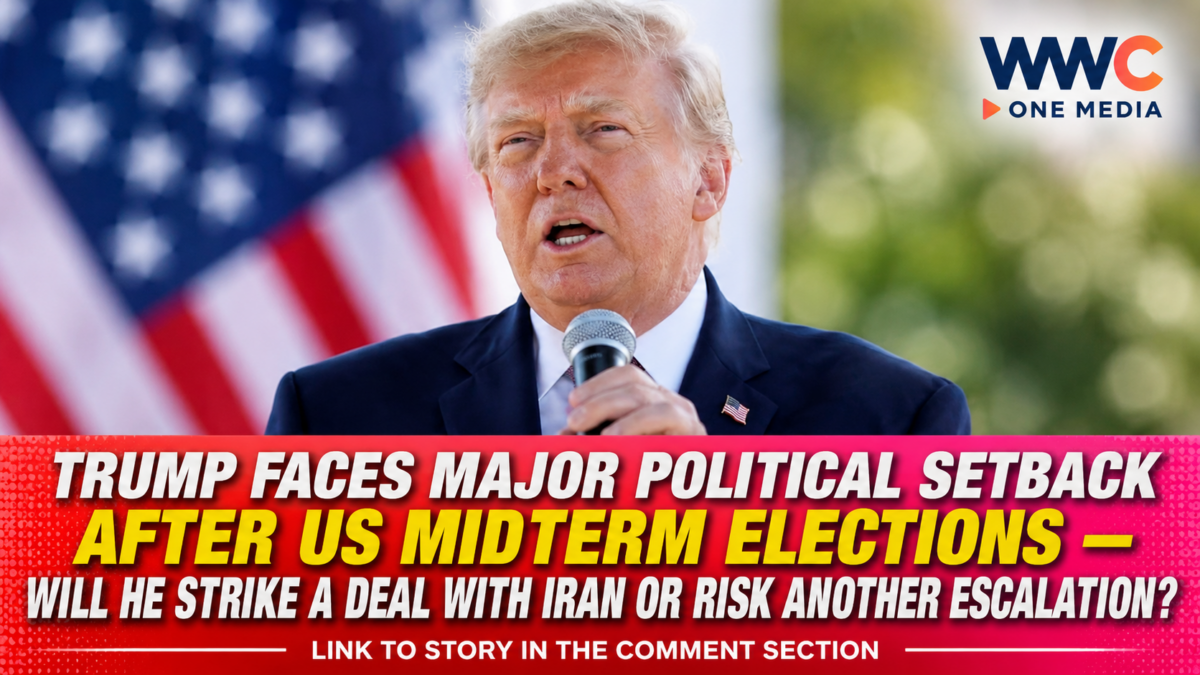
WASHINGTON / DUBAI — November 5, 2026 — US President Donald Trump is facing one of the most consequential decisions of his presidency as the political fallout from the November midterm elections collides with an unresolved war against Iran: negotiate an agreement to end the conflict or risk another round of military escalation.
The election results have weakened Trump’s political position in Washington, with Democrats winning control of Congress. Voters frustrated by the prolonged conflict and rising fuel prices have delivered a significant setback to the administration, raising questions about the war’s direction, its financial burden and whether the United States can secure its original objectives.
But an election defeat does not automatically mean the fighting will stop.
Regional analysts and Gulf officials warn that the political pressure on Trump could encourage diplomacy — or create incentives for a more aggressive response if the president believes an agreement would make the United States appear defeated.
The uncertainty has placed Washington, Tehran and America’s Gulf partners in a difficult position, with the future of the strategically important Strait of Hormuz and Iran’s nuclear programme still unresolved.
The stakes extend well beyond the Middle East. Any renewed confrontation could affect international oil supplies, shipping costs and energy prices in countries that depend heavily on imported fuel.
Democrats’ Midterm Victory Changes Trump’s Political Calculations
The November 3 midterm elections have reshaped the political environment surrounding Trump’s Iran policy.
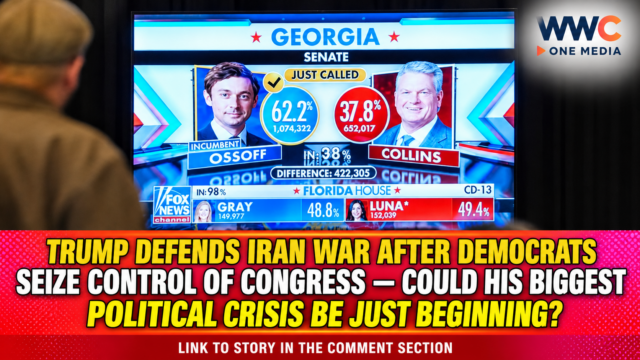
Democrats won control of Congress, reflecting voter dissatisfaction that included frustration over the war and the higher fuel costs associated with the regional crisis.
For Trump, the result creates a more difficult political environment as he tries to defend the administration’s military strategy and determine how to bring the conflict to an end.
Two sources close to Gulf government circles told Reuters that the election setback could increase Trump’s incentive to pursue a negotiated exit. They suggested that a full-scale assault on Iran may now be less likely, although further limited strikes remain a possibility.
However, the new political balance does not automatically remove the president’s military options.
Congress has important powers involving funding, oversight and legislation, but the president retains significant authority as commander-in-chief. The extent to which lawmakers can constrain further operations will depend on the circumstances and the legal and political mechanisms used.
Democrats are also expected to investigate aspects of Trump’s administration and dealings involving his family and associates once the new Congress takes office in January.
That prospect could add another layer of pressure to an already complicated political situation.
Iran Sees the Election as a Rejection of Trump’s War
In Tehran, the Democratic victory was quickly presented as evidence that American voters had turned against the conflict.
Iranian officials and political figures portrayed the election outcome as a rejection of Trump’s military campaign, particularly as rising energy costs and the prolonged fighting have affected public sentiment in the United States.
According to Associated Press reporting, Iranian leaders described the result as a political message against the war, although they also cautioned that a change in Washington’s congressional balance would not necessarily change American policy towards Iran.
Tehran has not abandoned its demands.
Iran’s Supreme Leader Mojtaba Khamenei warned against any inclination towards submission, while the country’s chief negotiator welcomed the political result as a sign of opposition to war.
That creates a potential problem for negotiations.
If Iranian leaders interpret Trump’s weakened domestic position as evidence that Washington is under pressure to accept Tehran’s conditions, they may become less willing to compromise.
Conversely, if Trump believes an agreement would allow Iran to claim victory, he could face pressure to demonstrate that the United States has achieved meaningful results.
The possibility of miscalculation is therefore becoming one of the most serious risks surrounding the negotiations.
The War Has Damaged Iran’s Military — But Its Nuclear Programme Remains Unresolved
The US-Israeli military campaign began on February 28, 2026, with the stated objective of confronting Iran’s military and strategic capabilities.
The campaign has inflicted significant damage on Iranian military infrastructure, according to the reporting cited by Reuters.
However, it has not produced a decisive resolution of the nuclear dispute.
That unresolved issue remains central to any potential agreement.
Washington wants assurances that Iran will not develop nuclear weapons and that restrictions on its nuclear activities can be verified.
Tehran, meanwhile, has continued to insist that its broader security and economic demands must be addressed.
The difference between damaging military infrastructure and resolving a country’s nuclear programme is significant. Military strikes alone cannot establish a durable diplomatic arrangement or guarantee that a nuclear dispute has permanently ended.
Any comprehensive settlement would likely need to address monitoring, verification, restrictions on nuclear activities and the future of Iran’s enriched uranium stockpile.
Without agreement on those issues, even a temporary reduction in fighting could leave the underlying conflict unresolved.
Strait of Hormuz Could Determine Whether the Conflict Returns
One of the biggest obstacles to a settlement is the Strait of Hormuz, a narrow maritime passage connecting the Persian Gulf with the Gulf of Oman and the wider Indian Ocean.
The waterway is a critical route for international energy shipments. Before the conflict, roughly one-fifth of global oil consumption moved through the strait.
Disruptions to shipping have already affected energy markets and created concerns among countries that rely on Middle Eastern supplies.
Gulf governments want any agreement to guarantee freedom of navigation and prevent Iran from imposing political conditions or tolls on commercial vessels.
For regional governments, reopening the waterway without reliable security arrangements could simply postpone another crisis.
The dispute is also tied to the American naval restrictions affecting Iranian maritime trade. Tehran wants those restrictions addressed, while Washington has used economic and maritime pressure as leverage.
For more background on the latest disagreement, read WWC One Media’s report, Iran and US Remain Far Apart on Peace Deal as Trump Warns He Is Ready for More Strikes — Is Another War About to Begin?.
The report examines the conditions being discussed by the two governments, including sanctions, the naval blockade, frozen Iranian funds and the future of the Strait of Hormuz.
China Steps Up Efforts as Gulf States Push for a Settlement
The diplomatic effort is no longer limited to Washington and Tehran.
China has been working to support efforts toward a settlement, while Gulf governments are pressing for an outcome that prevents another major regional confrontation.
For countries surrounding the Persian Gulf, the consequences of renewed fighting could be severe.
Iranian attacks during the conflict have affected regional targets and shipping. Several Gulf states also host American military facilities, making them vulnerable to the consequences of a wider confrontation.
Regional governments therefore face a difficult balance: they want Iran’s military threats addressed, but they also want to avoid becoming targets in another round of US-Iran hostilities.
The latest Reuters reporting indicates that Gulf officials are concerned about an agreement that leaves regional security unresolved.
A settlement that merely pauses attacks without establishing dependable maritime access and security commitments could create the conditions for another confrontation.
Netanyahu’s Political Position Adds Another Complication
Trump is not the only leader facing political pressure as the conflict continues.
Israeli Prime Minister Benjamin Netanyahu also faces uncertainty following Israel’s October 27 election.
His right-wing bloc won 53 of the Knesset’s 120 seats, leaving it eight seats short of the 61 needed for a majority.
The result has complicated Netanyahu’s political position at a time when Israel’s military objectives remain closely tied to the outcome of the confrontation with Iran.
The political pressure on both leaders could influence how they approach the next stage of the conflict.
Some regional analysts warn that leaders who feel politically weakened may become more willing to take risks rather than accept an outcome that could be interpreted as defeat.
That does not mean either leader has decided to escalate.
It does mean that the political consequences of a potential agreement — or the absence of one — could become as important as the military calculations.
Could Trump Choose Another Strike Instead of a Peace Agreement?
Despite the increased incentive to negotiate, military escalation remains a possibility.
Some Gulf analysts warn that Trump could decide to conduct further limited strikes, particularly if he believes that Iran is resisting negotiations or emerging from the conflict with a political advantage.
Saudi-based Gulf Research Center chairman Abdulaziz Sager warned that the election setback could even make Trump more willing to use military force.
His argument is that the electoral considerations that previously encouraged restraint may have diminished now that the midterms are over.
Trump could therefore see renewed confrontation as an opportunity to secure a legacy or demonstrate that the United States has achieved its objectives.
Other analysts caution that such a strategy could produce the opposite result.
A new round of attacks could trigger Iranian retaliation, endanger regional infrastructure and disrupt commercial shipping.
It could also deepen the economic consequences of a conflict that has already become politically damaging in the United States.
The danger is not limited to a deliberate decision to launch a major offensive. Misinterpreting the other side’s intentions or responding too aggressively to a limited incident could also push the confrontation into a wider conflict.
Iran’s Response Could Be Just as Important as Trump’s Next Move
The next stage will also depend on how Tehran interprets the election results.
Emirates Policy Center president Ebtesam al-Ketbi told Reuters that the outcome makes a settlement more urgent for Trump but does not necessarily make negotiations easier for Iran.
If Iranian leaders recognise that Washington needs a workable agreement, a diplomatic opportunity could emerge.
But if Tehran interprets the election as proof that American resolve has weakened, it could become more confident in resisting US demands.
That calculation could increase the risk of another confrontation.
Emirati political analyst Abdulkhaleq Abdulla also warned that Iranian leaders could misjudge the political situation and underestimate the possibility of further American or Israeli military action.
The competing assessments show why the election result cannot be treated as a guarantee of peace.
Both governments still have reasons to avoid a prolonged conflict, but both also face domestic and strategic pressures that could complicate compromise.
The Economic Cost of the Iran War Is Becoming Harder to Ignore
The political debate is closely connected to the financial burden of the conflict.
US Central Command estimated that the direct military cost of the war had reached approximately US$47.1 billion through October 16, according to figures previously reported by US media.
That estimate included weapons replacement, operational expenses and lost equipment. It did not represent the full economic cost of the conflict, including wider energy-market disruption and other indirect consequences.
The growing expense has become another issue for lawmakers and voters questioning how long the United States can sustain military operations.
WWC One Media previously examined the figures in Trump’s Iran War Costs US Taxpayers US$47.1 Billion as Hormuz Crisis Drags On — But Could the Next Strike Send the Bill Even Higher?.
The financial burden also extends to the region’s energy and shipping industries.
A prolonged confrontation can increase insurance premiums, shipping expenses and the cost of moving oil and other goods.
Even countries far from the conflict can experience the consequences through higher fuel prices and inflation.
Why the Crisis Matters to the Philippines and Other Asian Economies
The Philippines is particularly exposed to international oil-price movements because it relies heavily on imported petroleum.
A renewed escalation around the Strait of Hormuz could push crude prices higher and increase the cost of gasoline, diesel, transportation and logistics.
The effects could eventually reach consumers through higher prices for goods and services.
Other Asian economies that depend on Middle Eastern energy shipments face similar concerns.
This is why the future of the waterway matters beyond the governments directly involved in the conflict.
WWC One Media has also examined the regional shipping risks in US Carries Out ‘Defensive’ Strikes on Iran’s Qeshm Island as Trump Talks Down Renewed War — But Is the Strait of Hormuz Heading Toward Another Escalation?.
That report looks at the limited US strikes near the Strait of Hormuz and why even a relatively contained military incident can raise concerns about shipping security.
For the Philippines, a lasting diplomatic settlement could help reduce uncertainty in international energy markets. Another round of attacks, however, could put renewed pressure on fuel prices and the broader cost of living.
What Happens Next?
Several possible developments could shape the next phase of the conflict:
1. A negotiated agreement
Washington and Tehran could use the current diplomatic pressure to reach an arrangement involving maritime access, sanctions, security guarantees and Iran’s nuclear programme.
2. Limited military strikes
The United States could conduct additional targeted operations while continuing to pursue negotiations. Such actions would carry the risk of Iranian retaliation.
3. A prolonged stalemate
Neither side may be willing to make the concessions needed for a comprehensive agreement. The result could be continued economic pressure, military deployments and uncertainty around the Strait of Hormuz.
4. A wider escalation
A miscalculation or major retaliatory attack could trigger another round of fighting, potentially affecting Gulf countries, military facilities and commercial shipping.
None of these outcomes is guaranteed. The direction of the conflict will depend on decisions made by Washington, Tehran and the regional governments attempting to prevent a wider crisis.
The Bottom Line: Trump’s Next Move Could Shape the Future of the Middle East
Trump’s midterm setback has made the Iran conflict even more politically complicated.
Democrats’ victory has weakened his position in Washington and increased pressure to explain the war’s costs and objectives. At the same time, Iran’s leaders may see the election result as an opportunity to resist American demands.
The military campaign has damaged Iran’s capabilities but has not resolved the nuclear dispute. The Strait of Hormuz remains a major source of regional and economic uncertainty, while Gulf governments want a settlement that protects shipping and prevents further attacks.
A negotiated exit could give Washington a way to reduce the financial and political burden of the war. But an agreement viewed as a victory for Tehran could create new tensions, while another American strike could trigger retaliation and prolong the conflict.
For now, neither diplomacy nor escalation can be ruled out.
The biggest question is whether Trump and Iran’s leaders can find a settlement that both sides can accept without appearing to surrender — or whether political pressure, competing demands and a dangerous miscalculation will push the region into another round of war.