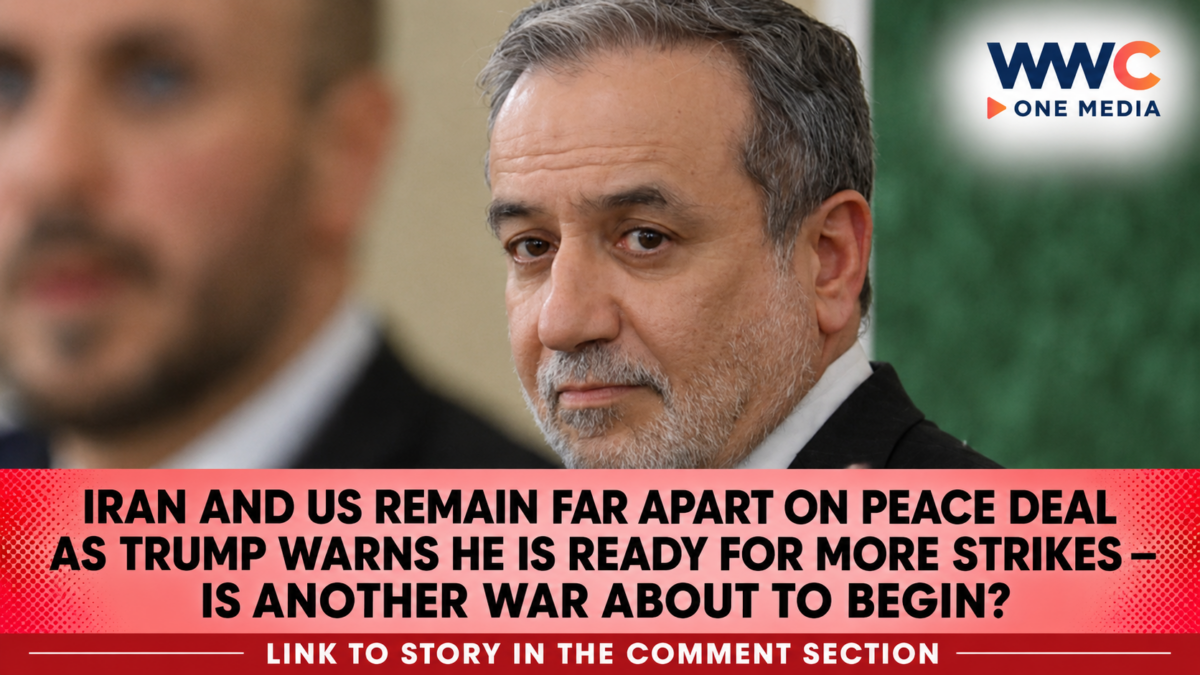
The United States and Iran remain far from reaching an agreement to end their conflict, despite intensified diplomatic efforts led by Qatar, as President Donald Trump warns that American forces are ready to resume military action if necessary.
Trump has signalled that Washington is prepared for another round of strikes but is not rushing into a decision. His latest comments come as negotiations remain stalled over sanctions, the US naval blockade, Iran’s enriched uranium stockpile and the future of the strategically important Strait of Hormuz.
The diplomatic uncertainty has become even more serious after US forces carried out limited strikes on Iranian targets on Qeshm Island, near the Strait of Hormuz. American officials described the operation as defensive, saying it targeted Iranian personnel using surface-to-air missiles against US assets.
The strikes have raised concerns that a conflict already responsible for major regional disruption could intensify again, even as Qatar and other regional players attempt to prevent a wider confrontation.
A senior Iranian official told Reuters on November 3 that the two countries were still far from a deal. Tehran also warned that it would respond forcefully to further American attacks.
The result is a dangerous standoff: negotiations are continuing, military operations have not completely stopped, and neither side appears ready to abandon its central demands.
Trump Says US Is Ready to Strike but Sees No Immediate Need
Trump delivered mixed signals about the possibility of renewed military action in separate interviews on November 3.
Speaking to the Financial Times, he said the United States was prepared to act if necessary but suggested that another attack might not be required.
He also indicated that indirect discussions over Iran’s stockpile of enriched uranium were continuing.
In a separate interview with Fox News, Trump again warned that military action remained an option.
His comments reflect the administration’s current approach: maintain pressure on Tehran while allowing diplomatic efforts to continue.
Trump has also argued that the United States has significantly weakened Iran’s military capabilities and that Washington is in a strong negotiating position.
However, his statements do not amount to a permanent commitment against further attacks.
The distinction is important. Saying the United States is ready to strike does not mean a new large-scale offensive has been ordered. But it makes clear that military action remains on the table if negotiations fail or Washington determines that its security interests are threatened.
US Carries Out Limited Strikes on Iran’s Qeshm Island
The diplomatic stalemate comes as military tensions remain active around the Strait of Hormuz.
US forces carried out what American officials described as limited defensive strikes on Qeshm Island, targeting Iranian personnel and surface-to-air missile capabilities that officials said had threatened US assets.
Iranian state media reported explosions on Qeshm Island and nearby areas.
A US official told Reuters that the operation appeared limited and did not signal a return to major combat operations.
That qualification matters. The reported strikes represent actual military action, but they should not automatically be described as the beginning of a new full-scale American offensive.
Nevertheless, even a limited strike can create opportunities for retaliation.
Iranian officials have warned that any renewed US attack could trigger a forceful response. The country’s military leadership has also said it is updating target lists that include American and Israeli assets.
The immediate concern is whether both governments can prevent another exchange of attacks from escalating into a much broader military confrontation.
Qatar Steps Up Mediation as Both Countries Review Proposals
Qatar has intensified its diplomatic efforts to bring Washington and Tehran closer to an agreement.
Qatari mediators have travelled between Doha and Tehran, exchanging proposals and attempting to narrow the differences between the two governments.
The discussions have focused on a possible framework that could restore maritime access through the Strait of Hormuz and create conditions for broader negotiations.
Qatar’s Foreign Ministry spokesperson Majed al-Ansari said both sides were reviewing proposals presented by mediators.
He also expressed hope that an agreement could still be reached, describing the regional diplomatic efforts as intensive.
According to Reuters, an official familiar with the negotiations expected feedback from Washington and Tehran within approximately 36 hours of the November 3 discussions.
However, that was an expectation reported at the time, not a confirmed deadline for a final agreement.
A senior Iranian official later said there was no deadline for exchanging messages through mediators or reviewing responses.
The continuing diplomatic contacts show that neither side has completely abandoned negotiations. But the absence of a breakthrough means the most difficult issues remain unresolved.
Iran Sets Conditions for Reopening the Strait of Hormuz
One of the biggest obstacles is the Strait of Hormuz, a narrow maritime passage connecting the Persian Gulf with the Gulf of Oman and the wider Indian Ocean.
The waterway is one of the world’s most important energy shipping routes. Before the conflict, approximately one-fifth of global oil consumption passed through it, making any prolonged disruption a major concern for international energy markets.
Iran has made clear that reopening the strait is tied to its demands against Washington.
A senior Iranian official told Reuters that Tehran wants the United States to address several conditions, including:
- Lifting or easing restrictions on Iranian oil exports.
- Ending the US naval blockade affecting Iranian ports.
- Releasing frozen Iranian funds.
- Addressing the wider security and military issues connected to the conflict.
Iran’s Supreme National Security Council secretary, Mohsen Rezaei, said Washington’s response to Tehran’s demands was not convincing. He insisted that the United States must address Iran’s seven conditions before the waterway can reopen.
The dispute is about more than shipping.
For Washington, the blockade is an important source of pressure on Iran’s economy. For Tehran, restoring maritime access without addressing the blockade and economic restrictions would mean giving up a significant bargaining position.
This disagreement over which side must make concessions first remains a major obstacle to a settlement.
Nuclear Dispute Remains One of the Hardest Issues to Resolve
Even if the two governments reach an understanding over the blockade and maritime access, the nuclear dispute could still prevent a comprehensive agreement.
The United States wants verifiable assurances that Iran will not develop nuclear weapons or rebuild capabilities that Washington considers a threat.
Trump said indirect discussions concerning Iran’s enriched uranium stockpile were ongoing.
But Tehran has maintained that nuclear negotiations cannot move forward until its conditions concerning the broader conflict are addressed.
The issue is particularly sensitive because Iran’s nuclear programme has been at the centre of tensions with Western governments for years.
Any agreement would likely require difficult decisions involving uranium enrichment, monitoring, verification and the future handling of Iran’s existing stockpile.
Washington wants guarantees that can be independently verified. Tehran wants sanctions relief and assurances that a diplomatic agreement will not simply be followed by another military attack.
Without progress on both sides, a deal covering only the Strait of Hormuz may not be enough to end the wider conflict.
Iran Warns of a Forceful Response if Washington Attacks Again
Iranian officials have repeatedly warned that the country will retaliate if the United States resumes major military operations.
The senior Iranian official who spoke to Reuters said Tehran would not accept what it considers excessive American demands and would respond forcefully to US strikes.
Mohsen Rezaei also warned that Iran’s response to any American miscalculation could extend beyond the immediate region.
Iran’s military leadership has reportedly been updating potential target lists involving US and Israeli assets.
Such statements demonstrate the seriousness of the confrontation, although threats should not be treated as proof that specific attacks have been ordered or will take place.
The danger is that a new strike could trigger retaliation against military facilities, shipping or other strategic interests, increasing the risk of a wider regional conflict.
For more background on the latest diplomatic deadlock, read WWC One Media’s report: Iran Says Peace Contacts With US Are Still Alive After Qatar Talks Fail — But Is Another Attack Now More Likely Than a Deal?.
The Strait of Hormuz Is More Than a Regional Military Flashpoint
The confrontation has consequences far beyond Iran and the United States.
The Strait of Hormuz is a critical route for oil and liquefied natural gas shipments from major Gulf producers. Any prolonged disruption can affect energy supplies, shipping schedules, insurance premiums and international commodity prices.
For countries that depend heavily on imported energy, uncertainty around the waterway can translate into higher costs.
The Philippines is particularly exposed to changes in international oil prices because it relies heavily on imported petroleum.
A sustained disruption could eventually affect gasoline and diesel prices, transportation costs, electricity generation expenses and the cost of moving goods.
WWC One Media previously examined the wider economic risks in Iran’s Economy Is Buckling Under War and Sanctions — But the Strait of Hormuz Could Be the Next Global Shock.
The report explored how sanctions, economic pressure and uncertainty surrounding the waterway could affect trade and energy markets well beyond the Middle East.
The US War Bill Has Already Reached US$47.1 Billion
The financial consequences of the conflict are also becoming increasingly difficult to ignore.
A Pentagon estimate reported by Reuters put the direct US military cost of the war at approximately US$47.1 billion through October 16, 2026.
The figure includes the cost of replacing expended munitions, operational expenses and equipment losses.
Approximately US$29 billion was associated with replacing weapons used during the conflict, while additional billions were attributed to operating costs and lost equipment.
The estimate does not represent the complete economic cost of the war. It also does not fully account for all damage to US military facilities or the wider effects of disrupted trade and higher energy costs.
The financial burden adds another complication for Washington as the administration weighs whether to pursue diplomacy, maintain economic pressure or resume major military operations.
Read WWC One Media’s coverage: Trump’s Iran War Costs US Taxpayers US$47.1 Billion as Hormuz Crisis Drags On.
The longer the conflict continues, the greater the potential pressure on military spending, government finances and international markets.
Regional Tensions Are Spreading Beyond Iran and the US
The conflict is also affecting the wider Middle East.
Iranian Foreign Minister Abbas Araqchi said discussions with Saudi Arabia were continuing over possible regional security arrangements that would exclude foreign military involvement.
The talks come amid growing concerns about the activities of Iran-aligned Houthi forces in Yemen, which have increased pressure on Saudi Arabia.
Regional governments have strong reasons to prevent another major escalation. A wider conflict could threaten energy infrastructure, shipping routes and military facilities across several countries.
Qatar’s mediation is therefore important not only to Washington and Tehran but also to Gulf states concerned about the economic and security consequences of renewed fighting.
The more countries and strategic interests become involved, the harder it may become to contain an escalation once it begins.
What Happens if the US and Iran Fail to Reach an Agreement?
The current negotiations face several possible obstacles.
1. The naval blockade remains in place.
Iran wants the US to end the blockade affecting its ports. Washington may be reluctant to surrender this source of economic pressure without receiving meaningful concessions.
2. The Strait of Hormuz remains restricted.
Without agreement on maritime access, shipping companies may continue facing uncertainty over safe passage and operating costs.
3. Sanctions relief remains unresolved.
Tehran wants relief from restrictions affecting its oil exports and access to frozen funds. Washington must decide what it is willing to change and what guarantees it expects in return.
4. Nuclear negotiations remain stalled.
The future of Iran’s enriched uranium stockpile and the verification of nuclear commitments remain major disagreements.
5. Military retaliation remains possible.
The recent Qeshm strikes and Iran’s warnings show that the military confrontation has not completely stopped.
These issues are interconnected. Progress on one may not be enough to resolve the others.
The Bottom Line
The United States and Iran remain far from a comprehensive peace agreement, despite renewed diplomatic efforts led by Qatar.
Trump says American forces are ready to resume military action if necessary, but he has also indicated that another major attack may not be required. Meanwhile, US forces have carried out limited strikes on Qeshm Island, and Iranian officials have warned that further attacks could trigger a forceful response.
The biggest disagreements involve the US naval blockade, sanctions on Iranian oil, frozen Iranian funds, the reopening of the Strait of Hormuz and the future of Iran’s nuclear programme.
The financial and economic stakes are enormous. The US military’s reported US$47.1-billion war cost highlights the growing burden on Washington, while disruption around Hormuz threatens energy supplies and economies that depend on Middle Eastern shipments.
For now, diplomacy remains active, but no comprehensive settlement has been announced.
The next move will depend on whether Washington and Tehran can agree on a sequence of concessions that allows negotiations to advance without either side believing it has surrendered its leverage.
With Trump keeping military action on the table and Iran warning of retaliation, can Qatar’s mediation prevent another major escalation — or are the United States and Iran moving closer to a new phase of war?