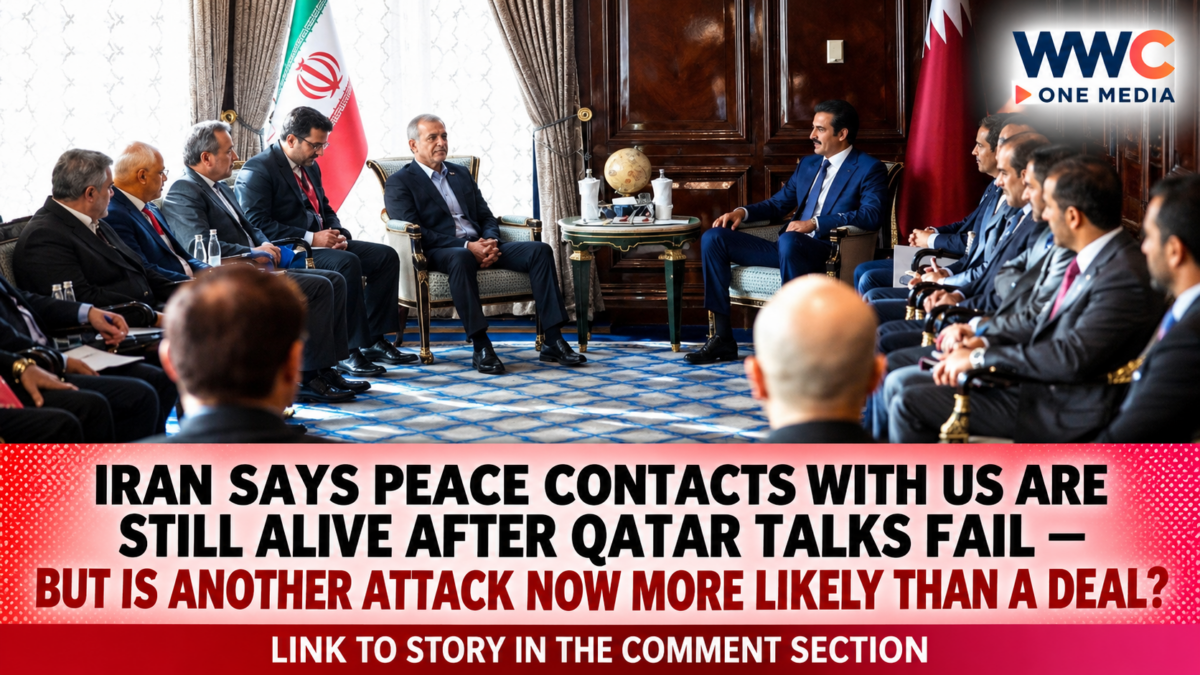
TEHRAN/WASHINGTON — Diplomatic efforts to end the conflict between Iran and the United States remain active, but the latest round of Qatar-mediated discussions has failed to produce a breakthrough, leaving the region facing continued uncertainty.
Iranian Foreign Minister Abbas Araghchi said on November 2 that consultations through mediators were continuing intensively, following several days of discussions involving Iranian representatives and Qatari officials.
His comments suggest that Tehran has not abandoned the possibility of a negotiated settlement. However, the absence of an agreement highlights how far apart the two sides remain on the conditions needed to stop the fighting.
Iran is continuing to push a seven-step proposal originally submitted in September. The revised version could reportedly be implemented within two days if Washington accepts Tehran’s conditions.
Those conditions include ending the US naval blockade on Iranian ports, restoring access through the strategically important Strait of Hormuz and addressing restrictions on Iranian oil sales and sanctions.
But there is no confirmed agreement, and the nuclear dispute remains unresolved.
The developments come just ahead of the November 3 US midterm elections, amid concerns that military action could resume after the vote.
Iran says negotiations are continuing despite the lack of progress
The latest discussions took place through Qatari intermediaries, who have been exchanging messages between Washington and Tehran.
Iranian negotiators reportedly left Doha on Sunday, November 1, after several days of discussions.
An official familiar with the negotiations told Reuters that their departure was not caused by a breakdown in the talks. A draft proposal was also reportedly being circulated, with the possibility of another meeting remaining open.
Iranian officials have continued to describe the diplomatic contacts as active.
Araghchi said the outcome would depend on Washington’s willingness to consider Tehran’s proposals.
The Iranian position is significant because it suggests that the diplomatic channel remains available even as both governments continue to express sharply different views about the conflict.
However, continued communication should not be confused with progress towards a signed agreement.
No comprehensive peace deal has been announced, and the central disagreements remain.
Tehran’s two-day proposal could reopen the Strait of Hormuz
One of the most significant elements of Iran’s latest proposal concerns the Strait of Hormuz.
Iranian Foreign Ministry spokesperson Esmaeil Baghaei said the seven-step proposal submitted in September remains the basis for negotiations, although the implementation process has been condensed.
The revised framework could reportedly be carried out within two days if the necessary conditions are met.
The proposal includes several major steps:
- The United States would end its naval blockade affecting Iranian ports.
- Iran would reopen the Strait of Hormuz and restore maritime access under the proposed arrangement.
- Washington would provide relief concerning restrictions on Iranian oil sales.
- New sanctions affecting Iran would be addressed.
- Further negotiations would follow on outstanding issues.
The sequence matters.
Tehran has argued that it cannot be expected to restore normal maritime access while the US blockade remains in place and its other demands are unresolved.
The two-day timetable is therefore conditional. It does not mean that the waterway will automatically reopen within 48 hours or that a peace agreement has already been reached.
The proposal also differs from a comprehensive settlement because important disputes, particularly those involving Iran’s nuclear programme, remain outstanding.
Reuters reported that Trump rejected the original seven-step proposal when Tehran presented it in September.
The nuclear dispute remains a major obstacle
Even if Washington and Tehran reach an understanding over shipping and the blockade, the nuclear issue could complicate any broader settlement.
The United States has continued to demand assurances that Iran will not develop nuclear weapons.
US Vice President JD Vance has said any agreement must include a firm and verifiable commitment preventing Iran from rebuilding its nuclear programme.
Iran, meanwhile, has maintained that discussions on its nuclear programme should only resume after its conditions for the wider settlement have been met and verified.
During the latest exchanges, Baghaei also rejected the suggestion that Iran had agreed to transfer its highly enriched uranium stockpile to another country.
That disagreement is important because nuclear restrictions and verification arrangements have been among the most difficult issues in previous negotiations.
Washington wants safeguards it can verify. Tehran wants its conditions and security concerns addressed before moving forward.
Without agreement on both sides, reopening shipping routes alone would not resolve the wider confrontation.
Trump says a deal is possible, but military action has not been ruled out
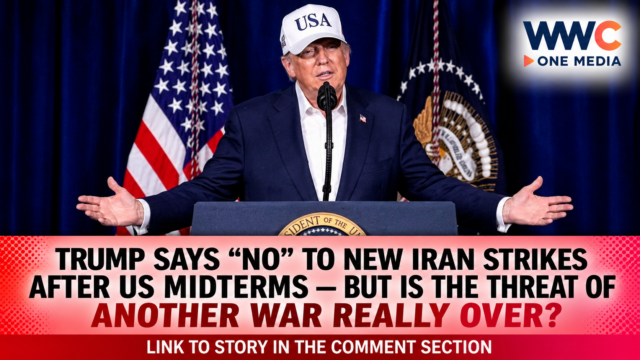
US President Donald Trump has recently indicated that he believes an agreement with Iran could happen.
He has also publicly raised doubts about launching new strikes immediately after the November 3 midterm elections.
However, his comments do not amount to a permanent commitment against military action.
The administration continues to emphasize its security objectives, particularly preventing Iran from obtaining a nuclear weapon.
Vance has expressed cautious optimism about the discussions, describing recent conversations between the two countries as positive.
But statements of optimism from Washington have not been matched by a confirmed agreement from Tehran.
The two governments still need to settle the details of sanctions, maritime access, security assurances and nuclear restrictions.
That leaves the possibility of further escalation unresolved.
Iran believes another US attack may be more likely than a deal
Despite Tehran’s public emphasis on diplomacy, Iranian sources told Reuters they believed a new American attack remained more likely than a negotiated settlement.
That assessment reflects the uncertainty surrounding the negotiations.
Iranian officials have warned that the country would respond to renewed attacks, while American officials have maintained that Washington retains military options.
The situation is further complicated by the timing of the US midterm elections.
Trump has repeatedly said that no new attack would take place before the vote, but the election date does not establish what Washington will decide afterwards.
For Iran, the concern is that diplomatic discussions could continue without producing enough progress to prevent renewed military action.
For the United States, the challenge is securing an agreement that meets its stated security requirements without prolonging a conflict that has already affected international energy markets.
China and Russia urge a political solution
The diplomatic developments have also attracted attention from major international powers.
Chinese Foreign Minister Wang Yi called for a political solution rather than a return to military confrontation during discussions with senior Iranian security official Ali Bagheri Kani in Beijing.
China has substantial economic interests in the Gulf, particularly because of its role as a major buyer of regional energy supplies.
The security of shipping routes through the Strait of Hormuz is therefore an important concern for Beijing.
China has also been engaging with regional governments, including Oman and Saudi Arabia, as diplomatic efforts continue.
Russia has similarly expressed concern about reports of possible renewed military action.
Moscow has called for further diplomatic efforts and warned against another escalation.
Neither country’s statements establish that Washington or Tehran has accepted an externally proposed settlement. Their involvement nevertheless illustrates how the conflict has become an international diplomatic and economic issue.
A damaged Qatari LNG tanker adds to shipping concerns
The negotiations are taking place against a backdrop of continuing maritime insecurity.
A Qatari liquefied natural gas tanker was struck by unidentified objects in the Gulf on October 30, according to its operator, Nakilat.
The incident reportedly caused damage but no injuries or environmental harm.
Attacks involving oil tankers have already affected shipping confidence in the region, while incidents involving LNG carriers raise additional concerns because of the importance of natural gas shipments to international energy markets.
The circumstances surrounding the tanker incident remain important to distinguish from confirmed responsibility.
The available reporting identifies unidentified objects as the cause of the damage; it does not establish who was responsible.
Nevertheless, the incident demonstrates why restoring safe and predictable commercial shipping remains a central part of the diplomatic discussions.
Why the Strait of Hormuz matters far beyond Iran
The Strait of Hormuz connects the Persian Gulf with the Gulf of Oman and the Arabian Sea.
It is one of the world’s most important routes for international oil and liquefied natural gas shipments.
Any prolonged disruption can affect more than Iranian exports.
Energy shipments from several Gulf producers depend on access to the wider maritime route. Shipping companies may also face higher insurance costs, delays and uncertainty over safe passage.
For Asian economies, the consequences can be particularly significant because many countries depend heavily on imported petroleum and natural gas.
The Philippines is among the economies exposed to changes in international energy prices.
Although it is not directly involved in the conflict, higher global oil prices can affect domestic fuel adjustments, transportation expenses and the cost of moving goods.
WWC ONE MEDIA previously examined the wider economic risks in Iran’s Economy Is Buckling Under War and Sanctions — But the Strait of Hormuz Could Be the Next Global Shock.
The report explains why pressure on Iran’s economy and uncertainty surrounding the shipping corridor could have consequences beyond the Middle East.
Qatar’s mediation faces another difficult test
Qatar has become an important intermediary because Washington and Tehran have not established a direct negotiating process capable of resolving the conflict.
The country has been facilitating the exchange of messages and helping the two sides explore possible arrangements.
But mediation cannot guarantee an agreement.
The central problem is that each side wants the other to make important concessions before moving forward.
Iran wants the US blockade and economic restrictions addressed, alongside guarantees against renewed attacks.
Washington wants security commitments and verifiable restrictions concerning Iran’s nuclear programme.
The proposed sequence of steps is therefore just as important as the final terms.
A disagreement over which side must act first could prevent the parties from moving beyond preliminary discussions.
For more background, read WWC ONE MEDIA’s report on Qatar’s push for US-Iran peace talks as mediators seek a breakthrough.
The conflict’s financial burden continues to grow
The diplomatic deadlock also comes with significant economic consequences.
Military operations, weapons replacement, maritime disruptions and the cost of maintaining regional deployments all contribute to the wider financial burden.
WWC ONE MEDIA previously reported that US Central Command estimated the direct cost of the conflict at approximately US$47.1 billion through October 16.
That figure represents an official military cost estimate reported at the time, not the complete economic cost of the war.
The wider consequences include pressure on energy markets, shipping expenses and the economies affected by disruptions to international trade.
Read more: Trump’s Iran War Costs US Taxpayers US$47.1 Billion as Hormuz Crisis Drags On.
The financial dimension is one reason the diplomatic outcome matters beyond the governments directly involved.
What happens if the proposal is rejected?
If Washington and Tehran cannot agree on the proposed conditions, the current diplomatic effort could remain stalled.
Several issues will determine what happens next:
1. The US naval blockade
Iran wants the blockade affecting its ports addressed before it agrees to restore normal maritime access.
2. The Strait of Hormuz
A reopening arrangement would need to establish how safe passage is restored and what conditions would apply to commercial vessels.
3. Sanctions and oil exports
Tehran wants economic relief, while Washington must decide what restrictions it is prepared to change and under what conditions.
4. Nuclear commitments
The two sides remain divided over verification, restrictions and the future of Iran’s highly enriched uranium stockpile.
5. Security guarantees
Iran wants assurances against renewed attacks, while Washington continues to seek commitments that address its security concerns.
These are not minor technical disagreements. They concern the basic terms of a possible settlement.
Can diplomacy prevent another round of fighting?
For now, the most accurate description of the situation is that diplomatic contacts are continuing, but the negotiations have not produced a breakthrough.
Iran has kept its seven-step proposal at the centre of discussions and says it could implement a condensed version within two days if Washington meets its conditions.
The United States has signalled that a negotiated outcome remains possible, but it has not accepted the Iranian proposal as presented.
China, Russia and regional mediators are urging political engagement as concerns grow over the consequences of renewed fighting.
The next significant development will depend on whether the draft proposal can bridge the differences over the blockade, sanctions, maritime access and nuclear restrictions.
Iran says the door to negotiations remains open. But with no breakthrough in Doha, a two-day proposal still dependent on US approval, and both sides maintaining sharply different positions, will diplomacy produce a settlement — or is the region heading towards another dangerous escalation?