WASHINGTON — US President Donald Trump has raised fresh doubts about whether Washington will resume military strikes against Iran after the November 3 midterm elections, offering a possible opening for diplomacy as indirect negotiations between the two countries continue.
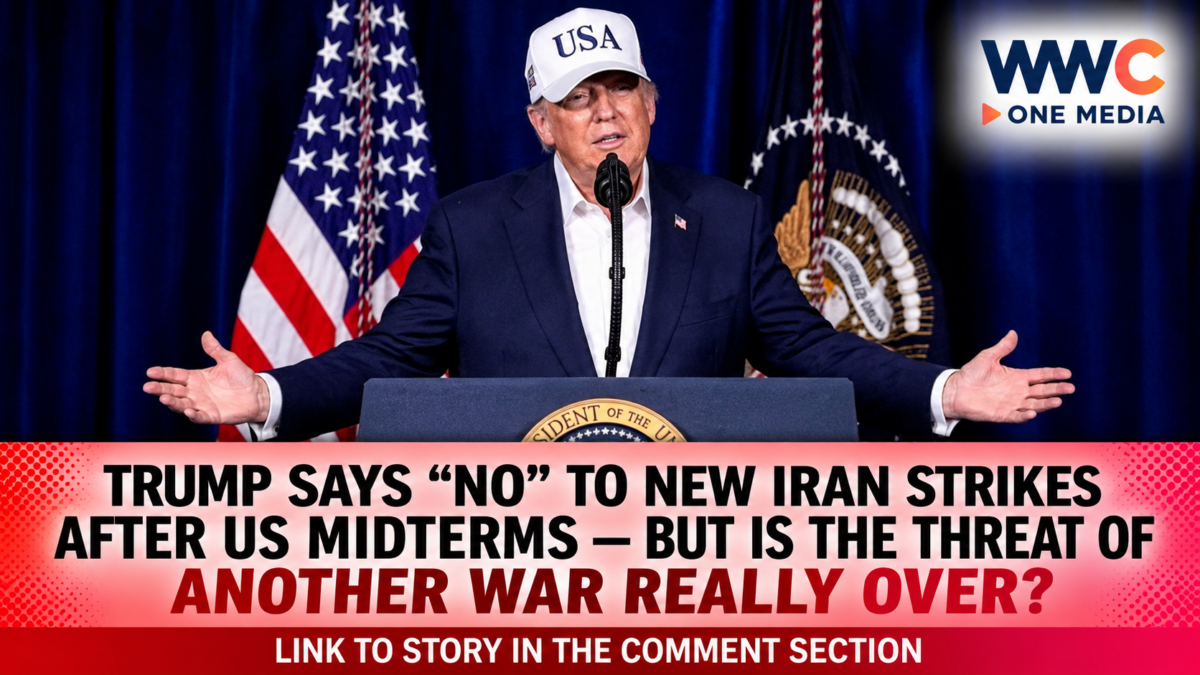
Asked on Monday, November 2, whether he was considering attacking Iran after the elections, Trump answered, “No.”
The response marked a notable shift from his earlier warnings that military action could resume after the vote. Trump also said he believed Tehran wanted to reach an agreement and that a deal was possible.
But his latest remarks do not amount to a formal peace agreement or a permanent commitment to rule out further military action.
The United States and Iran remain divided over nuclear restrictions, sanctions, maritime security and the conditions needed to end the conflict.
The diplomatic effort is continuing through regional mediators, with Qatar playing a central role. Meanwhile, Gulf countries are watching closely because renewed fighting could expose their territory, energy facilities and shipping routes to further risks.
Trump changes his public message on possible Iran strikes
In recent weeks, Trump had suggested that the United States could resume attacks against Iran after the midterm elections.
His November 2 comments offered a different public signal.
Speaking after an address at the Washington Reflecting Pool, Trump indicated that he was not considering strikes immediately after the election when directly questioned by reporters.
He also said an agreement with Tehran could happen.
Vice President JD Vance expressed similar optimism, saying the administration had held several constructive conversations with Iranian representatives and believed a negotiated settlement remained possible.
However, neither Trump’s answer nor Vance’s comments confirm that the two countries have resolved their differences.
The distinction is important: Washington may be pursuing diplomacy more actively, but the administration has not publicly announced a comprehensive settlement or a permanent end to military options.
Reuters reported that Trump had previously left open the possibility of renewed strikes, making his latest response a significant change in tone. <Link url=”https://www.reuters.com/world/middle-east/trump-raises-doubts-about-renewed-attacks-iran-2026-11-02/” title=”Read Reuters’ report on Trump’s latest remarks”/>.
Why the US midterm elections matter
Trump’s comments came as the administration faced growing political pressure over the conflict and its effect on American consumers.
The war has contributed to higher gasoline prices, making energy costs an important issue for voters ahead of the November 3 elections.
For households already dealing with living expenses, expensive fuel can affect commuting, transportation, deliveries and the cost of goods.
The economic pressure has added another consideration for the administration as it weighs the costs and consequences of continuing the confrontation.
However, the election calendar should not be mistaken for proof that military action will or will not resume. Trump’s latest public answer was a rejection of the suggestion that he was considering strikes immediately after the vote, not a detailed announcement of a long-term military policy.
Qatar continues to mediate as Iran seeks a negotiated settlement
Diplomatic activity has continued despite the uncertainty surrounding Washington’s position.
Iranian negotiators were in Doha for a third consecutive day of discussions with Qatari mediators, seeking a framework that could help end the conflict.
The discussions did not produce a final breakthrough.
According to Reuters, Iranian officials said contacts through mediators remained active after the delegation’s discussions ended with revised proposals.
Iranian Foreign Minister Abbas Araghchi said consultations were continuing and that the outcome depended on Washington’s response to Tehran’s conditions.
Al Jazeera reported that Iran was pushing an accelerated proposal involving the Strait of Hormuz and a possible return to negotiations, but Tehran’s demands had not been accepted by Washington.
The talks therefore remain an attempt to establish common ground rather than evidence that a final agreement has been reached.
The nuclear issue remains Washington’s central demand
Trump reiterated that the United States would not allow Iran to obtain a nuclear weapon.
The issue remains one of the central obstacles to a lasting settlement.
Washington wants firm assurances that Iran will not develop nuclear weapons capabilities. Tehran, meanwhile, has raised objections to the conditions being attached to negotiations and has sought guarantees concerning American actions.
Vance has also indicated that any agreement would need a firm and verifiable commitment preventing Iran from rebuilding its nuclear programme.
That leaves difficult questions for negotiators: what restrictions would Iran accept, how would compliance be verified, and what assurances would Washington provide in return?
A political statement that both sides are willing to talk does not resolve those technical and diplomatic disagreements.
Iran’s conditions include sanctions and the Strait of Hormuz
Iran has linked progress in negotiations to changes in US policy.
Among the conditions reported by international news outlets are the lifting of the American naval blockade affecting Iranian ports, sanctions relief, guarantees against renewed strikes and a broader regional ceasefire.
Tehran has also discussed reopening the Strait of Hormuz under conditions connected to the negotiations.
The waterway is a major international shipping route linking the Persian Gulf with the Gulf of Oman. It is particularly important for oil and gas exports from the region.
Any prolonged disruption can affect shipping schedules, energy supplies and international fuel prices.
But the two sides have not announced an agreed timetable for restoring normal maritime conditions.
The dispute over the strait is therefore more than a regional shipping issue. It is one of the central economic and security questions in the negotiations.
Gulf countries fear being caught in another round of fighting
The possibility of renewed strikes has caused concern among countries hosting American military facilities.
Reuters reported on November 2 that Gulf governments fear another confrontation could expose them to Iranian retaliation, even though they are not the parties deciding whether Washington resumes its campaign.
Previous fighting demonstrated the vulnerability of military installations and energy-related facilities in the region.
For Gulf governments, the concern is that bases intended to support regional security could become potential targets during another escalation.
These fears are particularly significant for countries whose economies depend heavily on energy exports, international trade and stable maritime routes.
Diplomatic efforts by regional governments are therefore focused not only on preventing attacks but also on avoiding a wider conflict that could affect neighboring countries.
Read more: <Link url=”https://www.reuters.com/world/middle-east/trumps-iran-threat-renews-gulf-fears-war-it-didnt-choose-2026-11-02/” title=”Reuters: Gulf states face renewed risks as Trump weighs Iran policy”/>.
Why the Strait of Hormuz matters to the global economy
The Strait of Hormuz is one of the world’s most important energy chokepoints.
A significant share of internationally traded oil and liquefied natural gas normally passes through the waterway.
When shipping is threatened, the consequences can spread well beyond the Middle East.
Oil prices can react to the possibility of supply disruptions. Shipping companies may face higher insurance costs, longer routes and uncertainty over whether vessels can safely complete their journeys.
Countries that depend on imported energy can then face additional pressure on fuel costs and inflation.
For Asian economies, the issue is particularly important because many rely on imported petroleum and gas to support transportation, electricity generation and industrial activity.
The Council on Foreign Relations has explained why the waterway is central to global energy security and why restrictions there can have consequences for international markets.
Read more: <Link url=”https://www.cfr.org/articles/strait-hormuz-us-iran-maritime-flash-point” title=”Council on Foreign Relations: The Strait of Hormuz as a US-Iran flashpoint”/>.
The conflict has already carried a substantial financial cost
The military confrontation has also placed a considerable financial burden on the United States.
WWC ONE MEDIA previously reported that US Central Command estimated the direct cost of the Iran conflict at approximately US$47.1 billion through October 16.
The estimate included spending associated with weapons replacement, operational expenses and lost equipment. It did not represent the full economic cost of the conflict or every possible future expense.
Any renewed military campaign could add further costs, depending on its scale and duration.
Read more: <Link url=”https://wwconemedia.com/trumps-iran-war-costs-us-taxpayers-47-1-billion-as-hormuz-crisis-drags-on-but-could-the-next-strike-send-the-bill-even-higher/” title=”WWC ONE MEDIA: The US$47.1 billion cost of the Iran conflict”/>.
The financial issue also connects to the broader question of how long Washington can sustain military operations while managing domestic spending priorities and political pressure.
Previous clashes at sea show why another escalation matters
The confrontation has extended beyond statements and diplomatic exchanges.
Earlier incidents involving Iranian and US-linked maritime assets heightened concerns about the security of commercial shipping.
WWC ONE MEDIA previously reported on a September confrontation in which the United States said it struck three Iranian oil tankers after Iranian missiles were directed towards American naval vessels. Iran disputed Washington’s account of the exchange.
The incident highlighted how confrontations involving military and commercial vessels can increase uncertainty around one of the world’s most important shipping routes.
Read more: <Link url=”https://wwconemedia.com/u-s-and-iran-trade-fire-at-sea-after-tanker-strikes-is-the-strait-of-hormuz-next/” title=”WWC ONE MEDIA: US and Iran trade fire at sea after tanker strikes”/>.
The earlier incidents do not establish that another maritime confrontation is inevitable. They do, however, provide context for why regional governments and shipping operators remain concerned about renewed hostilities.
What happens if negotiations fail?
The immediate question is whether the diplomatic channel can produce an agreement acceptable to both Washington and Tehran.
Several issues remain unresolved:
- Nuclear restrictions: The United States wants verifiable assurances that Iran will not obtain a nuclear weapon.
- Sanctions: Iran wants relief from economic restrictions affecting its economy and trade.
- Maritime access: The two sides remain divided over restrictions affecting Iranian ports and the Strait of Hormuz.
- Security guarantees: Tehran wants assurances against renewed attacks, while Washington wants commitments addressing its security concerns.
- Regional stability: Gulf countries want to avoid another escalation that could threaten their territory, infrastructure and economies.
A failure to bridge these differences could leave the region facing continued uncertainty, even if large-scale fighting does not immediately resume.
The possibility of further military action has not been formally removed from the administration’s options, and Iran has continued to signal that it is prepared to respond if attacked.
Is Trump’s latest answer the beginning of peace — or only a pause?
Trump’s November 2 response has given diplomacy additional room, but it has not settled the conflict.
The United States says preventing Iran from obtaining a nuclear weapon remains a central objective. Iran is seeking changes to American sanctions and maritime restrictions, along with guarantees against renewed strikes.
Qatar and other regional actors continue to support diplomatic efforts, while Gulf governments remain concerned about the consequences of another confrontation.
For international markets, the stakes extend beyond the two governments. Any serious disruption to the Strait of Hormuz could affect energy prices, shipping costs and economies far from the region.
Trump has publicly cast doubt on immediate post-election strikes. But the larger question remains unanswered: Can Washington and Tehran turn their latest diplomatic contacts into a lasting agreement before another round of military confrontation becomes possible?