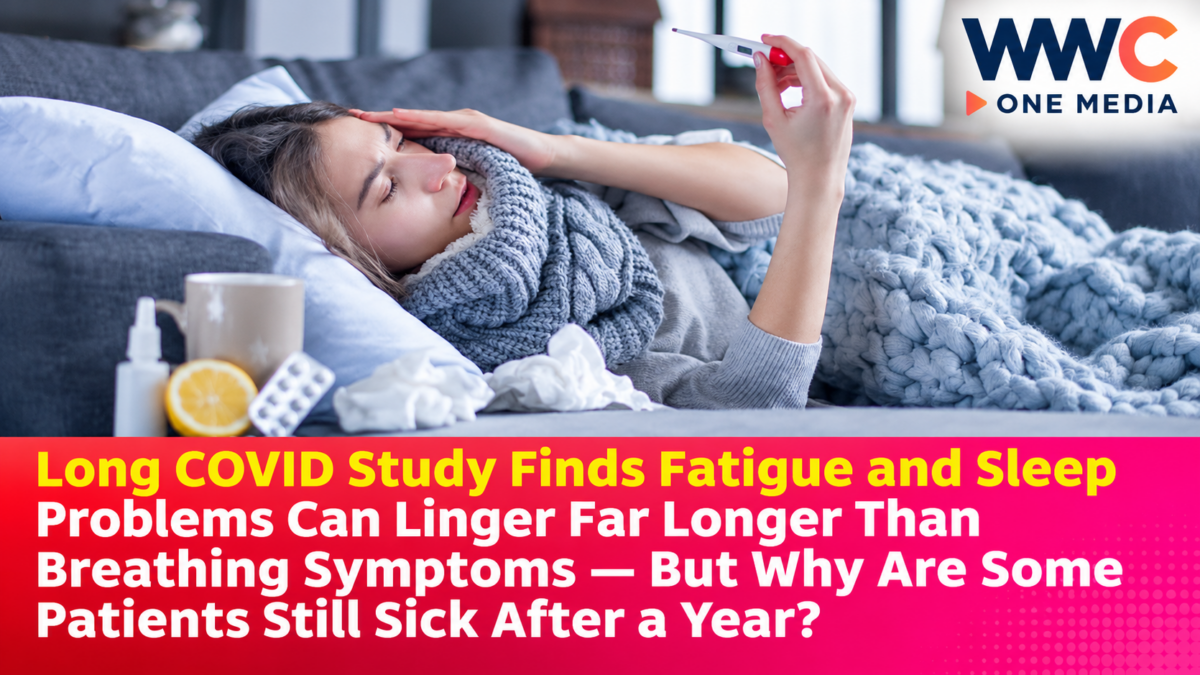
MANILA / SEOUL — November 3, 2026. A growing body of medical research is challenging the assumption that everyone recovering from long COVID follows the same path, with scientists finding that persistent fatigue, sleep disturbances and other symptoms can last substantially longer than many respiratory problems.
A peer-reviewed South Korean study involving 757 previously infected adults and 558 uninfected controls found that fatigue and sleep disturbances lasted approximately 50% longer among people who had experienced COVID-19.
The findings, published in the International Journal of Infectious Diseases, suggest that long COVID is not a single, predictable recovery process. Instead, different groups of symptoms may persist for different lengths of time, creating distinct challenges for patients and healthcare providers.
The research comes as Bloomberg highlights new questions about how quickly people recover from long COVID and why some symptoms appear to outlast others.
For millions of people who continue experiencing health problems after coronavirus infection, the distinction could be important.
Some patients report improvement in coughing or breathing difficulties while continuing to struggle with exhaustion, poor sleep, concentration problems and reduced ability to perform everyday activities.
Others experience symptoms that improve temporarily before returning.
The emerging research reinforces a central message: feeling better in one aspect of health does not necessarily mean a person has fully recovered from long COVID.
But it also raises a difficult question.
Why do some symptoms disappear within months while others persist for years, and could understanding those differences lead to more effective treatment?
Researchers Find Long COVID Symptoms Do Not Recover at the Same Speed
The South Korean study followed adults from 12 medical institutions between December 2022 and March 2025.
Researchers analyzed eight common symptoms using repeated assessments over as long as 22 months.
The study included people with confirmed SARS-CoV-2 infection and a comparison group without documented infection.
By examining both groups, researchers aimed to distinguish symptoms specifically associated with COVID-19 from health problems also occurring in the general population.
Their analysis found an important difference between types of symptoms.
Respiratory and certain physical symptoms resolved at broadly similar rates among infected participants and controls.
However, systemic and neurological symptoms persisted longer in the previously infected group.
Fatigue and sleep disturbances were particularly notable.
The researchers estimated that COVID-19 infection was associated with approximately 50% longer duration of those symptoms.
This does not mean every patient experienced fatigue or sleep problems for 50% longer.
It is a statistical comparison of symptom duration between groups, adjusted for factors included in the researchers’ model.
The result suggests that persistent fatigue and sleep disruption may require different clinical attention from symptoms that typically resolve sooner.
Up to One in Four Still Reported Fatigue After a Year
One of the study’s most significant findings involved fatigue.
At the one-year assessment, approximately 20% to 25% of previously infected participants reported fatigue.
That compared with around 10% of uninfected controls.
Sleep disturbances showed a similar pattern.
Approximately 15% to 20% of previously infected participants reported sleep problems at one year, compared with about 5% of controls.
These differences suggest an ongoing burden associated with prior COVID-19 infection.
However, the figures should not be interpreted as the prevalence of long COVID among all infected people worldwide.
The study involved a defined cohort, specific symptom measurements and a particular follow-up period.
Likewise, the presence of fatigue alone does not automatically establish a long COVID diagnosis.
Fatigue can have many causes, including anemia, sleep disorders, other infections, medication effects and chronic medical conditions.
The significance of the study is that the infected group continued experiencing fatigue and sleep problems more frequently and for longer periods than the comparison group.
That strengthens the evidence that these symptoms deserve careful medical evaluation rather than dismissal.
Why Fatigue May Be More Complicated Than Feeling Tired
Fatigue associated with long COVID can extend beyond ordinary tiredness.
For some patients, even routine tasks may become difficult.
Physical exertion, mental concentration or activities that were previously manageable can leave patients feeling exhausted.
The US Centers for Disease Control and Prevention identifies fatigue and post-exertional malaise among commonly reported long COVID symptoms.
Post-exertional malaise occurs when symptoms worsen after physical or mental activity, sometimes with a delayed onset.
It may affect a person’s ability to work, study, exercise or complete daily responsibilities.
This has important implications for rehabilitation.
An activity program suitable for someone recovering from an uncomplicated respiratory illness may not be appropriate for a patient whose symptoms worsen after exertion.
Medical assessment should therefore consider a person’s specific symptoms, activity tolerance and functional limitations.
The South Korean study did not establish that any particular exercise regimen, medication or rehabilitation program can accelerate recovery.
Instead, its findings reinforce the need for symptom-specific care.
Sleep Problems May Continue Long After the Initial Infection
Persistent sleep disturbance is another major concern.
Patients may experience difficulty falling asleep, interrupted sleep or waking without feeling rested.
Poor sleep can further complicate fatigue, concentration and daily functioning.
The South Korean study found a notably longer duration of sleep disturbances among previously infected participants.
This does not establish one definitive biological explanation.
Possible contributors to sleep problems can vary between individuals and may involve other illnesses, autonomic symptoms, changes in activity or psychological factors.
The findings therefore support careful evaluation rather than assuming that every post-COVID sleep complaint has the same cause.
For healthcare providers, understanding the type and duration of sleep disturbance may help guide appropriate assessment and management.
Middle-Aged Adults May Experience Slower Recovery
The study also identified age as a potential factor.
Participants aged 40 to 59 experienced slower recovery from certain symptoms.
Other factors examined by the researchers showed more limited associations.
The finding suggests that recovery patterns may vary across age groups.
However, it does not mean that everyone between 40 and 59 will experience prolonged long COVID.
Nor does it establish that younger or older individuals cannot develop persistent symptoms.
Age is one statistical factor among many that may influence recovery.
Researchers emphasized the need to understand why particular symptom groups follow different trajectories.
Their findings could help clinicians identify patients who require extended monitoring and individualized support.
A Separate European Study Finds Symptom Burden Matters
Additional evidence comes from a population-based study conducted using the Netherlands’ Lifelines research cohort.
Published in The Lancet Regional Health – Europe, the study analyzed 809 people who met its criteria for post-COVID condition.
Researchers evaluated recovery by comparing symptoms with each participant’s own pre-infection baseline.
That approach was intended to avoid mistakenly attributing longstanding health problems entirely to COVID-19.
The researchers observed a median time of 226 days for symptom levels to return to baseline or below among participants reaching that outcome.
Most improvement occurred during the first several months, before the rate of recovery slowed.
The study estimated a 92% probability of symptom decline to baseline within 24 months using a Kaplan–Meier statistical method.
However, this estimate should not be described as proof that 92% of all long COVID patients worldwide become fully healthy within two years.
The researchers used a specific symptom-based definition of recovery within a defined cohort.
The analysis also found that people experiencing a greater number of symptoms had a lower likelihood of recovery.
Together, the South Korean and Dutch studies suggest that both symptom type and overall symptom burden may help predict how recovery unfolds.
Why Long COVID Recovery Statistics Can Look Contradictory
Medical studies have sometimes reported very different recovery rates.
One study may find substantial improvement over time, while another reports persistent illness among a large proportion of participants.
These differences do not necessarily mean one study is wrong.
Research populations can vary significantly.
Community-based studies may include people with relatively mild or moderate symptoms.
Specialist clinics may disproportionately treat patients with severe and persistent illness.
Researchers may also use different definitions of recovery.
Some consider a participant recovered when a measured symptom disappears.
Others require a return to pre-infection health or functioning.
Still others examine whether symptoms recur after an apparent improvement.
A 2026 article in The BMJ highlighted the difficulty of defining full recovery when symptoms fluctuate or return after periods of improvement.
For accurate health reporting, the recovery definition used in each study is therefore essential.
A reduction in symptom severity is encouraging, but it may not mean that a patient can immediately return to all previous activities.
US Research Also Finds Different Long COVID Patterns
The US National Institutes of Health’s RECOVER Initiative has identified substantial differences in how long COVID symptoms develop over time.
In a study involving 3,659 adults, researchers identified eight broad symptom trajectories across 15 months.
Some participants improved.
Others experienced persistent symptoms.
Some reported symptoms that disappeared and later returned.
A smaller group developed symptoms months after the initial infection.
The research reinforces the idea that long COVID cannot always be understood through a single timeline.
Symptoms may vary in severity, timing and duration.
These findings are consistent with the CDC’s description of long COVID as a condition that can involve symptoms lasting months or years.
For patients, the variation can make recovery difficult to predict.
For clinicians, it supports ongoing assessment when symptoms interfere with everyday life.
Does the Research Reveal a Cure for Long COVID?
The studies offer useful information about recovery, but they do not establish a cure.
Understanding that fatigue and sleep problems may persist longer could improve clinical monitoring and help researchers design future treatment trials.
However, identifying a recovery pattern is different from demonstrating that a treatment can change it.
In September 2026, the US National Institutes of Health reported findings from a trial examining whether prolonged treatment with the antiviral combination nirmatrelvir and ritonavir could improve long COVID symptoms.
The trial did not find a significant improvement compared with placebo.
Participants in the different treatment groups improved at similar rates.
That finding does not prove antiviral approaches can never help any long COVID subgroup.
It does show that the tested regimen did not deliver the hoped-for benefit in that clinical trial.
Researchers continue examining the biological processes behind persistent symptoms and the possibility that different patient groups may eventually require different treatments.
For now, no single therapy should be presented as a proven cure for every form of long COVID.
Vaccine Misinformation Can Complicate Public Understanding
Scientific discussion about long COVID also takes place amid continuing debate about COVID-19 vaccination.
Public-health specialists warn that misinformation can distort how patients understand infection risks and medical research.
WWC ONE MEDIA previously covered the issue in Taiwan Doctors Push Back on COVID-19 Vaccine Rumors as Online Misinformation Surges.
The report examined physicians’ responses to unsupported claims that mRNA vaccines alter human DNA or cause cancer.
The new long COVID recovery findings do not support those allegations.
The South Korean study examined symptom persistence after SARS-CoV-2 infection.
Vaccination and long COVID are related public-health topics, but they should not be treated as interchangeable.
Studies involving vaccine safety, prevention of infection and recovery from post-COVID conditions ask different scientific questions.
Claims about their relationship require direct evidence rather than speculation.
South Korea’s Respiratory Illness Season Reinforces the Need for Monitoring
South Korea, where the symptom-duration study was conducted, continues monitoring COVID-19 alongside other respiratory illnesses.
WWC ONE MEDIA examined the country’s earlier respiratory-virus season in Red Ginseng Draws New Attention as South Korea Faces an Earlier Flu Surge.
That report described increased respiratory illness activity and renewed public interest in products marketed for immune support.
However, laboratory findings about supplements or immune responses do not establish that those products treat long COVID.
There is no evidence in the South Korean recovery study that red ginseng cures persistent fatigue, sleep disturbance or other post-COVID symptoms.
The relevant lesson is that prevention, accurate diagnosis and evidence-based medical care remain important.
Future research will need to establish which interventions help particular symptom groups.
Singapore’s Pandemic Preparedness Offers a Broader Lesson
Health officials across Asia are also working to strengthen systems for responding to future infectious-disease threats.
Singapore has been expanding research and manufacturing capabilities involving mRNA vaccine technology and respiratory pathogens.
WWC ONE MEDIA covered these efforts in Singapore Expands mRNA Vaccine Expertise as It Prepares for a Future Pandemic.
That initiative focuses on preparedness for future outbreaks rather than treatment of long COVID.
However, the broader public-health lesson is relevant.
Pandemic planning needs to consider not only acute infections and hospitalizations but also potential long-term health consequences.
Conditions that persist after infection can create demand for medical appointments, rehabilitation, workplace accommodations and specialist care.
Countries seeking stronger pandemic preparedness may therefore benefit from incorporating long-term recovery and follow-up services into health-system planning.
What the Findings Mean for Filipino Patients
The new research may be relevant to people in the Philippines who continue experiencing symptoms after COVID-19 infection.
Persistent fatigue, sleep disturbance, brain fog, dizziness or breathlessness can interfere with employment, schooling and family responsibilities.
However, symptoms should not automatically be attributed to long COVID without appropriate medical assessment.
Other conditions can cause similar complaints.
A healthcare professional may need to evaluate cardiovascular, respiratory, neurological, sleep-related or other possible contributors depending on the patient’s medical history and symptoms.
The findings also suggest that recovery expectations should be individualized.
Some patients may improve substantially over several months.
Others may require longer follow-up, particularly if several symptoms occur together or daily functioning remains impaired.
The South Korean results cannot be directly converted into a Philippine prevalence estimate without local population data.
Still, they provide useful evidence that the nature and number of symptoms may matter when planning follow-up care.
What Patients Should Know About Recovery
The CDC advises people who suspect they have long COVID to discuss their symptoms with a healthcare provider.
Symptoms can change over time, and some may be difficult to measure using routine tests.
Clinical care may involve assessing functional limitations, addressing specific symptoms and identifying other conditions requiring treatment.
People experiencing post-exertional symptom worsening should discuss activity management with a clinician rather than assuming that progressively more demanding exercise is always beneficial.
Persistent sleep problems may also require evaluation for treatable sleep disorders or other contributing conditions.
Severe or sudden symptoms, such as significant chest pain, severe breathing difficulty or stroke-like neurological changes, require urgent medical attention rather than routine long COVID follow-up.
The research does not provide a fixed recovery deadline for individual patients.
Instead, it shows that symptoms and recovery trajectories vary substantially.
The Bigger Question: Why Does Long COVID Last Longer for Some People?
The latest findings add to growing evidence that long COVID is a complex condition with multiple possible symptom patterns.
The South Korean study found that fatigue and sleep disturbances persisted longer after COVID-19 than several respiratory symptoms.
Research from the Netherlands separately found that greater symptom burden was associated with slower recovery.
US studies have identified different patterns of improvement, recurrence and persistent illness.
Together, these findings challenge the idea that long COVID has one predictable course.
They also underline the importance of distinguishing symptom improvement from complete recovery.
For scientists, the next challenge is identifying why particular symptoms persist and which treatments can improve outcomes.
For healthcare providers, the findings support individualized assessment and appropriate follow-up.
And for patients, they reinforce that different recovery timelines are documented in medical research, although no single study can predict exactly when an individual will recover.
As researchers find that fatigue and sleep disturbances can outlast other long COVID symptoms, will science finally identify the biological reasons behind prolonged illness — or could millions of patients continue facing unpredictable recovery paths while effective treatments remain elusive?