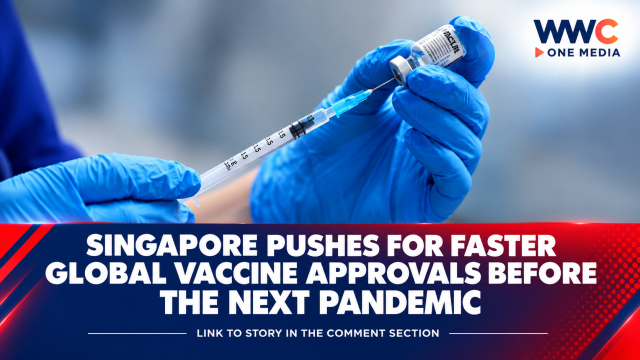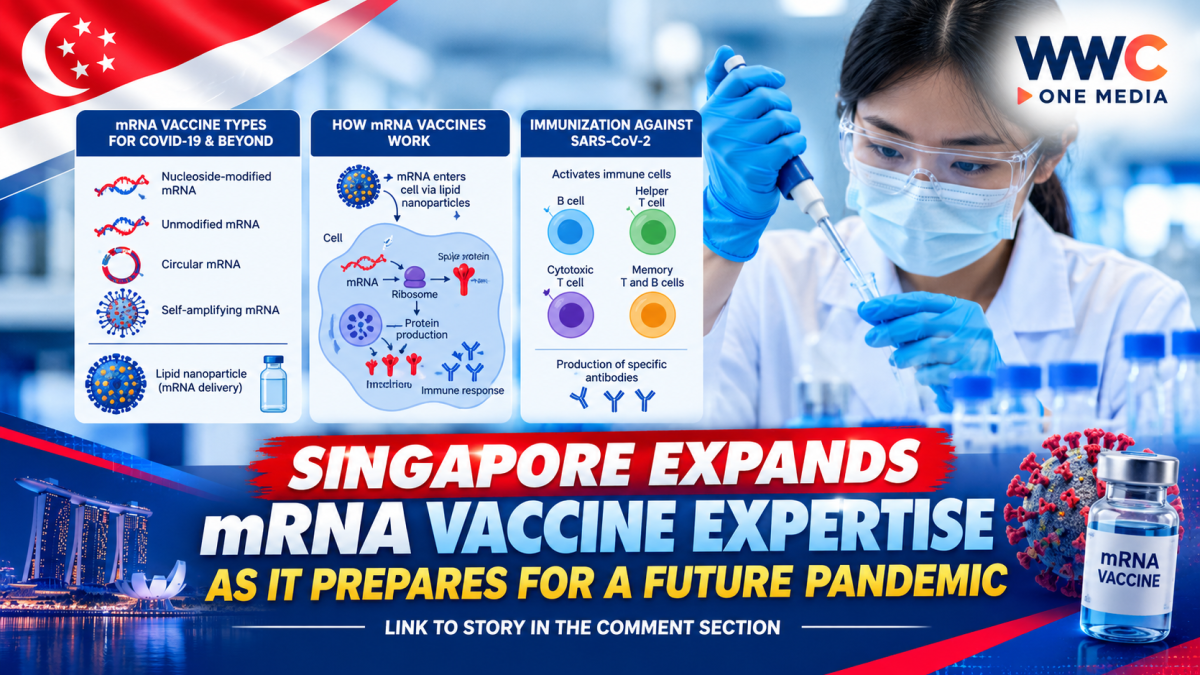
SINGAPORE — Singapore is strengthening its mRNA vaccine capabilities as part of a broader effort to prepare for future infectious-disease emergencies, including the hypothetical threat known as “Disease X.”
The initiative builds on lessons from COVID-19, when the rapid development of mRNA vaccines demonstrated the technology’s potential while global shortages exposed the importance of manufacturing capacity and resilient supply chains.
Health Minister Ong Ye Kung said Singapore is aligning its domestic vaccine research and development with the Coalition for Epidemic Preparedness Innovations (CEPI) 100 Days Mission, which aims to develop safe and effective vaccines within 100 days of identifying a new pandemic threat.
Singapore Targets Coronavirus Vaccine Technology
Rather than attempting to develop a vaccine against a specific unknown disease, Singapore is focusing its research on coronaviruses and flexible vaccine platforms that could be adapted when a new pathogen emerges.
Ong said Singapore’s experience with SARS and COVID-19 makes coronavirus vaccine research an area where the country can contribute to international preparedness efforts.
The strategy is part of a wider international effort to prepare vaccine technologies and prototype solutions before a pandemic begins.
CEPI describes Disease X as a hypothetical future pathogen and is developing a vaccine library containing information about high-risk viral families, together with tools intended to accelerate vaccine design when a new threat emerges.
Singapore Is Building Manufacturing Capacity Too
Research alone will not be enough if a pandemic occurs.
Singapore has been attracting multinational pharmaceutical companies to establish vaccine manufacturing capabilities on the island. The government has described these facilities as “warm” manufacturing hubs—facilities that operate during normal periods but can potentially pivot and scale up vaccine production during a health emergency.
The country’s existing vaccine ecosystem includes capabilities involving mRNA, recombinant-protein platforms and fill-and-finish operations. Much of the capacity is intended to serve Singapore as well as regional and international markets.
Sanofi’s vaccine facility in Tuas, for example, was designed to be highly flexible, allowing multiple vaccine types to be produced and enabling the facility to switch production according to demand.
The Goal: Move Faster When a New Threat Appears
One of the biggest lessons from COVID-19 was that vaccine development cannot begin from scratch after a pandemic is already underway.
CEPI’s 100 Days Mission is designed around shortening the time between identification of a pandemic threat and availability of a vaccine. Singapore is participating through research collaborations, technical exchanges and domestic R&D efforts.
The country is also working on the regulatory side.
Singapore’s Health Sciences Authority previously used the Pandemic Special Access Route (PSAR) during COVID-19 to allow timely access to emergency vaccines and therapeutics while continuing to assess quality, safety and efficacy. HSA says the route is no longer accepting new applications now that COVID-19 has moved toward an endemic pattern.
Ong has proposed broader cooperation among trusted national regulators so that countries can share assessments and reduce duplicated work during a future pandemic. Individual jurisdictions would still make their own regulatory decisions.
Disease X Does Not Mean a New Outbreak Is Underway
The term Disease X can sound alarming, but it does not refer to a specific virus currently circulating.
CEPI and the WHO use it as a preparedness concept for an unknown pathogen that could potentially cause a future epidemic or pandemic. The purpose is to encourage scientists and governments to prepare vaccine platforms, surveillance systems and manufacturing capacity before such a pathogen emerges.
Singapore is also strengthening disease surveillance and regional cooperation. The Ministry of Health says existing ASEAN mechanisms allow countries to share communicable-disease intelligence, while Singapore’s National Public Health Laboratory maintains relationships with laboratories across the region.
From COVID-19 Lessons to Future Pandemic Preparedness
Singapore’s approach therefore goes beyond developing a single new vaccine.
It combines pathogen surveillance, vaccine research, manufacturing capacity and regulatory preparedness—four areas the health minister has identified as important components of pandemic readiness.
The strategy also reflects the reality that Singapore cannot independently develop every vaccine needed for an unknown future pathogen. Instead, the country is positioning itself as one part of a larger international network of researchers, manufacturers and regulators.
The objective is straightforward: when the next major infectious-disease threat emerges, scientists and manufacturers should already have much of the infrastructure and expertise needed to respond.
WWC ONE MEDIA G,A