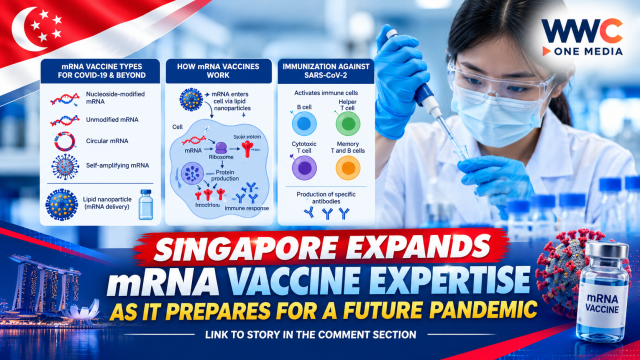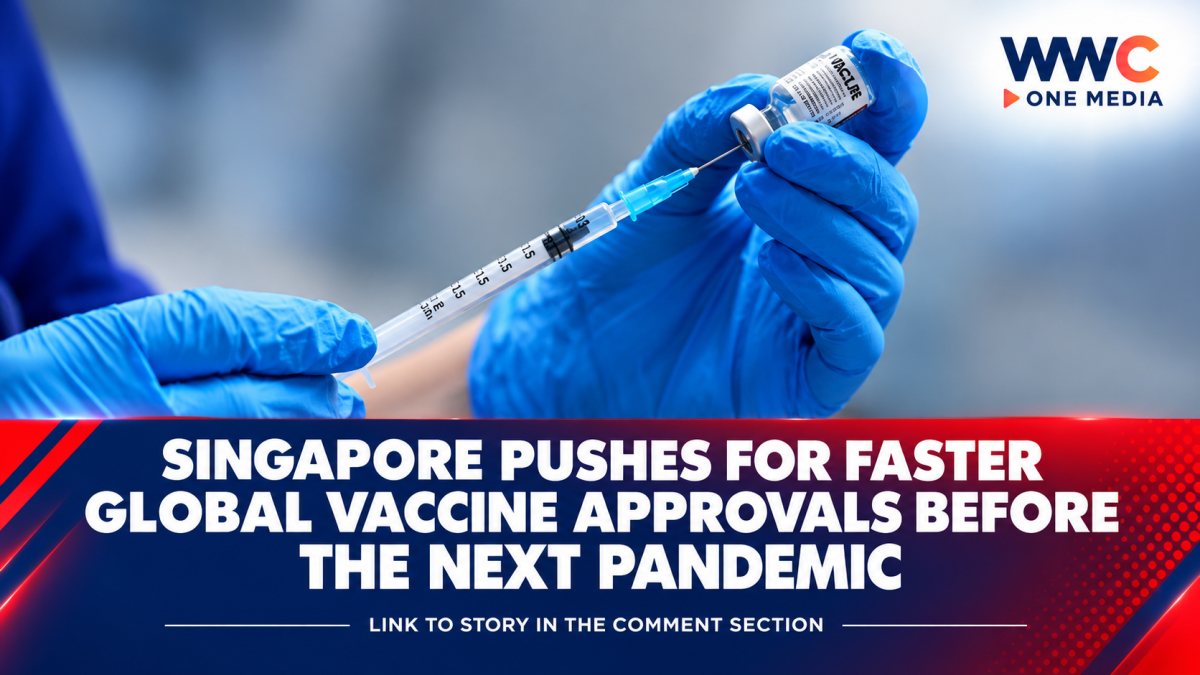
SINGAPORE — Singapore is urging the international community to strengthen the way vaccines are reviewed and approved during global health emergencies, with Health Minister Ong Ye Kung calling for a network of trusted regulators that could help the World Health Organization (WHO) accelerate access to new vaccines.
Ong’s proposal comes as governments continue to examine lessons from the COVID-19 pandemic, when the speed of vaccine development was accompanied by major challenges involving regulatory capacity, manufacturing and unequal access.
Speaking at the United Nations General Assembly High-Level Meeting on Pandemic Prevention, Preparedness and Response in New York, Ong has highlighted the need for countries to prepare regulatory systems before another pandemic emerges. Singapore’s Ministry of Health confirmed that he is attending the September 23–25 meeting and will co-chair a multistakeholder panel on strengthening pandemic-preparedness capacity and financing.
A Global Regulatory Network Could Help Cut Delays
The proposal builds on Singapore’s experience during COVID-19.
Ong previously explained that Singapore used its Pandemic Special Access Route (PSAR) to assess vaccines and other emergency medical products when complete data might not yet have been available. The approach allowed regulators to make decisions using the best available evidence while continuing to collect additional safety, quality and efficacy data.
Singapore is now advocating for the principles behind that system to be used more broadly.
Rather than relying on a single regulator to carry the entire burden of reviewing a vaccine during a crisis, Singapore has proposed a network of trusted national regulatory authorities that could share assessments and rely on one another’s work.
The WHO’s existing prequalification system would remain part of the broader framework.
Ong stressed that individual countries would still make their own regulatory decisions. The purpose of greater cooperation would be to reduce duplicated work and help regulators reach decisions more quickly when time is critical.
Why Speed Matters During a Pandemic
During a fast-moving outbreak, vaccine development can progress rapidly, but regulatory review still requires evidence about a product’s quality, safety and effectiveness.
Singapore’s experience showed how difficult that balance can become during an emergency.
The country’s HSA says PSAR provides regulatory flexibility for serious public-health emergencies while maintaining scientific assessment of quality, safety and efficacy. Products granted interim authorization are expected to generate continuing data that can support eventual full registration.
Singapore’s Health Sciences Authority has also reached the WHO’s highest maturity level for medicines regulation and was subsequently listed as a WHO-Listed Authority, reflecting the regulator’s established regulatory capabilities.
Singapore Also Wants More Vaccine Manufacturing Capacity
Regulatory approval is only one part of the problem.
Ong has also pointed to vaccine manufacturing as a major lesson from COVID-19. During the pandemic, shortages and export restrictions contributed to unequal access, particularly when demand surged worldwide.
Singapore’s approach is to support so-called “warm” manufacturing capacity—facilities that produce medicines during normal periods but can be adapted and expanded for vaccine production during a pandemic.
Singapore has attracted investments involving technologies including mRNA and recombinant-protein vaccines, as well as fill-and-finish capabilities. The government says the country’s small domestic market means much of this capacity is intended to support the wider region.
The 100-Day Vaccine Goal
The effort also connects with the Coalition for Epidemic Preparedness Innovations (CEPI)’s 100 Days Mission, which seeks to develop safe and effective vaccines against a newly identified pandemic threat within 100 days.
Singapore says its scientists are aligning domestic vaccine research with this international effort, with a particular focus on coronavirus vaccines based on the country’s experience with SARS and COVID-19.
The strategy is designed around a simple principle: the world should not have to build every part of a pandemic response from scratch after an outbreak has already begun.
Preparing Before the Next Crisis
Ong has repeatedly warned that the end of COVID-19 does not mean the end of pandemic risk.
At a May 2026 WHO-related event in Geneva, he said infectious-disease threats continue to emerge and argued that countries need stronger systems for surveillance, vaccine development, regulatory approval and manufacturing.
The September UN meeting places those issues back at the center of international discussions.
For Singapore, the objective is not simply to approve vaccines faster. It is to establish trusted international systems before the next emergency, so that regulators can cooperate, manufacturers can scale up and countries can make decisions without starting from zero.
The outcome of those efforts could determine how quickly the world responds when the next major infectious-disease threat emerges.
WWC ONE MEDIA G,A