Borrowing rates on Philippine government securities could move higher this week as investors adjust to elevated inflation risks, global interest-rate uncertainty and the government’s upcoming retail Treasury bond offering.
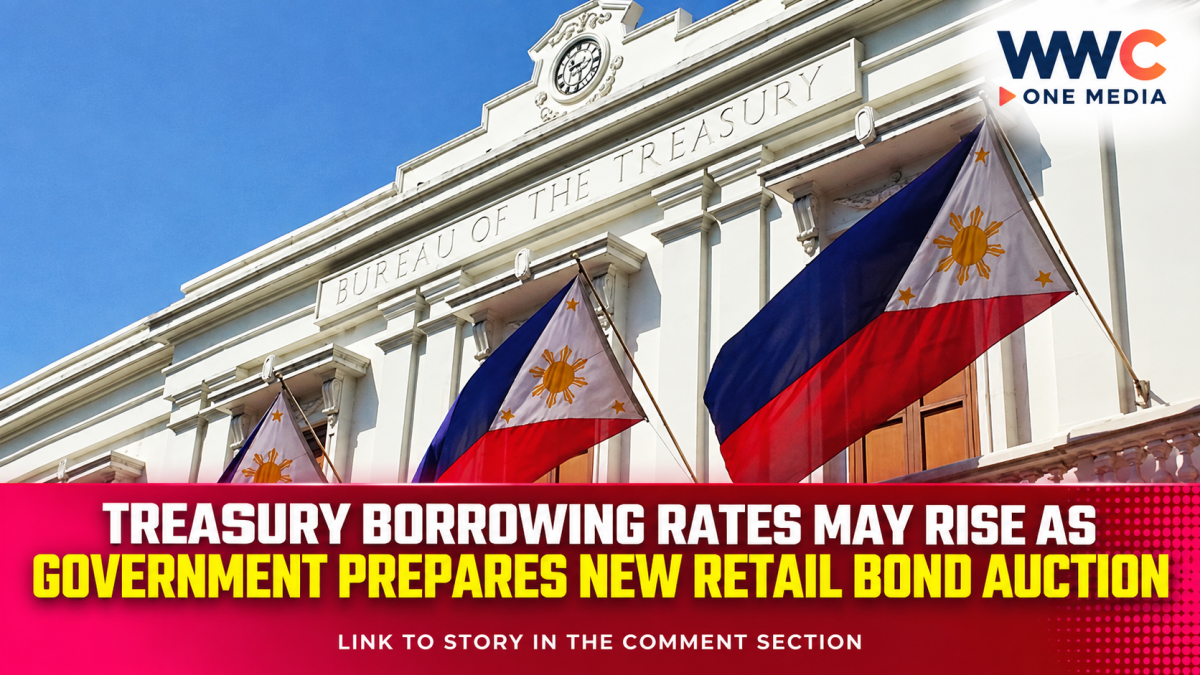
The Bureau of the Treasury is preparing to offer a new batch of peso-denominated retail Treasury bonds beginning Sept. 29, with market participants watching closely for the rates the government will need to offer to attract investors. The planned issue will have a 2.5-year tenor and will be offered until Oct. 7.
The expected increase in yields comes after the Bangko Sentral ng Pilipinas kept monetary conditions relatively tight. The BSP’s Target Reverse Repurchase Rate stood at 5% following its Sept. 24 policy decision, while other market rates have also remained elevated.
Recent Treasury data show how borrowing costs have moved across different maturities. The weighted average rate on 91-day Treasury bills reached 5.431% at the Sept. 21 auction, while the latest government bond data showed yields above 7% for several longer-term maturities.
The upcoming retail bond sale is also being launched against a different funding environment from last year’s offering. The Treasury has indicated that it plans to raise significantly less through the latest RTB sale than it did from the previous tranche, when the government raised about ₱507.16 billion.
The smaller planned borrowing requirement reflects the government’s broader financing options for the remainder of the year. Officials have indicated that the Treasury may also consider other sources of funding, including the retail dollar bond market, rather than relying entirely on peso-denominated retail bonds.
For investors, the key issue will be the coupon rate attached to the new RTBs. The government must balance its need to secure funding at reasonable costs with the returns required by investors who can choose among government securities, bank deposits and other fixed-income instruments.
Market interest rates are also being influenced by expectations for global monetary policy. Movements in US Treasury yields and expectations for Federal Reserve policy can affect Philippine bond yields because investors compare returns across markets and currencies.
The peso is another factor. A weaker Philippine currency can add to inflationary pressure through more expensive imported goods, while higher oil prices can further complicate the domestic inflation outlook. Those developments can influence expectations for both BSP policy and local fixed-income rates.
Higher government borrowing costs can have implications beyond the bond market. When yields rise, the cost of servicing new government debt can increase, potentially affecting future budget planning and the Treasury’s overall debt-management strategy.
At the same time, higher yields can make government securities more attractive to investors seeking relatively predictable income. Retail Treasury bonds are designed to broaden public participation in government borrowing by allowing individual investors to lend directly to the government through relatively accessible fixed-income instruments.
The Treasury’s decision to scale back the size of the upcoming RTB offering is therefore significant. Rather than maximizing the amount raised through the retail market, the government is balancing the cost of borrowing with other available financing channels.
The latest Treasury auction results also show that investors remain attentive to movements in market yields. The Bureau of the Treasury continues to publish regular auction results as it manages the government’s domestic borrowing program.
With the retail bond offering set to begin this week, attention will turn to the final coupon rate and investor demand. The outcome will provide another indication of how much the government currently needs to pay to attract domestic savings amid elevated interest rates and uncertain global financial conditions.
The bigger issue for the Philippine debt market is whether borrowing costs will remain elevated or begin easing as inflation, monetary policy and global interest-rate expectations change — factors that will shape both the government’s financing costs and returns available to Filipino fixed-income investors.