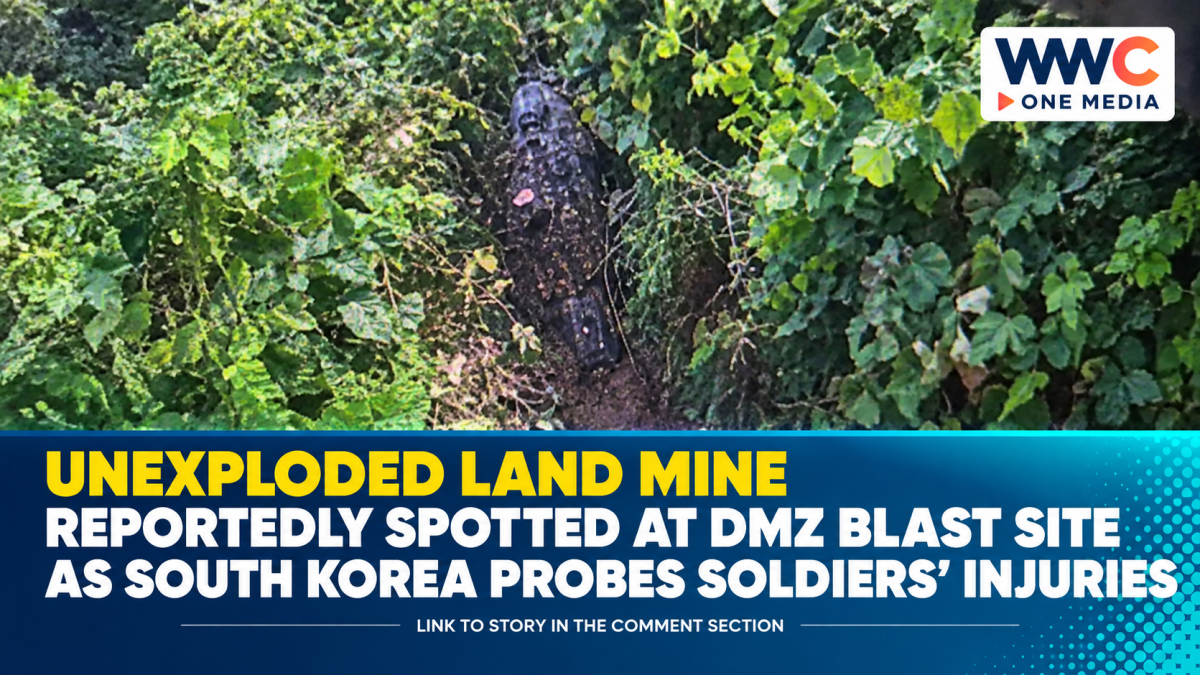
A new development has emerged in South Korea’s investigation into last week’s DMZ explosion, after soldiers reportedly said they saw another land mine that had not detonated near the blast site.
The testimony could provide important evidence as South Korean authorities and the United Nations Command (UNC) work to determine what caused the explosion that seriously injured two soldiers and left another with minor injuries. However, authorities have stressed that the mine’s type and origin have not yet been confirmed.
Unexploded Mine Could Become Key Evidence
Military sources said initial statements from soldiers involved in the incident indicated that an additional unexploded mine was visible at the site.
Recovering and examining the suspected mine could help investigators determine what happened during the Sept. 21 incident and potentially identify the type and origin of the explosive device.
Defense Minister Kang Shin-chul said the available testimonies are not sufficient to identify the exact type of mine and that officials will provide more information after the site investigation verifies the details.
That means the latest testimony is an investigative lead, rather than confirmation that a North Korean mine caused the blast.
Two Soldiers Seriously Injured
The original explosion occurred south of the Military Demarcation Line (MDL) inside the DMZ while South Korean troops were conducting a route-clearance operation.
Three soldiers were injured. Two suffered serious injuries, while a third sustained a minor injury. Earlier military reporting said the troops were clearing a route ahead of an inspection involving the UNC.
The military has been examining fragments and other evidence recovered after the incident.
The National Forensic Service is analyzing mine fragments and explosive residue collected from equipment associated with the injured soldiers.
Investigation Faces Another Dangerous Obstacle
South Korean forces and the UNC conducted a joint investigation on Sept. 27, but investigators were unable to reach the exact location of the blast.
A team of about 40 personnel reached the vicinity after conducting route-clearance work and using mine detectors, but the operation was halted before the actual blast site could be reached because of the continuing risk posed by unidentified mines and personnel fatigue.
The investigation is expected to continue once authorities can safely access the area.
Was It a North Korean Mine?
That remains one of the central questions.
South Korean authorities have previously said they are considering multiple possibilities, including whether a mine potentially planted by North Korean forces caused the explosion. Military officials have not made a definitive attribution.
Some military experts have suggested a North Korean origin could be possible based on the circumstances and injuries, but physical evidence is still needed to establish the mine’s origin.
If investigators eventually establish that a mine was deliberately planted across the MDL, the finding could carry implications under the Korean Armistice framework. But that conclusion cannot be drawn until the investigation establishes the facts.
Forensic Results Could Provide the Next Major Clue
The forensic examination of fragments, explosive residue and other evidence could become crucial to the investigation.
Officials are expected to compare the physical evidence with the soldiers’ accounts and findings from the eventual on-site inspection.
For now, the reported presence of another unexploded mine adds a significant new element to an already difficult investigation.
The key question now is whether investigators can safely reach the site — and whether the evidence there can finally reveal what caused the DMZ blast.
WWC ONE MEDIA G,A