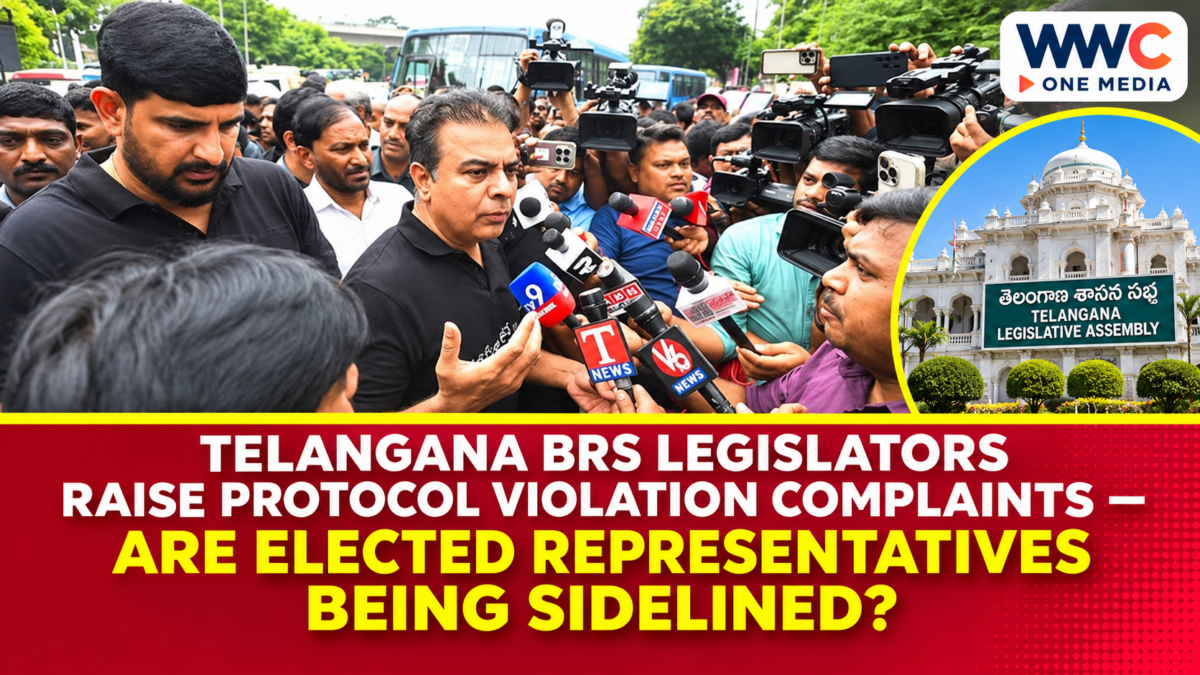
HYDERABAD, India — November 28, 2026 — A reported complaint by Bharat Rashtra Samithi (BRS) legislators concerning alleged protocol violations at government programmes has brought renewed attention to the relationship between elected representatives and public administrators in Telangana.
The reported Telangana protocol violations concern the treatment of legislators during official government functions and their participation in activities within their respective constituencies.
Telangana Chief Secretary Sanjay Jaju, an officer of the Indian Administrative Service, occupies a senior administrative position within the state government.
The original complaint and the administration’s formal response remain necessary to establish the precise circumstances surrounding the dispute.
Telangana Protocol Violations Raise Questions About Legislative Representation
The controversy centres on the distinction between political affiliation and the official responsibilities associated with elected public office.
Government programmes can bring together elected representatives, administrative officials, community organisations and other invited participants.
Questions concerning invitations, ceremonial arrangements and official participation must be assessed against the administrative instructions applicable to each event.
However, a disagreement over ceremonial arrangements does not automatically establish that a law has been violated.
Determining whether misconduct occurred requires examining the relevant government orders, event documentation and responsibilities of the officials involved.
The broader importance of elected representation also features in discussions surrounding India’s parliamentary delimitation and legislative representation debate.
Although the national delimitation debate and Telangana’s reported protocol dispute concern different issues, both involve questions about the institutional role of elected representatives.
What Do Telangana’s Official Protocol Guidelines Say?
The Telangana government distinguishes ceremonial precedence from the ordinary administrative functioning of government.
India’s Order of Precedence establishes a hierarchy of designated public offices and officials for ceremonial purposes.
The framework is established through the Office of the President of India and maintained by the Ministry of Home Affairs.
However, the Telangana government’s published explanation clarifies that ceremonial precedence does not independently carry legal standing or determine the everyday functioning of the national government.
This distinction is important when examining complaints involving seating arrangements, invitations and participation in official functions.
The specific obligations of organisers must be determined through the administrative rules and instructions applicable to the event concerned.
A complete assessment of the reported BRS complaint would therefore require identifying the particular government programmes involved and the official requirements governing those programmes.
Why Government Functions Require Administrative Clarity
Public functions and government development programmes can involve individuals with different institutional responsibilities.
Elected legislators represent their constituencies, while administrative officials undertake responsibilities assigned through the government structure.
Political party representatives may also attend public events, although their attendance does not automatically confer administrative authority.
The presence of a political figure at an official programme is not, by itself, sufficient evidence of improper conduct.
Relevant questions include whether applicable procedures were followed, whether elected representatives received appropriate notification and whether any individual exercised authority without lawful authorisation.
These issues must be considered separately rather than treated as interchangeable allegations.
Clear documentation of official invitations, responsibilities and administrative decisions could help establish whether established procedures were followed.
The Distinction Between a Political Complaint and an Established Violation
A complaint represents a request for an issue to be examined. It does not constitute a final administrative or judicial finding.
In the Telangana dispute, the original written representation would provide the most reliable basis for establishing the specific allegations, the individuals concerned and the corrective measures requested.
The government’s response would also be necessary to understand whether officials dispute the allegations, acknowledge procedural shortcomings or intend to initiate further examination.
Without both elements, it would be premature to conclude that government officials deliberately excluded elected legislators or acted under partisan instructions.
Political leadership and institutional responsibilities remain important subjects across India’s states, including the questions surrounding the BJP’s unresolved leadership arrangements ahead of the Uttar Pradesh Assembly election.
The Uttar Pradesh leadership issue is separate from the reported Telangana complaint, but it provides additional context on the distinction between political party positions and public office.
Legislative Institutions Remain Central to Public Accountability
Questions concerning the treatment of elected representatives extend beyond ceremonial arrangements.
Public accountability requires clarity about how decisions are made, which officials are responsible for implementing them and how elected representatives can communicate constituency concerns.
Administrative transparency can help distinguish legitimate procedural disagreements from allegations of political interference.
Written government instructions, official correspondence and properly documented decisions provide a stronger basis for resolving disputes than competing political accusations alone.
The wider functioning of India’s legislative institutions is also examined in WWC ONE MEDIA’s coverage of the reopening of India’s Parliament and its unresolved legislative agenda.
While Parliament and state legislative assemblies operate at different levels of government, both form part of India’s representative institutional structure.
What Happens Next in the Telangana Protocol Dispute?
The most important documents for establishing the circumstances of the reported dispute are the original BRS representation, the applicable government protocol instructions and any formal response issued by the Telangana administration.
These records could clarify whether the complaint concerns ceremonial precedence, exclusion from official programmes, administrative authority or several separate issues.
They could also establish whether any formal investigation or corrective action has been initiated.
Until such documentation becomes available, allegations of deliberate political discrimination or official misconduct should not be presented as established facts.
The central question remains whether the arrangements governing official public functions adequately recognise the responsibilities of elected representatives while maintaining lawful administrative procedures.
Frequently Asked Questions
What are the reported Telangana protocol violations?
The reported dispute concerns complaints by BRS legislators about their treatment and participation during official government programmes. The precise allegations await primary-record confirmation.
Who is Telangana’s chief secretary?
Sanjay Jaju, an Indian Administrative Service officer, is identified as chief secretary in Telangana’s official government directory.
What does BRS stand for?
BRS stands for Bharat Rashtra Samithi, a political party operating in India.
Does India’s Order of Precedence determine everyday government authority?
No. It establishes ceremonial precedence and does not independently determine the everyday administrative functioning of government.
Have the alleged Telangana protocol violations been officially established?
No authenticated administrative finding establishing the reported violations has been obtained for this article.