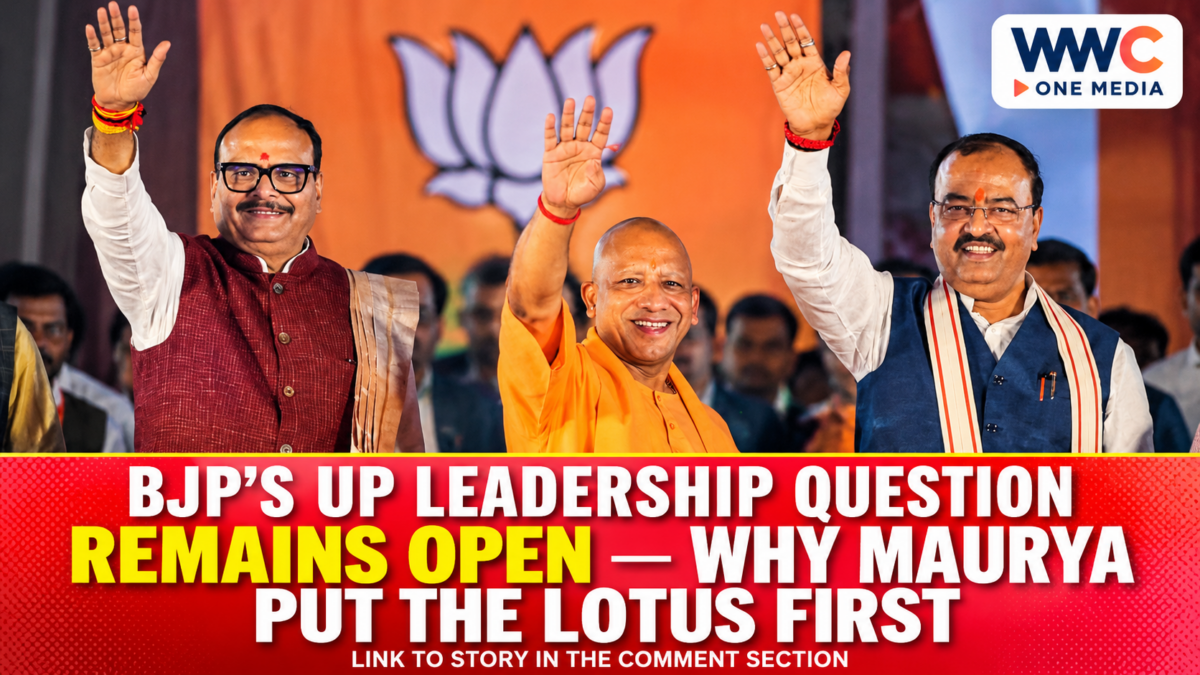
LUCKNOW, India — November 26, 2026 — Uttar Pradesh Deputy Chief Minister Keshav Prasad Maurya said the Bharatiya Janata Party’s next chief minister in the state would be chosen after the 2027 Assembly election by the legislators elected at that time. His remarks leave the question of whether incumbent Chief Minister Yogi Adityanath will continue in office unresolved in the public position he described.
The comments put attention on two different decisions in an election campaign: the symbol under which a party contests and the person who eventually leads the government. For the BJP, those questions are connected politically, but they are not the same decision under India’s election framework.
Maurya made the remarks during a public exchange in Jaunpur on November 25. He described the lotus as the BJP’s election face and said newly elected legislators would meet after the polls, with central observers present, before deciding who would lead the government.
BJP UP leadership: The symbol is settled, the leader is not
The Election Commission of India’s Election Symbols (Reservation and Allotment) Order, 1968, provides the formal framework for reserved and free election symbols. It states that a reserved symbol is set aside for a recognised political party and is allotted to candidates set up by that party under the order.
The Commission’s published list of symbols identifies the lotus as the symbol reserved for the Bharatiya Janata Party. That gives the lotus a defined electoral role: it identifies the party’s candidates on the ballot. It does not, by itself, identify the party’s candidate for chief minister.
That distinction is central to understanding Maurya’s remarks. A party symbol is an election identifier governed by the Election Commission’s rules. The choice of a legislative party leader is a separate political and organisational decision.
In practical terms, voters can recognise the party through its symbol while the party’s internal leadership choice remains open until after the election. The two processes operate on different tracks.
Maurya leaves the Yogi question to elected legislators
Maurya said the next chief minister could be Adityanath or another person, adding that the decision would belong to the MLAs elected in 2027. He also said he supports Adityanath, who currently holds the chief minister’s office.
The statement is significant because it does not announce a change in leadership or a formal decision to replace the incumbent. It describes a process that Maurya says will take place after the election, when the composition of the next legislative party is known.
That qualification matters. A statement that legislators will choose their leader is not the same as a party announcement that a particular leader has been ruled out. Nor does it confirm that Adityanath has already been formally selected as the party’s chief ministerial candidate for the next state election.
The distinction prevents two common misreadings: treating Maurya’s remarks as a direct challenge to the incumbent, or presenting them as confirmation that Adityanath will automatically continue.
What the Election Commission’s rules actually establish
The Election Symbols Order explains how recognised parties use reserved symbols. Under paragraph 8, candidates set up by a national party are to choose and receive the symbol reserved for that party, subject to the order’s provisions.
The rule concerns candidate identification and the administration of elections. It does not prescribe how a political party must choose its chief ministerial candidate, nor does it establish that the person associated most closely with a party’s campaign must become chief minister if the party wins.
That is why the lotus can be the BJP’s official election symbol without resolving the leadership question Maurya was asked about.
The legal framework also helps separate campaign messaging from government formation. The Election Commission administers elections and symbol allotment; political parties organise their legislative leadership through their own internal processes and the constitutional process that follows an election.
For readers following Indian political developments, WWC has also examined how the BJP and Shiromani Akali Dal are positioning themselves for Punjab’s 2027 Assembly election. That alliance is a separate state-level contest, but it illustrates how party identity, election strategy and leadership arrangements can shape preparations well before polling.
Why the timing matters ahead of 2027
The leadership question matters because Uttar Pradesh is a major political battleground, and the BJP’s campaign will have to communicate both its record in government and its plan for another term.
An incumbent chief minister offers continuity and a recognisable public profile. A party-led campaign that emphasises its symbol and organisation can instead present the election as a collective contest rather than a referendum on one individual.
Those are possible political effects, not confirmed explanations of Maurya’s motives. His recorded remarks establish what he said about the symbol and the post-election process; they do not establish an internal dispute or a final campaign strategy.
The distinction is important in a political environment where individual statements can quickly be interpreted as signs of factional conflict. Without a formal party decision or direct confirmation from the BJP’s authorised leadership, claims about a settled succession plan would go beyond the available record.
The broader electoral context also includes questions about voter registration and participation. WWC’s earlier coverage of India’s voter-list revision and the opposition’s demands for electoral transparency explored how election administration can become a central political issue. The leadership question in Uttar Pradesh is different, but both developments show why voters need clear distinctions between official election rules, party claims and political interpretation.
The BJP’s internal process will face its real test after the vote
Maurya’s description places elected MLAs at the centre of the post-election leadership decision, with central observers present during their meeting. The process he described would take place after the results, rather than through a definitive public announcement now.
That leaves several questions unanswered. The party has not, in the records reviewed for this report, published a formal resolution naming its chief ministerial candidate for the 2027 Uttar Pradesh election. Nor has a formal document been located that sets out the detailed procedure Maurya described for the next leadership selection.
The absence of such a document does not invalidate his public statement. It means the statement should be reported as his description of the party’s intended process, not as a published party resolution or a completed selection.
WWC’s coverage of Japan’s Sanseito building its local election organisation ahead of 2027 polls has also considered how parties prepare their structures before an election. Across different political systems, campaign organisation and the selection of leaders are related questions, but they should not be treated as interchangeable.
What happens next
The next meaningful evidence will come from formal BJP announcements, candidate-selection decisions and any official communication clarifying how the party intends to approach the Uttar Pradesh election.
The election result will determine the composition of the next Assembly. Only after that will the identity of the legislators and the party’s leadership decision become clear under the process Maurya described.
Until then, the most accurate reading is limited but important: the lotus is the BJP’s reserved election symbol, while the party’s next chief ministerial choice for Uttar Pradesh has not been formally settled in the records reviewed here.
Frequently asked questions
Who will decide the BJP’s next chief minister in Uttar Pradesh?
Maurya said the MLAs elected after the 2027 Assembly election would decide who leads the government, with central observers present during their meeting.
Has the BJP confirmed Yogi Adityanath as its 2027 chief ministerial candidate?
No formal party resolution confirming that choice was located in the records reviewed for this report. Adityanath remains the current chief minister.
What is the BJP’s official election symbol?
The Election Commission’s published symbol list identifies the lotus as the symbol reserved for the Bharatiya Janata Party.
Does the lotus symbol mean Yogi Adityanath will automatically remain chief minister?
No. The symbol identifies the party’s candidates on the ballot. It does not determine who will become chief minister after the election.
When will the BJP decide its next Uttar Pradesh chief minister?
Maurya said the decision would be made after the 2027 Assembly election by the elected legislators. The final choice remains pending.