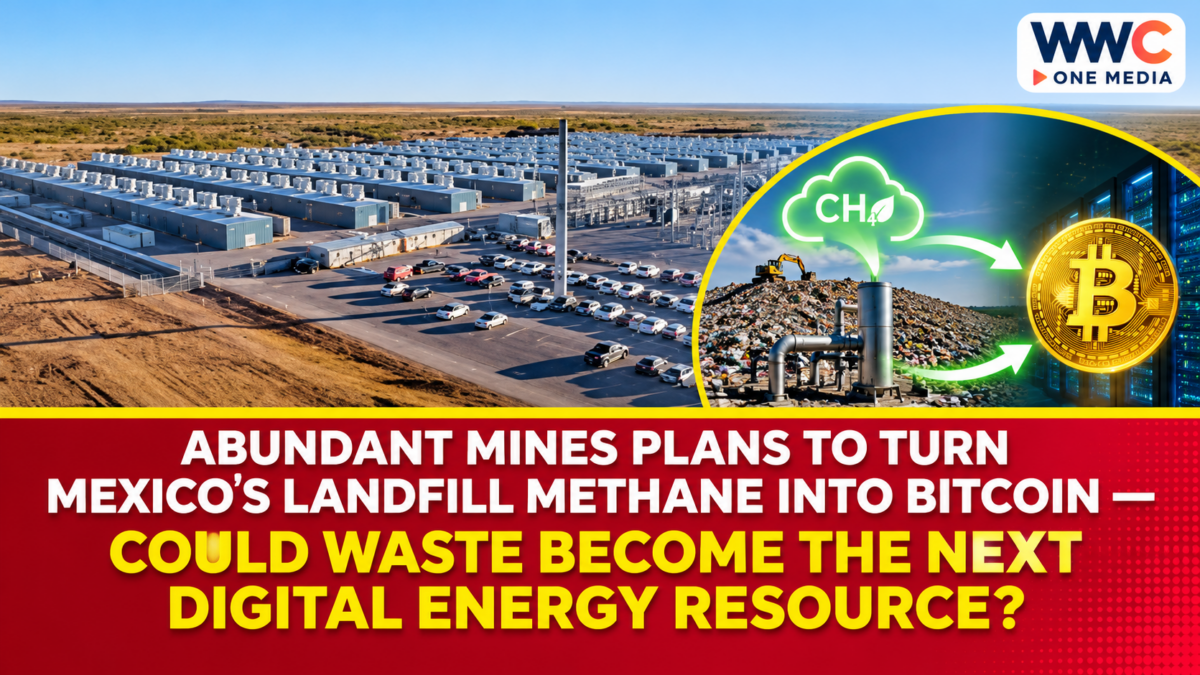
MEXICO CITY, MEXICO — Bitcoin mining company Abundant Mines is developing a project near Mexico City that would convert methane released by decomposing landfill waste into electricity for cryptocurrency mining equipment.
In an announcement on Nov. 25, 2026, Beau Turner outlined plans for an initial two-megawatt facility with the potential to expand to eight megawatts, in collaboration with CH4 Capital and Kardashev BTC.
The landfill Bitcoin mining project aims to establish a commercial application for gas that would otherwise escape into the atmosphere.
However, differences in the development partners’ capacity estimates and the absence of independently verified operating results highlight the challenges of transforming environmental ambitions into commercially sustainable infrastructure.
Landfill Bitcoin Mining Targets Mexico’s Waste Management Challenges
The proposed development is located at Relleno Sanitario Chicoloapan in the State of Mexico, a landfill operated by Grupo Contadero.
The project would collect gas released during the decomposition of organic waste and process it for electricity generation.
Instead of transporting the gas to external customers or supplying electricity through the national grid, the proposed facility would consume the electricity directly through specialised Bitcoin mining equipment.
The development represents an alternative approach to connecting electricity generation with digital infrastructure.
Similar considerations are emerging across Asia-Pacific, including MGEN and VITRO’s proposed renewable-powered data centre development.
Although artificial intelligence data centres and cryptocurrency mining facilities have different computing requirements, both require dependable electricity and commercially viable energy arrangements.
For Abundant Mines, the proposed Mexican facility seeks to establish those arrangements directly at the source of the available fuel.
Project Partners Publish Different Capacity Estimates
Abundant Mines has announced an initial generating capacity of two megawatts, with potential expansion to eight megawatts.
However, project financing partner CH4 Capital identifies a four-megawatt first phase and estimates that the landfill could support between eight and 10 megawatts of total generating capacity.
The difference remains unresolved in the publicly available project announcements.
These figures represent development plans and estimated energy potential rather than verified electricity output.
The ultimate capacity will depend on engineering assessments, gas availability, equipment performance and the amount of capital committed to the project.
The development also illustrates why announced power capacity should not be confused with completed infrastructure or commercial electricity generation.
Abundant Mines Targets 7.9 Million Pounds of Methane Annually
Abundant Mines estimates that its proposed two-megawatt facility could destroy approximately 7.9 million pounds of methane annually.
That is equivalent to approximately 3,583 metric tonnes of methane.
The company’s estimate remains conditional on site assessments and actual gas collection volumes.
Methane is a powerful greenhouse gas released when organic material decomposes under oxygen-limited conditions.
Capturing and combusting landfill methane converts it primarily into carbon dioxide and water, reducing the warming impact compared with allowing the same methane to escape untreated.
However, combustion still produces emissions, including pollutants that can affect local air quality.
The environmental performance of the project will therefore depend on effective gas collection, combustion efficiency, equipment maintenance and appropriate emissions controls.
The company’s projected methane destruction figure should not be interpreted as independently verified emissions reductions or evidence that the proposed facility is already carbon-negative.
Could Bitcoin Mining Finance Methane Capture?
The project seeks to address a commercial problem associated with landfill gas recovery: identifying a dependable user for the energy produced.
CH4 Capital’s proposed operating model combines electricity consumption by Bitcoin miners with equipment financing and potential revenue from carbon credits.
The financing company intends to generate income from equipment financing and carbon credits, while the mining operator retains the cryptocurrency produced.
The arrangement also incorporates continuous gas measurement and backup flaring to manage captured methane when electricity generators are unavailable.
However, carbon credit revenue depends on satisfying applicable methodologies, verification requirements and market conditions.
No confirmed volume of independently certified carbon credits has been established for the Mexican facility.
The commercial model must also withstand changes in Bitcoin prices, equipment expenses and electricity generation costs.
These risks are illustrated by American Bitcoin’s reported mining margin pressures and rising electricity expenses.
Access to an alternative electricity source does not automatically guarantee profitable cryptocurrency production.
Abundant Mines Will Own the Initial Mining Equipment
Abundant Mines has stated that the mining equipment installed during the Mexican project’s initial phase will be owned and operated by the company.
Customer-owned mining machines will not initially be hosted at the site.
The company intends to use the additional computing capacity to support its Hashrate Redirect programme, which reallocates processing capacity from company-owned equipment during qualifying interruptions affecting hosted customer machines.
This arrangement represents an additional commercial objective beyond generating cryptocurrency at the Mexican facility.
However, its effectiveness will depend on the availability and reliability of the new computing infrastructure.
The challenges associated with securing reliable power are also evident in CATL’s expansion into battery and energy-management applications for AI data centres.
Different computing facilities may require different energy solutions, but dependable operations remain an important consideration across the digital infrastructure industry.
Waste-to-Energy Opportunities Extend Beyond Mexico
The proposed Mexican facility could provide another example of how waste management and electricity generation might be combined with commercial technology applications.
CH4 Capital has identified Chicoloapan as its first financed project and outlined ambitions to pursue additional landfill developments elsewhere in Mexico and Latin America.
Similar interest in waste-derived energy is emerging across Asia-Pacific, including Indonesia’s proposed US$400-million Legok Nangka waste-to-energy development.
However, conventional waste-to-energy plants and landfill methane recovery systems employ different technologies and should not be treated as interchangeable.
The appropriate solution for an individual landfill will depend on its waste characteristics, gas production, local electricity requirements and environmental regulations.
Bitcoin mining is only one possible commercial application for recovered landfill gas. Other options include grid-connected electricity generation, industrial fuel applications and renewable natural gas production.
What Happens Next for Abundant Mines?
The most important developments will be confirmation of the project’s final generating capacity, construction progress, regulatory authorisations and commissioning schedule.
Independent measurements of methane collection and destruction will also be necessary to assess its actual environmental performance.
The reviewed public announcements have not established a final construction budget, confirmed commercial opening date or independently verified project profitability.
For businesses across APEC economies, the Mexican development presents an interesting intersection between environmental infrastructure and digital computing.
Its ultimate significance will depend not on the amount of Bitcoin it promises to produce, but on whether the facility can operate reliably, manage emissions responsibly and sustain its commercial model.
Frequently Asked Questions
What is Abundant Mines’ Mexico Bitcoin mining project?
It is a proposed facility in Chicoloapan, near Mexico City, designed to generate electricity from captured landfill gas and use that electricity for Bitcoin mining.
How large will the landfill Bitcoin mining facility be?
Abundant Mines announced an initial capacity of two megawatts with potential expansion to eight megawatts. CH4 Capital separately identifies a four-megawatt first phase and eight to 10 megawatts of total site potential.
How much methane could the project destroy?
Abundant Mines estimates approximately 7.9 million pounds of methane annually for its proposed two-megawatt facility. This remains a modelled projection.
Is landfill-powered Bitcoin mining carbon-free?
No. Methane recovery can reduce greenhouse gas emissions compared with uncontrolled venting, but electricity generation through combustion still produces emissions.
Is the Mexican Bitcoin mining facility already operational?
Commercial operations have not been independently established through the reviewed project announcements. Construction, commissioning and environmental performance remain important milestones.