MANILA, Philippines — The Philippine economic slowdown is placing increasing pressure on households, entrepreneurs and business leaders as rising consumer prices threaten purchasing power and weaker economic expansion raises concerns about future opportunities.
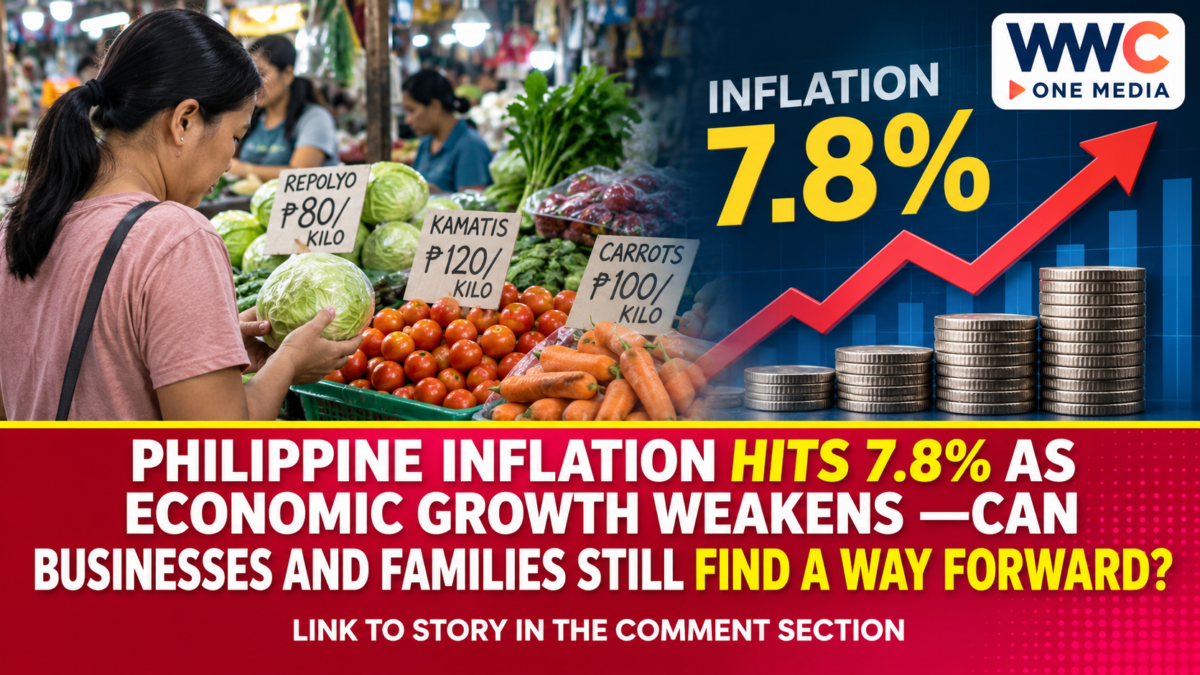
National inflation accelerated to 7.8% in October 2026, while gross domestic product (GDP) expanded by just 2.1% during the third quarter.
Behind these economic indicators lies a more immediate challenge: how can families maintain financial stability and businesses protect their operations when essential expenses continue to rise?
The answer may require more than waiting for an economic recovery. Financial discipline, responsible leadership and stronger cooperation could become increasingly important in navigating the months ahead.
Philippine Economic Slowdown Puts Household Budgets Under Pressure
The country’s October inflation figures reveal significant increases across several essential spending categories.
Annual price increases included:
- Rice: 20.7%
- Transportation: 20.1%
- Corn: 19.3%
- Housing, water, electricity, gas and other fuels: 9.3%
- Food: 6.4%
- Healthcare: 5.9%
Overall inflation increased from 7.2% in September to 7.8% in October.
For households whose earnings have not increased at the same pace, higher prices can reduce the quantity of goods and services they can afford.
Families may find themselves reconsidering discretionary purchases, postponing major financial commitments or adjusting their everyday consumption.
However, financial responsibility should not be confused with expecting households to absorb unlimited price increases.
Careful budgeting can help individuals manage available resources, but it cannot independently resolve structural problems affecting wages, food supply, transportation and energy costs.
The broader economic implications are examined in WWC ONE MEDIA’s coverage of El Niño, currency weakness and mounting pressure on Philippine economic targets.
Economic Growth Remains Positive, but Weaknesses Are Emerging
The Philippine economy continued expanding during the third quarter of 2026, although performance varied considerably across major industries.
The services sector grew by 3.7%, while agriculture, forestry and fishing contracted by 4.8%.
Industrial activity recorded a marginal annual decline of 0.003%.
Household consumption increased by 2.4%, while gross capital formation declined by 0.2%.
These figures indicate that economic activity has not stopped, but investment and certain productive sectors are facing considerable challenges.
For entrepreneurs, national growth statistics provide useful context, but the condition of an individual business ultimately depends on its own revenues, expenses, financing obligations and customer base.
Businesses operating in growing industries may encounter opportunities even when national economic performance is weak.
Conversely, companies facing declining demand or rising operating costs may experience financial pressure despite positive GDP growth.
The latest economic performance has also raised questions surrounding development forecasts, as discussed in ADB’s growth outlook following the Philippines’ weaker third-quarter GDP results.
Business Resilience Requires More Than Optimism
Economic uncertainty can expose weaknesses in business models that appeared sustainable during more favourable conditions.
A company may generate substantial sales while struggling to maintain enough available cash to pay employees, suppliers and creditors.
During difficult periods, business owners should consider reviewing several important operational areas:
- Cash flow and outstanding customer payments.
- Operating expenses and unnecessary recurring costs.
- Inventory management and purchasing commitments.
- Debt obligations and financing arrangements.
- Customer retention and product profitability.
These measures are not guarantees of business survival. However, they can help management identify vulnerabilities before financial difficulties become more severe.
Companies should also distinguish between strategic cost reductions and decisions that could undermine long-term productivity.
Reducing unnecessary expenditure may improve financial flexibility, but indiscriminate cuts to product quality, employee development or customer service can create additional problems.
Responsible leadership means protecting the company’s ability to operate while recognising the needs of employees, suppliers and customers.
The challenge is not simply to spend less. It is to allocate available resources more effectively.
Financial Discipline Becomes More Important as Borrowing Risks Increase
Periods of elevated inflation create difficult choices for both borrowers and economic policymakers.
Measures intended to contain inflation can influence financing conditions, while businesses and households must evaluate whether new debt remains affordable.
For entrepreneurs, expansion plans should be assessed against realistic revenue projections rather than expectations of a rapid economic turnaround.
Households considering major purchases may benefit from reviewing repayment obligations, emergency savings and existing financial commitments before taking on additional debt.
WWC ONE MEDIA’s examination of monetary tightening and the challenge of controlling inflation without deepening the economic slowdown provides further context on the relationship between price stability and economic activity.
Prudent financial management does not require abandoning every ambition.
Instead, it involves recognising which commitments remain sustainable under different economic conditions and maintaining sufficient flexibility to respond when circumstances change.
Leadership During Difficult Times Must Extend Beyond Financial Results
Economic hardship also raises questions about how organisations treat the people who sustain their operations.
Business leaders should consider whether their decisions distribute financial pressures fairly and whether employees receive clear information about significant organisational changes.
Open communication, responsible financial planning and realistic expectations can provide a stronger foundation for cooperation.
Employers facing financial difficulties should avoid making promises they cannot fulfil. Employees, meanwhile, deserve respectful treatment and transparency when decisions affect their livelihoods.
Community support also deserves attention.
Individuals and organisations with sufficient resources can consider supporting local enterprises, participating in community initiatives and assisting vulnerable households where practical.
Gratitude can have a meaningful place in this discussion when it encourages responsible action rather than dismissing legitimate economic concerns.
Acknowledging the contributions of employees, customers and business partners should complement fair treatment and sound management, not substitute for them.
What Happens Next for the Philippine Economy?
Upcoming economic releases will help determine whether inflationary pressures are easing and whether businesses and consumers are regaining financial confidence.
The most important indicators to monitor include consumer prices, household expenditure, agricultural output, business investment and overall economic growth.
For businesses across APEC economies, the combination of inflation, uncertain demand and financing pressures illustrates the importance of maintaining adaptable operating strategies.
For households, the priority remains protecting essential spending while making financial commitments that reflect their actual circumstances.
Economic recovery cannot be achieved through personal optimism alone. It also requires effective public policy, productive investment, sustainable employment opportunities and reliable access to essential goods.
Nevertheless, individuals and businesses can make decisions that improve their preparedness for uncertain conditions.
The Philippine economic slowdown presents a difficult reality. But the ability to respond thoughtfully, manage resources responsibly and support others remains valuable even when financial circumstances are challenging.
Frequently Asked Questions
What was the Philippine inflation rate in October 2026?
National headline inflation reached 7.8%, increasing from 7.2% in September 2026.
How much did the Philippine economy grow in the third quarter of 2026?
Philippine GDP expanded by 2.1% year on year between July and September 2026.
Is the Philippine economy contracting?
Overall GDP recorded positive annual growth in the third quarter. However, agriculture and industry experienced declines during the same period.
How can businesses respond to an economic slowdown?
Businesses can consider strengthening cash flow management, reviewing operating costs, assessing debt obligations and prioritising activities that support sustainable profitability.
Can financial discipline alone overcome inflation?
No. Financial discipline can help households and businesses manage their resources, but broader economic and supply-side measures are also necessary to address persistent inflation.