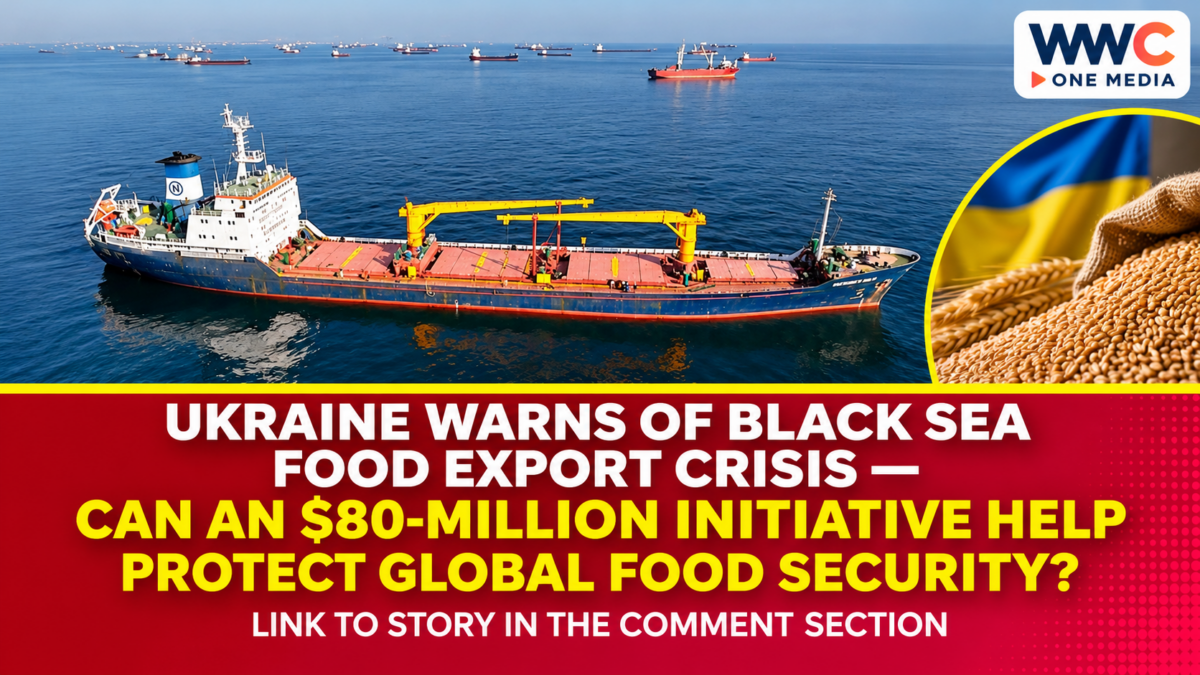
KYIV, Ukraine — November 28, 2026 — Ukraine is intensifying international efforts to protect agricultural exports and strengthen global food security as disruptions to Black Sea shipping threaten the movement of essential commodities to international markets.
President Volodymyr Zelenskyy announced during the Food from Ukraine Summit on November 27 that more than US$80 million is available for the country’s humanitarian food programme, reinforcing its commitment to supporting vulnerable communities despite the continuing war with Russia.
The announcement comes amid diplomatic efforts to protect civilian shipping and restore agricultural trade through one of the world’s strategically important maritime regions.
For food-importing economies across Asia-Pacific, Africa and the Middle East, the stability of these supply routes remains an important concern.
Black Sea Food Security Faces Growing Maritime Challenges
Ukraine’s agricultural sector continues to face export difficulties as the ongoing war disrupts maritime transportation.
Zelenskyy highlighted the importance of Ukrainian agricultural exports, including grain, flour and sunflower oil, to international markets.
The Ukrainian government is working with European neighbours to maintain alternative transportation channels through the Solidarity Lanes, while also pursuing cooperation with Türkiye and Arab partners.
Maintaining access to international markets is important not only for importing economies but also for Ukrainian agricultural producers who depend on export revenues to finance future planting seasons.
When shipping becomes less predictable, agricultural exporters face greater uncertainty over delivery schedules, transportation expenses and future sales.
Food importers may consequently need to reconsider their procurement arrangements and diversify suppliers.
However, the extent of any resulting price increases will depend on global harvests, available inventories, alternative export routes and prevailing market conditions.
Ukraine Secures More Than $80 Million for Humanitarian Food Programme
The Food from Ukraine initiative has been operating for four years, delivering agricultural products to countries experiencing humanitarian and food-security challenges.
Zelenskyy identified Sweden, Norway, Finland, Japan and Germany among the countries supporting the programme.
The initiative has provided food assistance to communities in countries including Yemen, Ethiopia and Sudan, as well as Syria.
Ukraine is also seeking to expand its cooperation with recipient countries beyond the delivery of agricultural commodities.
The proposed next phase includes sharing agricultural expertise and supporting the development of local food production through cooperation with Ukrainian businesses and farmers.
Such initiatives could help participating countries strengthen their domestic agricultural capabilities over the longer term.
However, the announced US$80 million represents resources available for the humanitarian programme, not a guarantee that commercial maritime trade will return to normal.
The restoration of shipping remains a separate challenge requiring diplomatic and security arrangements.
G7 Calls for Protection of Black Sea Shipping
Concerns about the disruption of international maritime trade were also addressed during the G7 foreign ministers’ meeting in Paris on November 9 and 10, 2026.
The group’s November 11 declaration condemned attacks against civilian shipping in the Black Sea and reaffirmed its commitment to protecting international food supply chains.
The declaration supported a reciprocal halt to attacks affecting energy infrastructure and Black Sea activities as an initial step towards a wider peace settlement.
The G7 comprises Canada, France, Germany, Italy, Japan, the United Kingdom and the United States, with the European Union also participating.
Its ministers identified the Black Sea conflict, disruption to the Strait of Hormuz and El Niño as interconnected challenges affecting international food trade.
Although these developments arise from different circumstances, their combined effects could place additional pressure on agricultural production, transportation and commodity markets.
Climate-related risks are already attracting attention across Asia-Pacific, including concerns surrounding El Niño, currency weakness and mounting economic pressures.
Why Black Sea and Strait of Hormuz Disruptions Matter
International food and energy markets are interconnected through transportation, agricultural production and industrial supply chains.
Agricultural exporters require reliable shipping services to move commodities between producing and importing economies.
At the same time, agricultural production depends on inputs such as fuel, fertilisers and transportation services.
Disruptions affecting food shipments and energy supplies can therefore create overlapping challenges for businesses and consumers.
The Black Sea and Strait of Hormuz are geographically separate maritime regions. Their respective security situations should not be treated as identical.
Nevertheless, both illustrate how disruptions to international transportation can extend beyond the countries directly involved in a conflict.
Asian economies maintain diverse commercial and diplomatic relationships with international energy producers, as explored in the discussions surrounding Vietnam–Russia energy cooperation at APEC.
For agricultural businesses, access to diversified suppliers and reliable transportation arrangements may become increasingly important when multiple international markets face simultaneous disruptions.
Alternative Supply Routes Remain Important
Ukraine’s continued efforts to maintain agricultural transportation through Europe demonstrate the importance of alternative logistics arrangements during periods of maritime uncertainty.
These arrangements provide opportunities for exporters to reach international customers when conventional shipping channels become difficult to use.
However, alternative routes cannot automatically reproduce the commercial advantages of established maritime transportation networks.
The effectiveness of any alternative logistics system depends on available infrastructure, transportation capacity, commercial agreements and delivery requirements.
Regional cooperation can also contribute to longer-term supply-chain resilience.
In Southeast Asia, discussions surrounding Vietnam’s CLMV and ACMECS regional cooperation initiatives provide further context on efforts to strengthen economic connectivity and cross-border collaboration.
The Southeast Asian frameworks are separate from Ukraine’s agricultural export arrangements, but both highlight the importance of dependable commercial networks.
What Happens Next for Global Food Security?
Ukraine’s humanitarian food initiative will continue alongside diplomatic efforts to protect commercial agricultural exports.
The immediate challenge is maintaining food assistance for vulnerable communities while establishing conditions that allow agricultural producers to access international markets.
A sustainable improvement in maritime trade would require arrangements that provide sufficient protection for civilian vessels, port operations and commercial transportation.
The announcement of humanitarian funding does not establish that such an agreement has already been reached.
For food-importing economies across APEC, future developments will remain relevant to agricultural procurement, commodity prices and supply-chain planning.
The availability of alternative suppliers may reduce certain risks, although the impact will differ between individual countries and businesses.
Ukraine’s US$80-million humanitarian initiative represents an important contribution to international food assistance.
The larger question remains whether diplomatic efforts can establish sufficiently reliable conditions for agricultural exports to recover and reduce uncertainty across global food markets.
Frequently Asked Questions
What is the Food from Ukraine initiative?
It is a Ukrainian humanitarian food programme established during the first year of Russia’s full-scale invasion to support communities facing food insecurity.
How much funding is available for Food from Ukraine in 2026?
President Volodymyr Zelenskyy announced on November 27, 2026, that more than US$80 million was available for the programme.
Which countries are supporting Ukraine’s food initiative?
Supporting countries identified during the November summit include Sweden, Norway, Finland, Japan and Germany.
Why is Black Sea shipping important to global food security?
The region provides maritime transportation routes for agricultural commodities, including grain, flour and sunflower oil. Shipping disruptions can affect export availability and transportation costs.
Has a new Black Sea shipping ceasefire been confirmed?
No new mutually accepted shipping ceasefire has been established by the primary records reviewed for this article. Diplomatic efforts and humanitarian assistance should not be confused with a completed maritime security agreement.