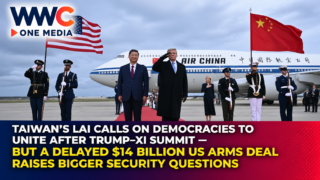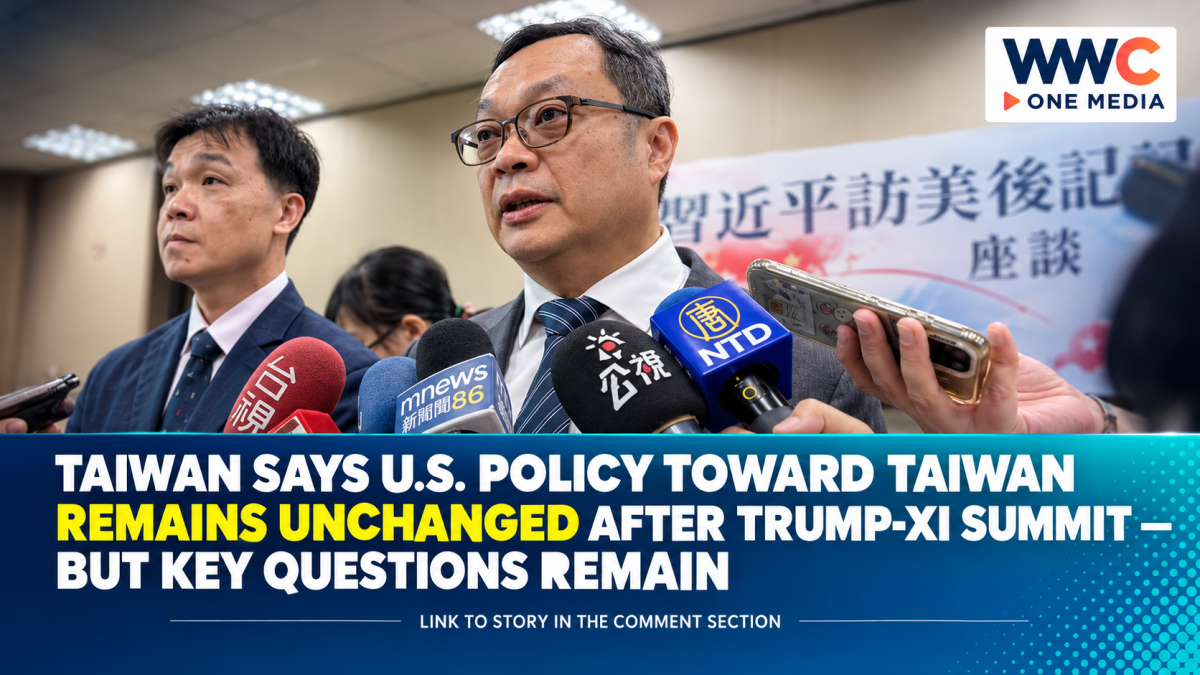
Taiwan says it has received repeated assurances that U.S. policy toward Taiwan remains unchanged following President Donald Trump’s meeting with Chinese President Xi Jinping in Washington, even as Beijing sought a clearer U.S. position opposing Taiwan independence.
Taiwan Deputy Foreign Minister Chen Ming-chi made the comments Sunday after the two leaders met at the White House on Sept. 24. Chen said Taipei continues to maintain communication with Washington through multiple channels and will seek further information about what was discussed during the summit.
Beijing Sought a Clearer U.S. Position
The Taiwan issue was among the subjects surrounding the Trump-Xi summit, although Trump later said Taiwan was not a major focus of his discussions with Xi.
According to Taiwan’s Foreign Ministry and Chen’s account, Beijing had sought to persuade Washington to explicitly oppose “Taiwan independence.”
Chen said that wording did not appear in the U.S. account of the summit or in Trump’s public comments following the meeting.
Trump said the two leaders “didn’t spend a lot of time talking about Taiwan” and that Xi understood his position.
Washington Says Its Taiwan Policy Has Not Changed
Taipei’s assessment is also based on statements from U.S. officials.
Chen cited U.S. Ambassador to China David Perdue, who said Friday that there had been no change in Washington’s Taiwan policy following the Trump-Xi talks.
Taiwan’s Foreign Ministry said the Taiwan Relations Act and the Six Assurances remain important foundations of U.S. policy toward Taiwan. Reuters separately reported Chen saying Taiwan had received repeated confirmation through U.S. channels that Washington’s policy remained unchanged.
The statements do not mean every Taiwan-related issue has been resolved.
$14 Billion Arms Package Still Awaits a Decision
One of the outstanding issues is a reported US$14 billion U.S. arms package for Taiwan.
Chen said Taiwan continues communicating with Washington about its defense requirements but did not provide a timetable for a decision.
He referred to earlier comments from U.S. Secretary of State Marco Rubio, who said arms sales must be considered alongside factors including U.S. military requirements and industrial capacity.
Taiwan has been waiting for months for the package to be approved, according to Reuters.
Taipei Says Communication With Washington Remains Active
Chen emphasized that communication between Taiwan and the United States remains active at multiple levels.
Taipei intends to use those channels to better understand the Trump-Xi discussions and monitor any implications for Taiwan.
Taiwanese officials have also pointed to continued Chinese military investment and pressure around the Taiwan Strait as reasons for maintaining attention on defense preparedness.
What the Summit Did — and Did Not — Change
The immediate message from Taipei is that the Trump-Xi summit did not produce a publicly announced change in U.S. Taiwan policy.
At the same time, several issues remain unresolved, including the pending arms package and the broader question of how Washington and Beijing will manage their competing positions on Taiwan.
The summit therefore leaves Taiwan watching both sides of the U.S.-China relationship closely.
For Taipei, the next developments may come not from the summit’s public statements, but from follow-up diplomatic contacts, U.S. policy decisions and future discussions between Washington and Beijing.
WWC ONE MEDIA G,A