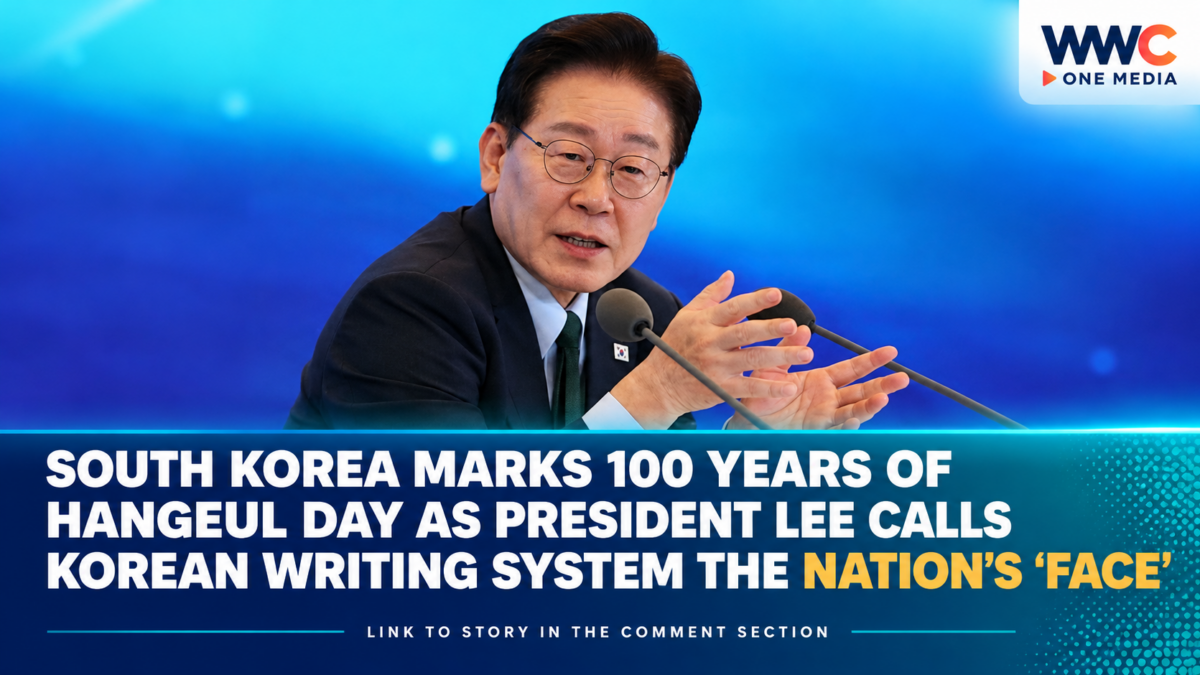
South Korea is celebrating a major milestone in its cultural history as President Lee Jae-myung honors Hangeul, the Korean writing system, describing it as a powerful symbol of national identity, cultural pride and the country’s global competitiveness.
In a message posted on social media on October 9, 2026, Lee marked the 100th anniversary of Hangeul Day, emphasizing the importance of protecting the Korean language while expanding its reach around the world.
“Writing is the face of the country and language is its heart,” Lee said, arguing that the strength of Korea’s language and writing system contributes to the nation’s competitiveness.
The anniversary carries significance beyond a national celebration. It recalls generations of Koreans who worked to preserve their language during Japanese colonial rule and highlights how Hangeul has become increasingly visible through Korean entertainment, education and popular culture.
Hangeul’s Historic Journey From Royal Invention to National Identity
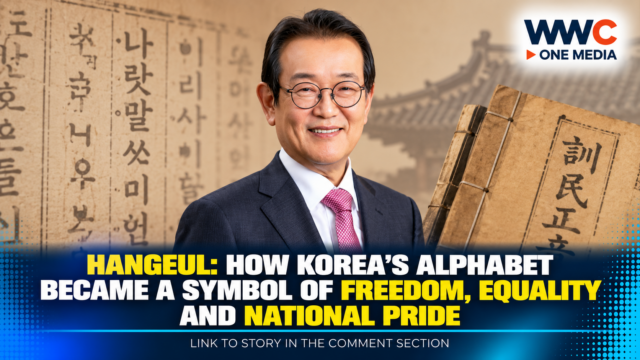
Hangeul was created under King Sejong of the Joseon Dynasty in 1443 and officially promulgated in 1446. Known initially as Hunminjeongeum, meaning “the correct sounds for instructing the people,” the writing system was designed to make written communication more accessible.
Before its introduction, written Korean relied heavily on Chinese characters, which were difficult for many ordinary people to master.
However, Hangeul did not immediately replace Chinese characters. It took centuries for the Korean alphabet to gain broader recognition, particularly among influential scholars and social elites.
Its history became even more closely tied to national identity during Japan’s colonial rule of Korea from 1910 to 1945. Language activists and scholars worked to preserve Korean speech and writing as part of a wider effort to protect the country’s cultural heritage.
Hangeul Day emerged from those preservation efforts. The holiday’s centennial in 2026 commemorates the movement that helped safeguard the writing system and strengthen its place in Korean society.
Korean Language Goes Global as K-Culture Expands
One of the clearest signs of Hangeul’s growing international reach is the expansion of Korean-language education overseas.
According to reports from South Korean broadcasters SBS and KBS, the King Sejong Institute network has expanded from 13 locations in three countries in 2007 to 273 locations across 89 countries in 2026. The institutes provide Korean-language education and help international learners understand Korean culture.
The growth comes amid the worldwide popularity of Korean music, films, television dramas and other cultural exports, which have encouraged more people to learn the language behind the entertainment they enjoy.
For South Korea, the expanding interest in Korean represents an opportunity to strengthen cultural connections and introduce the country’s history and traditions to new audiences.
Yet the challenge is no longer simply making Hangeul more widely known. Preserving the accuracy and richness of Korean in digital platforms and artificial intelligence systems is also becoming increasingly important, as language technology plays a greater role in everyday communication.
Seoul Celebrates Hangeul Day With Cultural Events
The centennial is also being marked with public celebrations in Seoul.
Gwanghwamun Square, home to the statue of King Sejong, hosted a special Hangeul-themed event on October 9 featuring exhibitions, interactive activities, performances and opportunities for visitors to explore the Korean alphabet. Organizers also included activities highlighting Korean expressions and creative uses of Hangeul.
The celebrations connect the writing system’s historical importance with its continuing role in modern Korean life, allowing residents and international visitors to engage with the language beyond classrooms and textbooks.
The Next 100 Years: Preserving Tradition While Embracing Technology
President Lee’s message points toward a new chapter for Hangeul.
The previous century focused heavily on protecting the writing system and ensuring that it remained central to Korean identity. The next century, Lee said, should focus on expanding its possibilities.
That ambition includes encouraging international interest in Korean, strengthening language education and ensuring that Korean remains well represented as digital communication and AI technologies evolve.
Hangeul’s story is therefore about more than an alphabet. It reflects the connection between language, historical memory, education and cultural influence.
As South Korea celebrates 100 years of Hangeul Day, the central question is how the writing system can continue to preserve its heritage while reaching even more people around the world.
WWC ONE MEDIA G,A