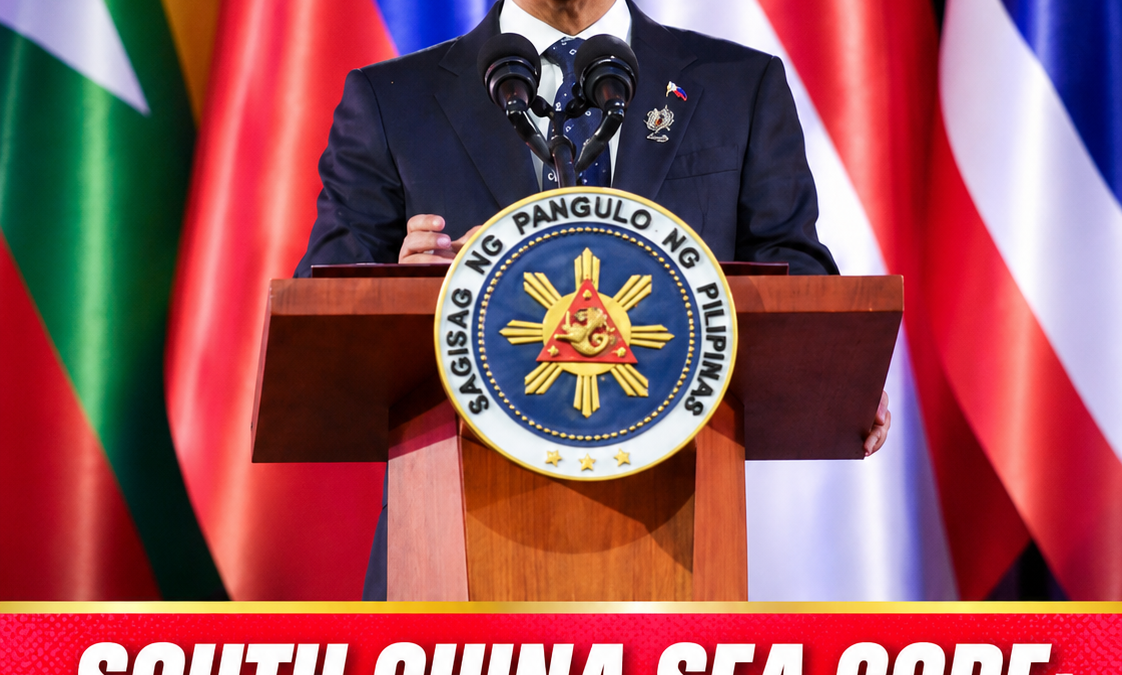
MANILA, Philippines — Nov. 15, 2026 — The Philippines is hosting the 49th ASEAN Summit from Nov. 15 to 17, placing the long-running negotiations for a South China Sea Code of Conduct back in focus as President Ferdinand R. Marcos Jr. chairs the regional gathering. An official ASEAN ministerial statement continues to set an ambitious objective: conclude negotiations on an effective and substantive code within 2026.
The timetable is now approaching its final weeks, but the public records reviewed for this report do not establish that the agreement has already missed its deadline. They also do not provide a verified percentage of the draft text that negotiators have settled.
That distinction matters. The proposed agreement is intended to guide conduct in disputed waters, but its value will depend on the final commitments, their consistency with international law and whether participating governments can put them into practice.
The South China Sea Code remains a 2026 ASEAN objective
The clearest published deadline appears in the statement issued after the ASEAN Foreign Ministers’ Retreat in Cebu on Jan. 29, 2026.
In that document, ministers welcomed progress in negotiations and said they would endeavour to conclude an effective and substantive Code of Conduct within 2026. They specified that the proposed agreement must be consistent with international law, particularly the 1982 United Nations Convention on the Law of the Sea (UNCLOS). ASEAN 2026 Photos
The language is important. Ministers expressed a collective objective, not a guarantee that the negotiations would be completed by a legally binding date.
As of Nov. 15, the 2026 period remains open. The target has not expired, although the remaining time makes the next round of diplomatic work particularly significant.
The Philippines’ role as ASEAN chair gives Manila an opportunity to keep the issue on the regional agenda. The country’s 2026 chairship theme is “Navigating Our Future, Together”, with peace and security among its stated priorities. ASEAN Main Portal+1
What the official records actually say about progress
The ASEAN-China negotiating process has continued through formal meetings between senior officials.
On Jan. 30, ASEAN member states and China held the 25th ASEAN-China Senior Officials’ Meeting on the implementation of the Declaration on the Conduct of Parties in the South China Sea (DOC) in Cebu. The meeting reviewed implementation of the DOC and discussed ways to advance negotiations towards the COC.
On May 21, the 26th senior officials’ meeting took place in Kuala Lumpur, alongside the 32nd ASEAN-China Senior Officials’ Consultation. The official announcement again confirmed that participants reviewed DOC implementation and discussed progress towards concluding the COC. ASEAN Main Portal+1
These records establish that negotiations and related discussions continued during the year. They do not disclose a final agreed text, a percentage of completed provisions or a confirmed list of unresolved paragraphs.
That is why claims that negotiators have settled a specific share of the draft should not be treated as established fact unless the negotiating parties release an official record confirming the figure.
For readers, the distinction is straightforward: meetings and reported progress are not the same as a completed agreement.
ASEAN’s May summit called for an effective agreement under international law
The 48th ASEAN Summit in Cebu on May 8 produced another important public record.
In its chair’s statement, ASEAN leaders welcomed progress in the ongoing negotiations and encouraged efforts to make full use of the guidelines for accelerating an effective and substantive COC. They also said the agreement should be consistent with international law, including UNCLOS.
The same section called for self-restraint, peaceful settlement of disputes and measures that could reduce the risks of accidents, misunderstandings and miscalculation at sea. ASEAN Main Portal+1
This is more than a diplomatic formality. It identifies the standards ASEAN says should guide the final text.
For the Philippines, consistency with UNCLOS is particularly important because maritime rights and jurisdiction are central to its position in the South China Sea. The government has repeatedly framed international law as the basis for addressing maritime disagreements.
WWC has previously examined the Philippines’ wider regional diplomatic challenge in its coverage of preparations for the 49th ASEAN Summit.
Why the wording of the proposed code matters
A Code of Conduct is intended to establish expectations for how participating governments behave in the South China Sea. It is connected to the 2002 Declaration on the Conduct of Parties, which calls for peaceful approaches and restraint while territorial and jurisdictional disputes remain unresolved.
The code is not a substitute for UNCLOS. Nor should it be presented as a settlement of every sovereignty dispute involving islands, reefs or maritime zones.
Its practical value will depend on what governments eventually agree to do.
A document that sets out clear commitments and workable procedures could help reduce the risk of incidents escalating. Broad language without meaningful implementation arrangements, by contrast, could leave important questions unresolved.
This is an assessment of the policy challenge, not a claim that the final draft has already been examined or that particular provisions have been rejected.
The May ASEAN statement itself emphasised preventive measures and confidence-building efforts. These are important because even a negotiated code cannot eliminate the need for communication, restraint and compliance by the parties. ASEAN Main Portal
Maritime tensions make the negotiations more consequential
The diplomatic process is taking place while maritime disputes remain an important regional security issue.
The Jan. 29 ministerial statement recorded concerns over land reclamation, activities and serious incidents in the South China Sea. It also referred to risks to personal safety and damage to the marine environment, warning that such developments could erode trust and increase tensions. ASEAN 2026 Photos
The May summit statement likewise reaffirmed the importance of safety at sea, freedom of navigation and peaceful dispute resolution. ASEAN Main Portal
For the Philippines, these concerns are not abstract. The country has continued to assert its maritime rights while maintaining diplomatic engagement with China and other ASEAN members.
WWC has also covered the Philippine military’s public position on maritime disputes in its report on the AFP’s response to claims that Manila’s maritime stance could provoke conflict.
China’s military activities around disputed features have also remained part of the regional security picture. WWC previously reported on Chinese naval and air exercises around Scarborough Shoal. Those activities are separate from the COC negotiations, but they illustrate why ASEAN’s calls for restraint and confidence-building remain relevant.
What happens next
The 49th ASEAN Summit runs from Nov. 15 to 17, with Marcos chairing the leaders’ meetings. The official Philippine programme also includes related summits with dialogue partners, including China. Presidential Communications Office+1
The public documents available for this report do not confirm that the COC will be concluded during the summit, nor do they establish that negotiations have formally been extended into 2027.
The next important evidence will be the summit’s official chair’s statement, any ASEAN-China joint statement and subsequent announcements from the senior officials conducting the negotiations.
Those records should clarify whether governments have made further progress, whether the 2026 objective remains achievable and what work is still required.
For now, the official position remains an effort to conclude an effective and substantive code within 2026. The deadline is close, but it has not yet passed.
Frequently asked questions
1. What is the South China Sea Code of Conduct?
It is a proposed agreement between ASEAN and China intended to establish rules and expectations for conduct in the South China Sea and help reduce the risk of disputes escalating.
2. When does ASEAN want to conclude the Code of Conduct?
The Jan. 29, 2026 ASEAN Foreign Ministers’ Retreat statement says ministers will endeavour to conclude negotiations within 2026. ASEAN 2026 Photos
3. Has ASEAN officially confirmed that 80% of the agreement is complete?
The primary ASEAN records reviewed for this article do not confirm an 80% completion figure. They confirm that negotiations continued and that progress was discussed.
4. Does the Code of Conduct settle the South China Sea territorial disputes?
No. The proposed code is intended to guide conduct and cooperation. It should not be described as a settlement of every sovereignty or maritime-boundary dispute.
5. Why does UNCLOS matter to the negotiations?
The Jan. 29 ministerial statement and the May ASEAN summit chair’s statement both say the proposed code should be consistent with international law, particularly UNCLOS.