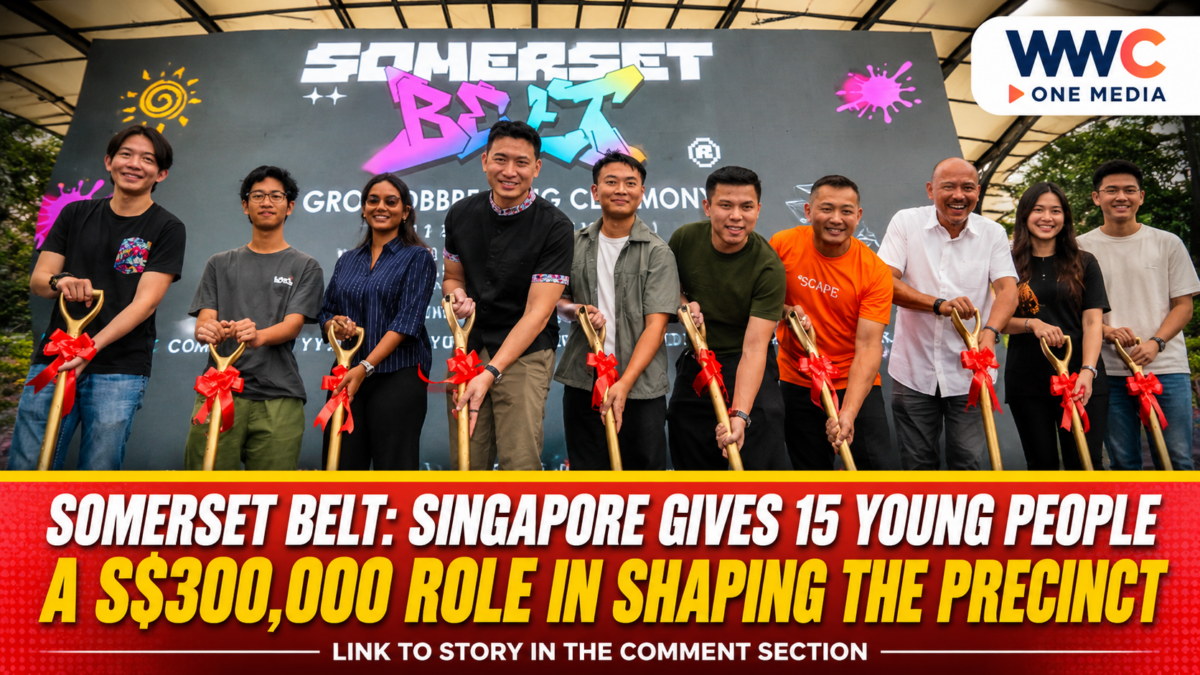
Singapore’s Somerset Belt redevelopment is being designed around more than new recreational facilities: the government has also committed to giving young people a direct role in deciding how the precinct will operate. A March 5, 2026 parliamentary announcement set out a 15-member Somerset Belt Youth CoLab, with a dedicated space and an annual budget of S$300,000 to support youth-led activities.
The initiative forms part of a wider plan to connect *SCAPE, Somerset Youth Park, Somerset Slopes and Somerset Skate Park into a youth-focused area near Somerset MRT station. Its significance lies in the proposed management model: young people are expected to help determine not only what the spaces look like, but also what activities take place there.
That approach could make the project a useful test of how public spaces can move from being facilities designed for young people to places where young people have a meaningful role in decisions.
Somerset Belt puts youth participation into the project structure
The Ministry of Culture, Community and Youth describes the Somerset Belt as a youth precinct in the Orchard Road area. Its published project overview identifies *SCAPE, Somerset Youth Park and Somerset Skate Park as key places for recreation, creative expression and community activities. Ministry of Culture, Community & Youth
The wider plan also includes Somerset Slopes and the Incubation Nexus. These spaces are intended to support different interests, including outdoor recreation, creative work, entrepreneurship and community-led programmes.
The idea did not emerge solely from a construction plan. In a February 2025 statement, the ministry said the Somerset Reset campaign would bring young people together with architects, planners, government agencies and the wider community to refine the precinct’s design and programming.
The same statement described youth involvement in developing the masterplan and identified four important planning elements: a transformed *SCAPE, an expanded skate park, a green space beside the skate park and a youth park supporting creative and entrepreneurial activity. Ministry of Culture, Community & Youth
The process is important because it places consultation before final design decisions. Rather than asking young people to respond only after facilities are completed, the project gives them a role in shaping the intended uses of the precinct.
A 15-member youth group gets a dedicated budget
The most concrete governance commitment came during the March 2026 parliamentary proceedings.
David Neo announced that the Somerset Belt Youth CoLab would consist of 15 young people. The group would lead programming and activities across the precinct and decide how different spaces should be used.
The government also committed a dedicated space for the group to activate and an annual budget of S$300,000. SG Parliament
This arrangement goes beyond inviting young people to attend events or submit suggestions. It gives a designated group responsibility for developing activities and shaping how the precinct is used.
The budget is also significant because programming requires resources after construction. A skate park, performance area or workshop space does not automatically create a functioning youth community. Events, partnerships, equipment, coordination and opportunities for participants to organise activities all require ongoing support.
The announced annual allocation gives the CoLab a financial basis for its work. However, the public announcement does not establish how the budget will be divided among individual projects, how spending will be evaluated or what performance measures will determine the group’s success.
Those details will matter when the initiative moves from announcement to implementation.
Four spaces are intended to serve different interests
The Somerset Belt plan combines several types of public space instead of relying on a single youth facility.
Somerset Youth Park is intended to support gatherings, creative expression and community activities. The skate park provides a setting for urban sports, while Somerset Slopes adds a green recreational component.
The Incubation Nexus is intended to provide a different kind of opportunity: space for entrepreneurship, workshops and creative projects. This gives the precinct a potential connection between recreation and practical skill development.
The distinction matters. Young people do not all use public spaces in the same way. Some may be interested in skating or performances, while others may want somewhere to organise a small event, develop a creative project or test a business idea.
The variety of planned facilities could help the precinct serve different communities rather than concentrating its activities around one dominant interest.
That also creates a management challenge. A multi-use public area needs clear scheduling, maintenance, accessibility and coordination so that one activity does not prevent others from using shared facilities.
WWC has examined similar questions in Singapore’s rules for public sports facilities, where access and facility-management conditions shape how recreational spaces can be used.
*SCAPE provides the foundation for the wider precinct
The Somerset Belt is not being developed without an existing youth hub.
The *SCAPE building was officially launched in June 2010 as a community space for young people. In a November 2025 speech, the ministry described its role in supporting creative interests, youth communities and activities ranging from dance and urban sports to entrepreneurship.
The same speech said the refreshed *SCAPE would provide opportunities for 40,000 young people each year to explore their interests. It also identified more than 50 communities of interest operating at the venue at that time. Ministry of Culture, Community & Youth
The ministry further identified *SCAPE as the precinct manager for the wider Somerset Belt, extending its programmes beyond the building to include the Youth Park, Somerset Slopes and Skate Park.
That management role gives the project an organisational link between the existing venue and the surrounding public spaces.
The wider idea is to make the precinct function as a connected environment rather than a collection of unrelated facilities.
The potential business dimension is also worth watching. An area that supports workshops, creative projects and youth entrepreneurship can create opportunities for partnerships with organisations, mentors and small enterprises. WWC has previously explored how structured training and mentorship can support entrepreneurs developing business capabilities.
The project reflects a broader approach to public-space planning
Singapore’s approach to the Somerset Belt connects with a wider planning question: how can public places support relationships and community participation, not just movement and recreation?
The ministry’s project description says the precinct is being shaped by youth aspirations and input. Its March 2026 parliamentary statement also referred to more than 16,500 responses gathered from young people and other stakeholders about what they wanted to see in the area. SG Parliament
That figure provides evidence of public engagement, but it should not be confused with a measure of how many people will eventually use the completed precinct.
The next test will be whether participation continues after the planning stage. Young people need practical ways to propose activities, organise programmes, work with partners and influence decisions over time.
This is a wider challenge for public-space development. WWC has also reported on Singapore’s efforts to bring community activities into everyday neighbourhood spaces, illustrating how the value of a public place can depend on the programmes and relationships built around it.
For Somerset Belt, the CoLab could become the mechanism that connects the physical facilities with the people expected to use them.
What happens next
The government’s February 2025 project statement set out a redevelopment schedule that anticipated work on the wider Somerset Belt beginning in the first half of 2026 and completion by the end of 2027. The March 2026 parliamentary statement said construction was expected to begin later that year. Ministry of Culture, Community & Youth+1
The public records reviewed for this article do not independently confirm the precise date of the latest reported groundbreaking or a revised completion timetable. Those details should be checked against a current ministry or project-owner announcement before publication.
The next major questions concern implementation: when each facility will be ready, how the CoLab will be selected and supported, how the S$300,000 annual budget will be administered, and how the project will measure meaningful youth participation.
The physical redevelopment will create the setting. The longer-term test will be whether young people can continue to shape what happens there.
Frequently asked questions
What is Singapore’s Somerset Belt?
Somerset Belt is a planned youth precinct in the Orchard Road area, connecting *SCAPE with public spaces including Somerset Youth Park and Somerset Skate Park.
Who is David Neo?
David Neo is Singapore’s Minister for Culture, Community and Youth and Second Minister for Education. He announced the Somerset Belt Youth CoLab during parliamentary proceedings in March 2026.
What is the Somerset Belt Youth CoLab?
It is a proposed group of 15 young people tasked with leading activities and programming across the Somerset Belt.
How much funding will the Youth CoLab receive?
The March 2026 parliamentary announcement committed a dedicated activation space and an annual budget of S$300,000.
When will the Somerset Belt redevelopment be completed?
A February 2025 ministry statement targeted completion of the wider redevelopment by the end of 2027. A later, independently verified revised completion date was not established in the records reviewed for this article.