The Philippines’ rising import demand is exposing a pressure point in the country’s external accounts: even when exports grow, the dollars needed to pay for imported goods can remain substantially higher. The Philippine Statistics Authority (PSA) recorded a US$15.03-billion import bill in September 2026, the highest monthly value in its series dating back to 1991.
That figure helps explain why a weaker peso may persist even as export receipts improve. It does not, by itself, establish where the exchange rate will go; forecasts remain projections, while the trade figures show what has already happened.
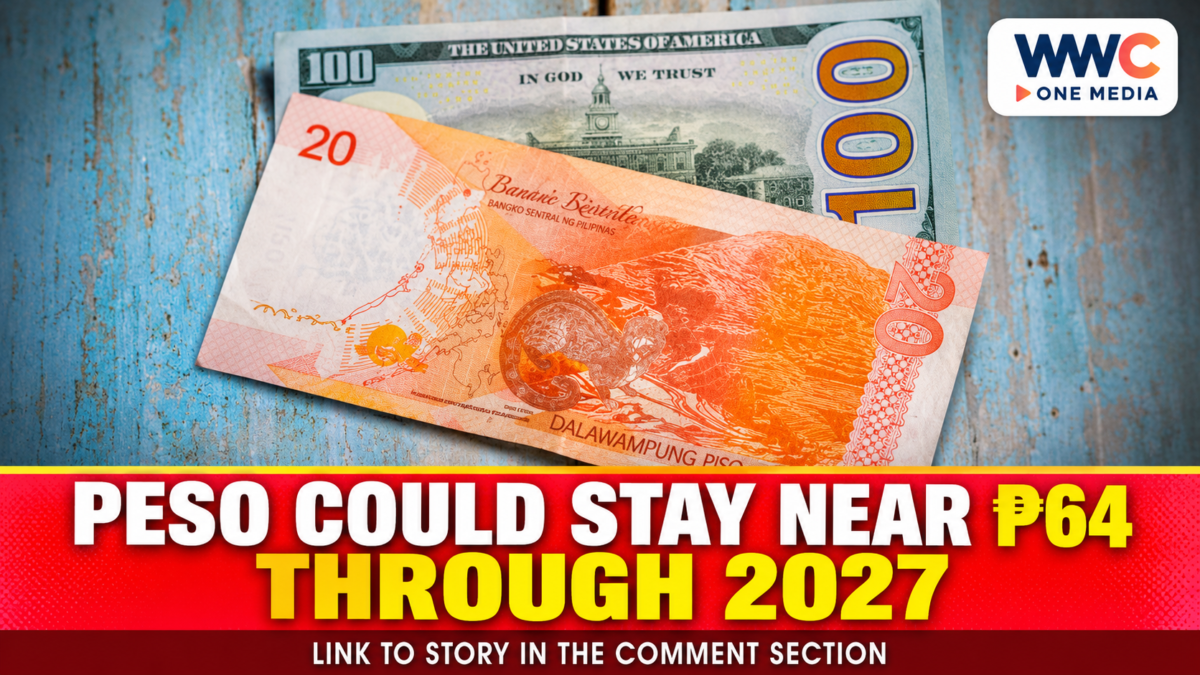
The bank’s November 12 Asia FX Outlook 2027 places the dollar at ₱62.70 against the peso in the fourth quarter of 2026, rising to ₱63.50 in the first quarter of 2027. Its projections then settle at ₱64.00 for each of the final three quarters of 2027. ING THINK+1
The forecast is not a promise that the peso will trade at exactly ₱64 every day. It is an estimate of the exchange rate at selected points in the future, based on the bank’s assessment of economic conditions.
The distinction matters because the peso’s actual value continues to respond to trade payments, global dollar movements, oil prices, investment flows and monetary policy.
Peso forecast: Why ₱64 remains in ING’s outlook
ING’s assessment identifies several pressures on the Philippine currency, including a widening current account deficit, relatively narrow interest-rate differentials and weaker foreign direct investment inflows.
The bank also points to the role of the Bangko Sentral ng Pilipinas (BSP) in managing excessive currency volatility through foreign-exchange reserves.
Its outlook suggests that even if the international environment becomes more favourable, the Philippines may struggle to achieve a sustained peso recovery without improvements in its external accounts.
The BSP’s reference rate provides a useful comparison with ING’s forecast. On November 16, the central bank reported the peso at ₱63.8130 per US dollar. That was already close to the ₱64 level in ING’s projections for the second half of 2027. Bangko Sentral ng Pilipinas+1
The rate is a daily reference figure, not a guarantee of the price consumers or businesses will receive from banks and money changers.
The peso’s movement also comes against a difficult domestic backdrop. Inflation reached 7.8% in October 2026, while the BSP’s policy rate stood at 5.50% following its November 13 monetary policy decision.
For additional context, the Philippine economy’s slowdown and renewed inflation pressure show why policymakers face a difficult balance between containing prices and supporting economic activity.
Record imports are widening the trade gap
The most striking evidence of the country’s external pressure appears in the PSA’s September merchandise trade report.
Imports reached US$15.03 billion, increasing 25.7% from US$11.95 billion a year earlier. The agency identified September’s import value as the highest in its historical series, which began in 1991.
Exports also delivered a strong performance. Their value reached US$9.87 billion, up 35.6% from US$7.28 billion in September 2025.
But the difference between the two remained substantial. The country recorded a merchandise trade deficit of US$5.15 billion for the month, with imports exceeding exports. Philippine Statistics Authority+1
The figures reveal an important distinction: faster export growth does not automatically mean the country is earning enough from exports to cover its import requirements.
The composition of imports also matters. Electronic products accounted for US$5.80 billion, or 38.6% of September’s total import value. Raw materials and intermediate goods represented US$6.71 billion, while capital goods accounted for US$3.93 billion.
These categories include inputs and equipment used by businesses, meaning that a large import bill is not necessarily evidence of excessive household consumption. Some imports support manufacturing, investment and future production.
However, they still require foreign currency. When businesses need more dollars to pay overseas suppliers, demand for foreign exchange can add pressure to the peso, depending on the timing and availability of dollar inflows.
The current account shows a deeper external imbalance
The merchandise trade deficit is only one part of the Philippines’ external position.
The BSP’s balance-of-payments figures show that the current account deficit reached US$8.968 billion in the second quarter of 2026, compared with US$5.581 billion in the same quarter of 2025.
For the first six months of 2026, the deficit stood at US$15.436 billion, 51.7% higher than the US$10.178-billion deficit recorded in the same period a year earlier.
The figures reflect the combined position of goods, services, primary income and secondary income transactions with the rest of the world. They are therefore broader than the PSA’s monthly merchandise trade balance. Bangko Sentral ng Pilipinas+1
This broader measure helps explain why stronger merchandise exports alone may not be enough to reverse currency pressure.
The BSP’s data also show that personal remittances reached US$19.123 billion in January to June 2026, up 2.4% from US$18.672 billion in the same period of 2025.
Remittances remain an important source of foreign currency for the country. But their growth must be considered alongside imports, investment income payments, services transactions and capital movements.
ING’s outlook also identifies weaker foreign direct investment inflows as a concern. Such investment can provide a more stable source of external financing when it supports long-term business operations and productive capacity.
What a ₱64 dollar rate could mean for households and businesses
A weaker peso generally raises the peso cost of goods and services priced in US dollars.
Importers may need more pesos to pay for the same shipment of fuel, machinery, electronic components or raw materials. Businesses can absorb some of the increase, but others may pass part of the additional expense to customers.
The effect on household budgets depends on the products involved, international prices, supplier contracts and the time needed for higher costs to reach retail shelves.
Fuel is particularly important because it affects transportation, logistics and production expenses across multiple industries.
A weaker peso can also increase the peso value of dollar-denominated obligations. Companies with foreign-currency debt may face larger repayment requirements when their revenues are mainly earned in pesos.
There are potential beneficiaries, too. Exporters receiving dollars may obtain more pesos when converting their earnings, while families receiving remittances may benefit from a higher conversion rate.
The overall impact is therefore uneven. A weaker currency can support some export earnings while increasing costs for import-dependent businesses and consumers.
WWC has also examined how a weakening peso and changing economic assumptions are complicating government planning.
The BSP faces a difficult balancing act
The central bank must consider inflation, economic growth, financial stability and foreign-exchange conditions when setting monetary policy.
Higher interest rates can help contain inflation expectations and support demand for peso-denominated assets. But tighter monetary conditions can also increase borrowing costs for households and businesses.
Currency intervention has limits as well. Foreign-exchange reserves can help smooth excessive market volatility, but they cannot permanently correct structural imbalances in trade, investment or productivity.
Global developments will also influence the peso. Changes in US interest rates, oil prices and investor appetite for emerging-market assets can affect demand for dollars and other currencies.
ING’s regional outlook notes that a softer US dollar and easing oil prices could provide some relief to Asian currencies in 2027. However, it still sees downside risks for the peso because of the Philippines’ external vulnerabilities and weaker capital inflows. ING THINK+1
For readers following the international side of the currency market, the latest movements in the US dollar and global interest-rate expectations provide additional context.
What happens next
The next important indicators will be the Philippines’ monthly trade results, balance-of-payments updates, inflation releases and BSP monetary policy decisions.
A sustained improvement in export earnings, stronger foreign investment and more balanced import growth could help ease pressure on the country’s external accounts.
Lower oil prices and a softer US dollar could also provide temporary support, although these developments remain dependent on global conditions.
For now, ING’s ₱64 projection should be treated as a warning about persistent vulnerabilities rather than a guaranteed exchange-rate outcome.
The central issue is not whether the peso crosses a particular number on a trading day. It is whether the Philippines can generate enough reliable foreign-currency earnings and investment inflows to support its growing demand for imports.
Frequently Asked Questions
1. Is ING forecasting the peso to reach ₱64 per dollar?
Yes. ING’s November 2026 outlook projects USD/PHP at ₱64.00 for the second, third and fourth quarters of 2027. These are forecasts, not guaranteed market rates.
2. Why is the Philippine peso under pressure?
ING identifies the widening current account deficit, narrow interest-rate differentials and weaker foreign direct investment inflows as factors weighing on the currency. Strong import demand also increases the country’s need for foreign exchange.
3. Were Philippine exports growing in September 2026?
Yes. PSA data show exports reached US$9.87 billion, increasing 35.6% year on year. Imports, however, rose to US$15.03 billion, leaving a US$5.15-billion merchandise trade deficit.
4. Does a weaker peso always mean higher prices?
No. A weaker peso can increase the cost of imported products, but the effect on retail prices depends on international prices, supplier contracts, business margins and other domestic conditions.
5. Can the BSP prevent the peso from weakening?
The BSP can use monetary policy and foreign-exchange operations to manage inflation and excessive currency volatility. However, it cannot guarantee a particular exchange rate or eliminate the underlying effects of trade and capital-flow imbalances.