MANILA, Philippines — Nov. 17, 2026. Global food commodity prices eased in October even as the Philippines reported a sharp year-on-year increase in rice prices, highlighting the divide between international supply and household affordability. New official statistics forecast exceptionally high world cereal production in 2026, but they also show continuing vulnerabilities in rice markets and communities facing severe food insecurity.
That contrast matters because a worldwide grain shortage and a household food crisis are different conditions. The first concerns the quantity of food available across markets; the second also depends on purchasing power, transport costs, access, conflict and local harvests.
Global Food Prices Slip, but Not Every Commodity Falls
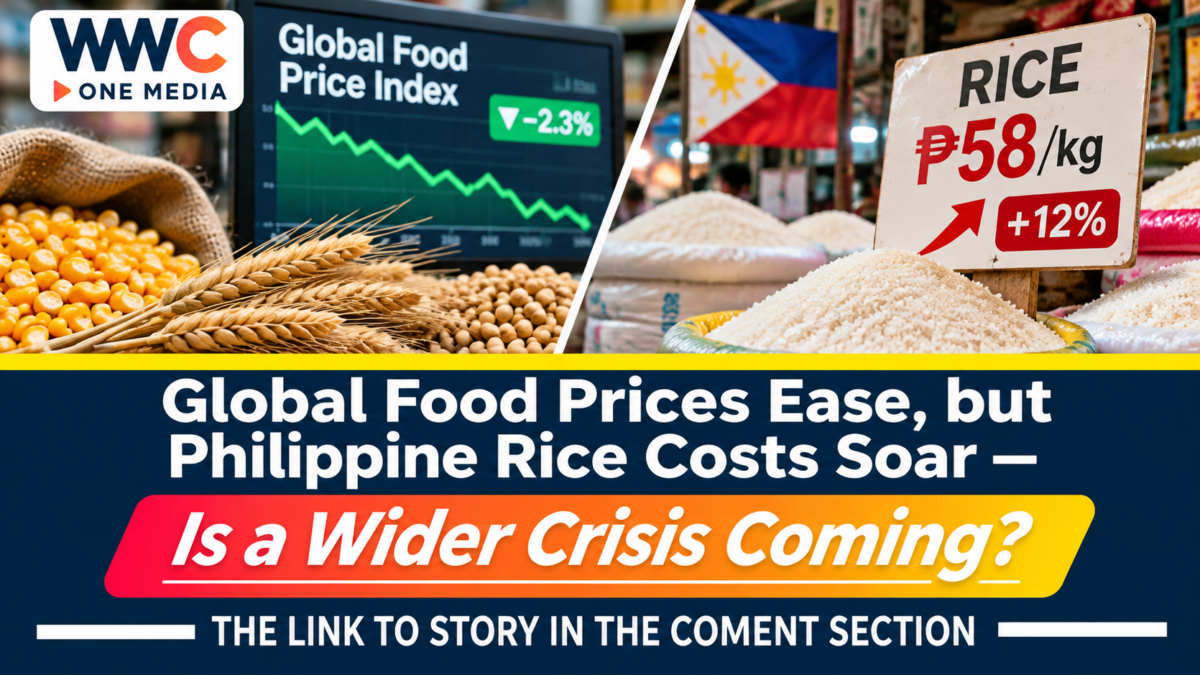
The global food price index averaged 133.9 points in October 2026, falling 1.2% from September, while standing 5.9% above October 2025. The index tracks internationally traded food commodities rather than the final prices consumers pay in supermarkets or neighbourhood markets.
Lower international quotations for cereals, dairy products and meat outweighed increases elsewhere. The cereal price index fell 4.5% month on month, reflecting softer wheat and maize quotations, among other developments.
However, rice moved in the opposite direction. International rice prices rose 1.6% in October, while the sugar price index jumped 6.6%. A decline in the overall index therefore does not mean every staple has become cheaper.
For households, the implication is practical: one global headline number cannot describe the cost of an entire grocery basket, much less the food budget of a family whose main purchases are rice, fish and cooking oil.
World Grain Production Is High, but Distribution Matters
The November cereal outlook projects 2,999 million tonnes of global production in 2026, the second-highest level on record. Output is forecast to decline from the 2025 record, so describing the latest forecast as a new record would be incorrect.
World cereal stocks are projected to rise 1.8% by the end of the 2027 seasons, leaving the global stocks-to-use ratio at 32.4%. These estimates argue against presenting the world as already facing a universal shortage of major grains.
Yet availability is not the same as delivery. Global cereal trade in the 2026/27 season is forecast to contract 3.3% to 507.7 million tonnes, partly because of supply and logistical constraints. More grain held in one place does not automatically reach another market when it is needed.
Rice deserves particular scrutiny. Production is projected to fall 2.5% to 552 million tonnes, while use is forecast to exceed output. Global rice stocks remain substantial, but the projected drawdown illustrates why individual commodities can tighten even when overall cereal inventories appear comfortable.
Philippine Rice Prices Tell a Different Story
Philippine food inflation slowed to 6.4% in October, from 6.8% in September, but food prices were still rising compared with a year earlier. Overall inflation accelerated to 7.8%, meaning the pressure on family budgets extends beyond groceries.
The latest national statistics put rice inflation at 20.7% year on year, up from 20.3% in September. Corn inflation reached 19.3%, while fish inflation slowed to 5.0%. These differences reinforce why households do not experience inflation as a single uniform rate.
The broader squeeze is explored in WWC’s earlier report on Philippine inflation and slowing economic growth. The latest global food data add another layer: a softening international benchmark does not immediately reverse domestic price increases or erase earlier losses in purchasing power.
Price movements also involve domestic harvests, storage, import timing, transport and retail distribution. Those are potential transmission channels, not proof that any one factor caused October’s rice inflation. Determining the cause requires more detailed domestic market evidence.
Food Security Means More Than Aggregate Tonnes
The 2026 Global Report on Food Crises documents widespread acute food insecurity during 2025 and identifies continuing famine risks in the Gaza Strip, Sudan and South Sudan during 2026. High worldwide production totals do not negate those humanitarian emergencies.
A market can be adequately supplied in aggregate while people cannot afford food, cannot safely reach markets or live where supply routes have broken down. The distinction should guide both policymaking and public discussion.
WWC’s previous examination of involuntary hunger among Filipino families is relevant because it addresses food access rather than world harvest volumes. Household experience can deteriorate even when global production projections look reassuring.
The opposite error is also possible. Serious local hardship should not be used as proof that every nation is running out of grain. An accurate account separates widespread vulnerability from a prediction of a single, simultaneous global famine.
What the Data Mean for Food Policy
Analysis: Governments can improve resilience by watching several indicators at once: domestic retail prices, crop output, import availability, reserves and household access. Relying on the global commodity index alone risks missing price spikes in the foods people purchase most often.
For the Philippines, rice supplies are an especially sensitive measure. WWC has previously examined concerns about domestic rice reserves and harvest risks.
Policy responses also need to distinguish temporary price shocks from longer-running affordability problems. Emergency support may address immediate needs, while crop resilience, reliable logistics and transparent market information can strengthen the system over time. None is a guaranteed cure for inflation.
What Happens Next
The next scheduled FAO food price and cereal outlook releases are Dec. 4, 2026. They will indicate whether October’s easing in international prices continued and whether forecasts for grain output, trade and stocks changed.
Philippine policymakers and families will also have new domestic inflation figures to compare with those international trends. The most important question is not whether a global index falls for another month, but whether food becomes reliably accessible and affordable where people live.
A broad global food collapse is not established by the current crop outlook. Equally, the official data do not justify dismissing local price crises or acute hunger. Both conclusions would stretch the evidence beyond what the records show.
Frequently Asked Questions
Is the world facing a food shortage in 2026?
The latest global cereal forecast indicates near-record production, not a demonstrated worldwide shortage of major grains. However, severe food insecurity continues in particular countries and territories.
Why are food prices high in the Philippines if world prices are falling?
International commodity prices and Philippine retail prices measure different markets. Domestic harvests, distribution costs, imports and previous price increases can affect what families pay.
How much did Philippine rice prices rise in October 2026?
The national rice consumer-price index increased 20.7% year on year in October. This is an inflation rate, not a peso-per-kilogram retail quotation.
Are grain supplies expected to set a record this year?
No. Global cereal production in 2026 is forecast at 2,999 million tonnes, below the 2025 record but still the second-highest level on record.
When will the next global food-price update be released?
The next scheduled release of the monthly global food price index and cereal outlook is Dec. 4, 2026. Forecasts may change as new information arrives.