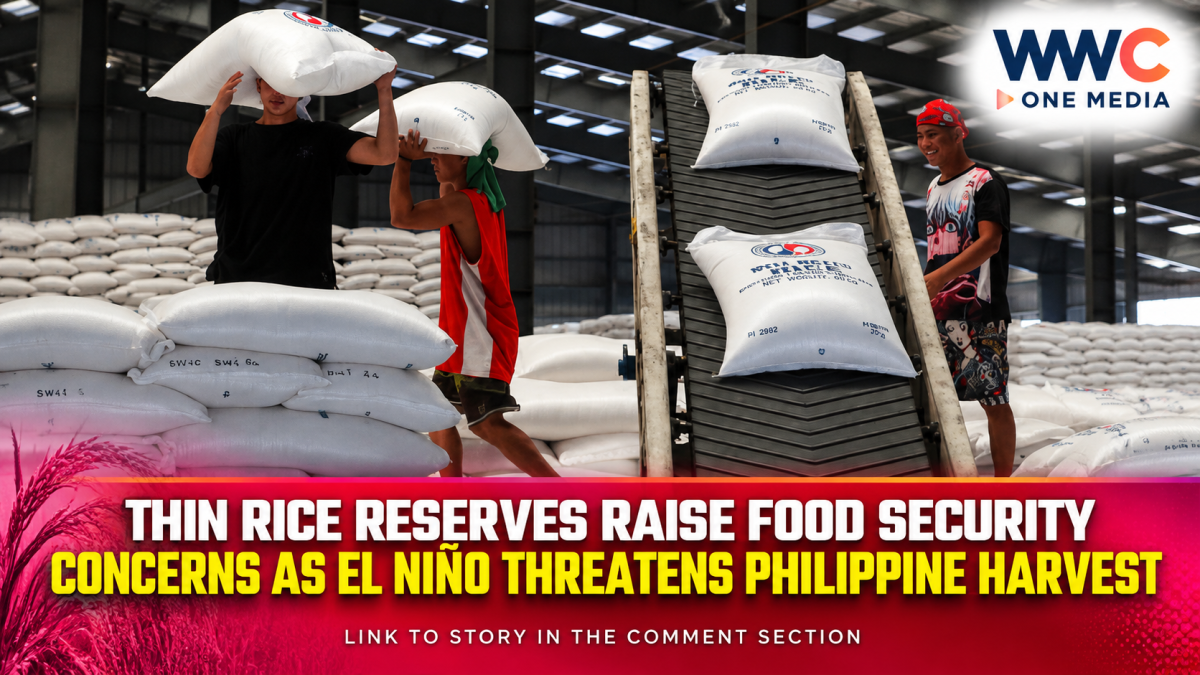
MANILA — The Philippines is entering a potentially difficult rice-supply period with government reserves still relatively thin as the country prepares for the possible intensification of El Niño, raising concerns over whether the National Food Authority can rebuild its buffer stocks before weather-related disruptions affect production.
The NFA currently has rice reserves equivalent to about seven days of consumption. The agency is trying to replenish those stocks during the ongoing wet-season harvest while simultaneously releasing rice through government programs.
The timing is critical because officials expect El Niño conditions to strengthen toward the end of the year. The Department of Agriculture has warned that the weather phenomenon could reduce domestic palay production, prompting the government to keep rice imports open rather than repeat last year’s temporary suspension during the main harvest season.
The NFA has already procured 92,032 metric tons of palay since January and is targeting another 500,000 metric tons from the wet-season harvest. If achieved, total procurement for the year would reach roughly 592,000 metric tons, still below the agency’s original 790,000-metric-ton target.
The agency’s ability to reach that target could depend heavily on the severity and timing of El Niño. NFA Administrator Larry Lacson said a severe event could prevent the agency from reaching its full procurement goal, although officials remain confident they can absorb as much as 500,000 metric tons during the wet harvest if farmers deliver clean and dry palay.
The government is also prepared to pay more for palay if supplies tighten. The NFA currently buys clean and dry palay at ₱27 per kilogram, while officials said its approved maximum could reach ₱30 per kilogram if severe El Niño conditions reduce available supply and intensify competition among buyers.
The risk extends beyond government warehouses. Lower domestic production could place upward pressure on farmgate prices and eventually affect rice prices if supply becomes tighter. Officials have estimated that as much as 30% of the projected wet-season palay harvest could be lost if El Niño has a severe impact.
The Department of Agriculture has therefore opted to maintain rice imports as a food-security measure. Rice imports had already reached millions of tons by August, providing an additional source of supply while the government prepares for potentially weaker domestic production later in the year.
The government’s strategy reflects a delicate balance. Buying more local palay can support farmers and rebuild public stocks, while continued imports can help protect supply if domestic production falls. At the same time, excessive imports during a strong harvest could place pressure on local farmgate prices.
Storage capacity is another concern. The NFA has been clearing older stocks and freeing warehouse space so it can purchase newly harvested palay. The agency is also pursuing warehouse modernization, including facilities designed to better preserve grain quality and improve storage in geographically isolated areas.
There is some protection from the country’s recent production performance. The Agriculture Department said first-half palay production was around 9 million metric tons, supported by a record second-quarter harvest. But it also expects third-quarter production to decline from the previous year, while delayed planting and irrigation issues could add to the pressure as weather conditions change.
The situation also highlights why rice reserves are strategically important. Government-held stocks provide an additional supply source during disasters, market disruptions and periods when domestic production is temporarily reduced. Thin reserves leave less room for error if several supply risks occur at the same time.
For consumers, the immediate concern is whether adequate supply can be maintained without triggering another period of significant rice-price pressure. For farmers, the outcome will depend partly on whether government procurement and market demand remain strong enough to support palay prices despite the weather risks.
The Philippines therefore enters the coming months with several moving pieces: a wet-season harvest that can replenish stocks, continued rice imports, an NFA procurement drive and the growing possibility of stronger El Niño conditions.
The bigger challenge now is whether the government can rebuild its rice buffer quickly enough to provide a meaningful cushion before El Niño begins to put greater pressure on domestic production.