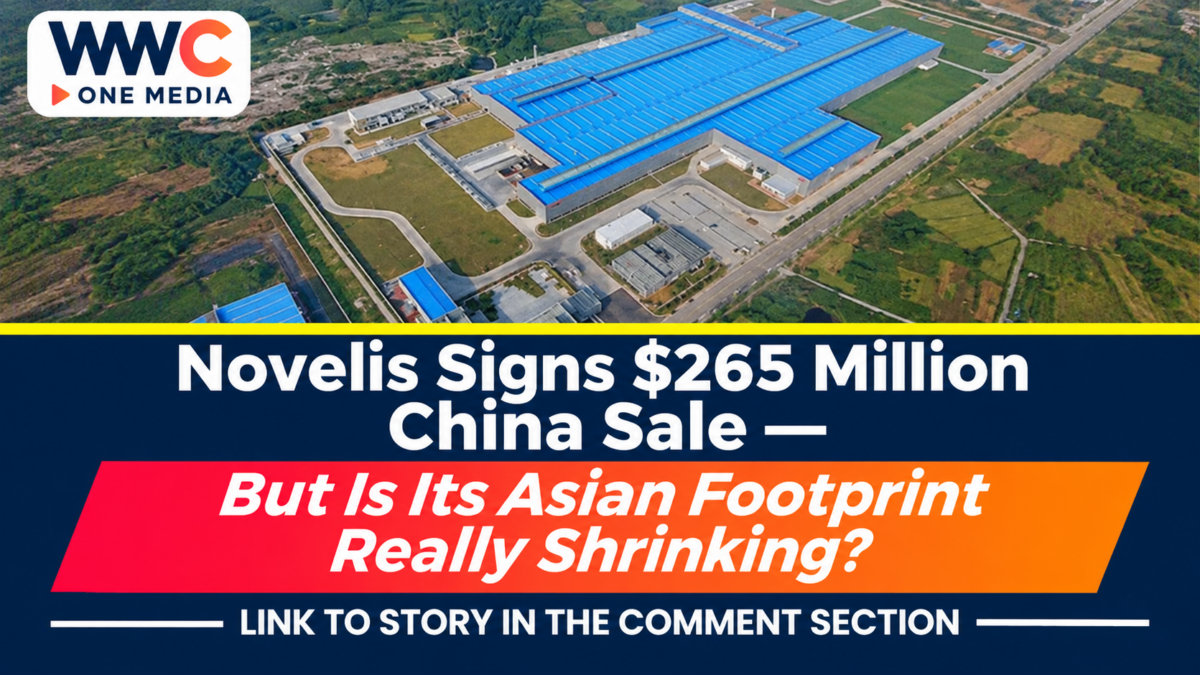
MUMBAI, Nov. 15, 2026 — Novelis, the aluminium producer controlled by India’s Hindalco Industries, signed an agreement on Nov. 14 to sell two wholly owned Chinese subsidiaries for approximately US$265 million, with a possible additional US$10 million payment. Hindalco disclosed the proposed sale to stock exchanges on Nov. 15, saying completion remains subject to regulatory approval.
The transaction is a small part of Hindalco’s consolidated business, but it raises a larger strategic question: what changes when a global metals producer sells selected Chinese operations while continuing to invest elsewhere? The exchange disclosure confirms the proposed ownership transfer; it does not establish a complete exit from China or identify a geopolitical motive.
Novelis China Sale: What Has Actually Been Agreed?
The two entities are Novelis (China) Aluminum Products Co. Ltd. and Novelis (Shanghai) Aluminum Trading Co. Ltd. Both are wholly owned subsidiaries of Novelis Inc., which sits within the Hindalco group.
The buyer identified in Hindalco’s exchange notice is Shenzhen Hongzhi Industrial Investment Co., Ltd., or one or more of its affiliates. Hindalco said the buyer is not part of its promoter group and classified the proposed transaction as not involving a related party.
The agreed consideration is approximately US$265 million. A further US$10 million could become payable if specified conditions are achieved. That contingent amount is not guaranteed proceeds, and the notice does not provide enough detail to calculate the eventual accounting gain or loss.
The agreement was executed on Nov. 14. Closing is expected within 12 months, provided regulatory approvals are obtained. Until completion, the two entities should not be described as having already ceased to be subsidiaries.
Why the 1% Revenue Figure Matters
For financial year 2026, the entities generated US$376 million in net sales, equivalent to approximately ₹3,319 crore in Hindalco’s filing. They represented about 1% of the group’s net sales for that period.
At the end of the same financial year, they contributed US$259 million, or approximately ₹2,420 crore, to the group’s net worth, representing about 2% of the consolidated figure. Net worth is an accounting measure, not the same as market valuation or cash proceeds from selling a business.
Analysis: The percentages suggest a targeted portfolio decision rather than a disposal of Hindalco’s principal revenue engine. Still, a comparatively small sale can matter strategically if it changes a company’s customer access, product mix or operations in a particular market.
It would be premature to call the transaction profitable solely because the stated consideration exceeds, or is close to, a reported balance-sheet contribution. Purchase-price adjustments, liabilities, taxes and accounting rules can all affect the final result.
A Sale of Two Companies Is Not a Total China Exit
Novelis’s fiscal 2026 annual report identified a facility in Zhenjiang, China, producing aerospace plate and sheet as well as commercial and industrial products. The two subsidiaries named in the new sale announcement are different legal entities from the Zhenjiang company identified in earlier group records.
That distinction prevents an overbroad conclusion that the entire Chinese production footprint has been sold. The new disclosure does not list every asset, contract or operation that may remain in China after closing.
A corporate group can sell a local manufacturing or trading subsidiary while keeping other production, distribution or investment relationships. Whether the transaction materially changes Novelis’s regional supply chain will depend on the businesses transferred and on subsequent company disclosures.
International aluminium markets also face pricing and tariff uncertainty. WWC’s recent examination of US aluminium pricing and factory costs explains why the cost of metal to industrial buyers depends on more than a global benchmark price. That wider context does not establish a particular cause for Novelis’s sale.
Novelis Is Investing Heavily in North America
In its Nov. 5 quarterly earnings release, Novelis reported US$5.9 billion in net sales for the three months ended Sept. 30, 2026, a 25% increase from a year earlier. Adjusted EBITDA reached US$508 million, while rolled-product shipments declined 2% to 919 kilotonnes.
The company also reported US$210 million in net income attributable to its common shareholder, although that result benefited in part from insurance recoveries connected with earlier fires at its Oswego facilities. Different measures tell different stories: higher revenue does not automatically mean rising shipment volumes.
Novelis has been commissioning a major rolling and recycling facility in Bay Minette, Alabama. Its quarterly filing describes the project as an approximately US$5 billion investment with planned annual rolled-aluminium capacity of 600 kilotonnes at normal operation.
Analysis: These investments show where Novelis has committed substantial capital, but they do not prove the China divestment is financing the Alabama project. The company has not disclosed that direct connection in the sale announcement.
Trade barriers can shape industrial decisions across borders. WWC’s coverage of Canada’s adjustments to tariff relief for selected aluminium goods provides another example of how policy can affect metal sourcing without determining the outcome of any single corporate deal.
What the Sale Could Mean for Investors and Suppliers
The deal’s headline value is only the start of the financial assessment. Investors still need to know whether approvals arrive, how much of the contingent consideration becomes payable, and how Novelis accounts for the businesses when the transaction closes.
Suppliers and industrial customers have different questions. They need clarity on contract continuity, service arrangements, and which legal company will be responsible for obligations after ownership changes. None of those outcomes can be assumed from the headline sale price alone.
It is also unproven that tariffs, political tensions or Chinese competition directly prompted this particular decision. WWC’s report on Shenzhen exporters navigating international trade barriers offers relevant background on changing industrial supply chains, not evidence of Hindalco management’s private reasoning.
What Happens Next
The most important next milestone is regulatory clearance and formal completion of the sale, which Hindalco expects within 12 months of Nov. 14. A later filing should clarify when the Chinese entities cease to be consolidated and whether the group recognises any financial gain or loss.
The Novelis China sale therefore remains an agreed but unfinished transaction. Its significance will be measured less by speculation about a complete retreat from China than by its actual accounting effects, the remaining regional operations and the capital priorities management discloses next.
Frequently Asked Questions
How much is Novelis selling its Chinese subsidiaries for?
The announced base consideration is approximately US$265 million, with a possible additional US$10 million conditional payment.
Which Novelis businesses are included in the sale?
The agreement names Novelis (China) Aluminum Products Co. Ltd. and Novelis (Shanghai) Aluminum Trading Co. Ltd.
Who is buying the two businesses?
Hindalco identifies Shenzhen Hongzhi Industrial Investment Co., Ltd., or one or more affiliates, as the buyer.
Has Novelis completed its exit from China?
No. The sale has not yet closed, and the disclosure does not establish that Novelis is disposing of every Chinese operation.
When is the transaction expected to close?
Hindalco expects closing within 12 months of the Nov. 14, 2026, agreement date, subject to regulatory approvals.