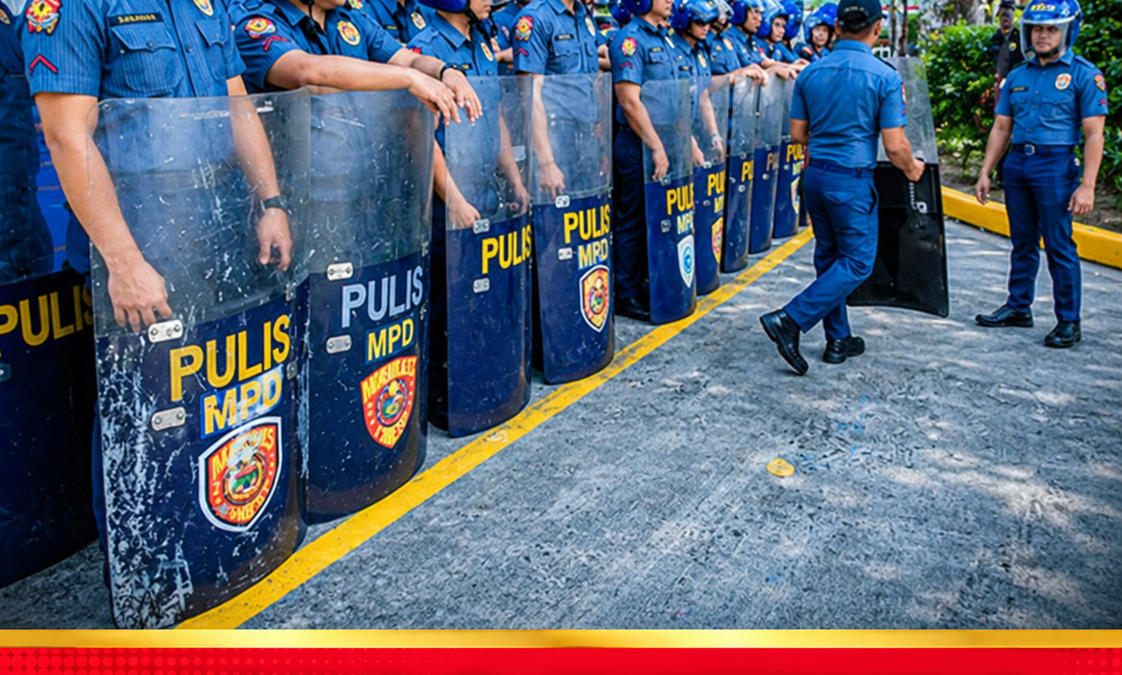
The Philippines’ preparations for the 49th ASEAN Summit are extending beyond the conference venues, with the National Capital Region Police Office (NCRPO) coordinating security arrangements for visiting delegates as they move around Metro Manila.
The police preparations cover not only official summit activities but also personal excursions, tourist destinations and cultural attractions, reflecting the wider operational demands of hosting an international gathering.
The expanded arrangements place attention on an important part of summit security: protecting foreign visitors while keeping transport facilities, commercial establishments and ordinary public activities functioning. Police visibility is only one part of that responsibility. Coordination, accurate public information and respect for lawful public activity also matter.
NCRPO Extends Security Beyond Official Venues
The NCRPO said its security coverage includes places delegates may visit outside their official summit engagements. Its regional leadership directed the five police districts to coordinate with establishments, tourism stakeholders, local government units and other security partners.
The districts involved are the Manila Police District, Quezon City Police District, Northern Police District, Southern Police District and Eastern Police District. Philippine News Agency
This approach recognises that visiting delegations may move through several parts of the capital during their stay. Hotels, tourist destinations, cultural sites and other public locations can become part of the security operation even when they are not official conference venues.
The wider deployment also builds on the security preparations previously examined in WWC ONE MEDIA’s report on nearly 17,000 personnel mobilised for the ASEAN Summit and the challenge of protecting public rights. The issue is not simply how many officers are deployed, but how effectively different units coordinate their responsibilities across the region.
Airports and Transport Hubs Are Part of the Security Plan
Airports, major transport terminals and important access roads are also included in the NCRPO’s preparations. These locations are significant because they serve both visiting delegations and the public.
The police established a Multi-Agency Coordination Center at the PTTC Building in Pasay City to support CCTV monitoring and coordination among participating agencies. The centre forms part of the arrangements for monitoring transport facilities and responding to developing security requirements. Philippine Information Agency
For commuters, airport passengers and businesses, the practical concern is how security arrangements will affect everyday movement. Additional checks and police activity may require travellers to allow more time for their journeys, particularly when travelling near locations associated with official events.
WWC’s earlier coverage of Clark and Subic as alternative gateways for ASEAN visitors provides further context on why transport coordination matters. The movement of delegates involves more than the venues themselves; airports, roads and connections between locations all form part of the logistical picture.
Fake Advisories Can Complicate Public Safety
Security operations also depend on the accuracy of information reaching the public.
The NCRPO has warned against fabricated online announcements involving supposed road closures, security threats, venue restrictions and emergency incidents connected to the summit. It has directed police units to monitor information circulating online and coordinate with the PNP Anti-Cybercrime Group and government information offices when suspicious material requires verification. Philippine Information Agency
This is an important concern because misleading advisories can influence travel decisions even when no official restriction exists. A false announcement about a road closure, for example, could lead commuters to change routes unnecessarily or businesses to make avoidable adjustments.
Residents should check unusual announcements through official government channels before sharing them. A screenshot, forwarded message or post without a verifiable government source should not automatically be treated as an official advisory.
The issue also connects with the wider traffic concerns raised in WWC’s previous report on police deployment and possible Metro Manila traffic restrictions during the summit. Accurate information is particularly important when security preparations may affect routes used by thousands of ordinary commuters.
Emergency Response Requires More Than Police Deployment
Security is not limited to preventing incidents. Authorities must also be prepared to respond when emergencies occur.
A government announcement dated Nov. 12 identified 774 personnel and 119 specialised assets mobilised for emergency preparedness and response during the ASEAN Summit. The listed resources included ambulances, fire engines, engineering equipment, transport vehicles and tactical radios.
These resources serve different functions from police deployment. Emergency-response personnel may be needed for medical incidents, fires, infrastructure concerns or other situations requiring specialised equipment and coordination.
The distinction is important when interpreting deployment figures. Emergency-response personnel and police officers should not automatically be combined into one total because they have different roles and may be counted under separate mobilisation arrangements.
The government’s challenge is to ensure that the different teams can coordinate when an incident requires more than one agency. A well-prepared operation depends not only on personnel and equipment but also on communication, clear responsibilities and timely decisions.
Public Order and Lawful Activity Must Remain in View
International events bring additional security responsibilities, but they do not remove the public’s ordinary rights.
Police operations must be carried out within the law, including the rules governing public assemblies. The Public Assembly Act of 1985, or Batas Pambansa Blg. 880, provides the legal framework for public assemblies and related responsibilities.
For authorities, the challenge is to maintain security without treating lawful public activity as automatically disruptive. For the public, the practical responsibility is to follow legitimate safety instructions while checking whether restrictions or advisories have an official basis.
A successful summit operation should be measured not only by the protection given to visiting officials but also by how responsibly authorities manage the wider public environment.
What Happens Next
As summit activities continue, residents, commuters and businesses should monitor verified announcements from the NCRPO, PNP, local governments and relevant transport authorities.
Travellers should allow time for possible security checks and confirm traffic advisories before leaving. Businesses near summit-related locations should also rely on official announcements rather than unverified social media posts when adjusting their operations.
The wider test for the authorities is whether security arrangements can protect delegates while allowing Metro Manila’s daily activities to continue as smoothly as possible.
Frequently Asked Questions
1. What areas are included in the NCRPO’s ASEAN security preparations?
The arrangements extend beyond official summit venues and include locations delegates may visit, such as tourist destinations and cultural attractions.
2. Which police districts are involved?
The NCRPO identified the Manila, Quezon City, Northern, Southern and Eastern police districts.
3. Where is the Multi-Agency Coordination Center?
It is located at the PTTC Building in Pasay City.
4. Why is the public being warned about fake ASEAN advisories?
False announcements about road closures, threats or emergencies can cause confusion and influence travel decisions. The public is advised to verify information through official channels.
5. Are emergency-response personnel part of the security preparations?
Government announcements identify a separate mobilisation of emergency-response personnel and specialised assets to support preparedness during the summit.