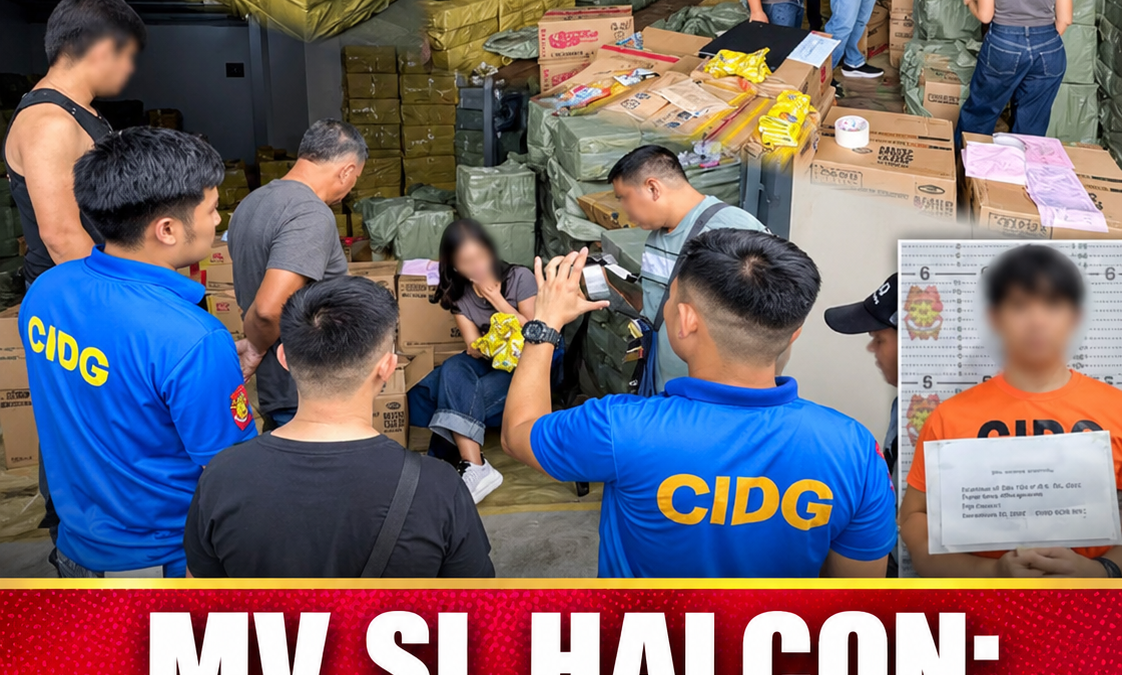
The reported suspension of MV SL Halcon’s cargo ship safety certificate raises an important question for Philippine shipping: what evidence must a vessel present before regulators allow it to return to service?
The Maritime Industry Authority (MARINA) has an established inspection and certification framework that provides for the suspension of ship safety certificates following certain maritime incidents. Its rules also outline the technical inspection process that may lead to the lifting of a suspension.
The issue matters beyond one vessel. For shipping operators, port users and businesses that depend on maritime transport, safety certification is an essential part of ensuring that vessels meet the technical requirements for operation.
Why MV SL Halcon’s reported suspension matters
The Nov. 9, 2026 incident involving MV SL Halcon near Manila Harbor Center has been reported as a grounding incident. The reported regulatory response was the suspension of the vessel’s Cargo Ship Safety Certificate.
However, the actual suspension order has not been independently obtained for this report. Its precise terms, the vessel’s technical condition and the findings of the investigation should therefore not be treated as established facts.
The distinction is important. A reported suspension does not automatically establish why an incident happened, whether a particular safety deficiency existed before it, or whether an operator violated a specific regulation.
Those questions require technical findings and official documentation.
For readers following the wider shipping industry, the regulatory environment is also relevant to developments involving shipping operators and their business activities.
What MARINA’s safety rules actually require
MARINA’s revised rules on inspection, drydocking and the issuance of certificates provide the regulatory foundation for ship safety certification.
The rules state that safety certificates are issued or endorsed following an inspection or survey. They also specify circumstances under which a safety certificate may be suspended or its issuance or endorsement denied.
These circumstances include situations in which the integrity of a ship’s hull may have been compromised following an accident, unauthorised structural or equipment alterations, and non-compliance with safety and pollution-prevention requirements.
The rules specifically identify grounding, collision and hitting hard objects among maritime incidents that can trigger suspension.
This means a maritime accident can have consequences beyond the immediate operational disruption. It can also require regulators to reassess whether the vessel continues to meet the technical conditions associated with its certification.
The regulatory framework is available in MARINA’s revised inspection and certification rules.
A certificate is not automatic permission to resume operations
A safety certificate is evidence that a vessel has undergone the applicable inspection and certification process. It should not be interpreted as a permanent guarantee that the vessel remains safe regardless of subsequent incidents.
When an accident raises questions about the hull, machinery or underwater equipment, regulators may require further technical examination.
This is particularly important for cargo vessels because structural damage may not always be fully visible through an ordinary external inspection.
For that reason, the regulatory process must consider the condition of the vessel after the incident rather than relying solely on its previous certification.
The suspension mechanism serves as a safeguard while the relevant technical requirements are assessed.
How a suspended safety certificate can be reinstated
MARINA’s 2026 Citizen’s Charter describes a specific procedure for supervising underwater inspections for the purpose of lifting safety-certificate suspensions.
The procedure involves an inspection of the vessel where the integrity of its hull or underwater machinery and equipment requires verification.
The inspection is conducted with an accredited underwater marine surveying entity and supervised by qualified technical engineers.
The charter also identifies documentary requirements, including a letter of intent, marine protest, suspension order, certificate of ownership, Certificate of Philippine Registry, ship safety certificates and the accreditation certificate of the underwater surveying entity.
Importantly, the process does not mean that submitting an application automatically restores a vessel’s operating authority.
The charter states that a lifting order is issued following a satisfactory underwater inspection.
This provides a clear distinction between requesting a review and satisfying the technical conditions necessary for the suspension to be lifted.
The complete procedure appears in the 2026 MARINA Citizen’s Charter.
Why the investigation matters to shipping businesses
A vessel’s suspension can affect more than its owner or operator.
Shipping companies rely on vessels to move goods between ports, support supply chains and serve commercial customers. An interruption can therefore create operational challenges, particularly when schedules depend on the availability of specific vessels.
However, the commercial impact of a particular suspension should not be assumed without information about the vessel’s cargo, contractual arrangements and operational schedule.
For businesses, the broader lesson is that safety compliance is also an operational responsibility.
Maintaining vessel integrity, completing required inspections and addressing technical deficiencies are important parts of managing maritime operations.
The importance of reliable shipping infrastructure is also reflected in WWC’s previous coverage of the Philippine ferry industry’s transition towards electric vessels.
What happens next
The next important developments in the MV SL Halcon case should come from official regulatory and investigation records.
These include the actual suspension order, any show-cause order issued to the owner and operator, and the results of the marine safety investigation.
A show-cause process would give the concerned parties an opportunity to respond to the matters raised by the regulator. Its actual issuance and contents have not been independently verified for this article.
The technical inspection process will also be important if the vessel seeks to have its suspension lifted.
Until the relevant documentation and technical findings are available, the circumstances surrounding the incident and the vessel’s eligibility to resume operations remain matters requiring official confirmation.
For the wider maritime sector, the case illustrates why certification must remain connected to actual vessel condition, particularly after an incident that could affect structural integrity.
Frequently asked questions
1. What is a Cargo Ship Safety Certificate?
A Cargo Ship Safety Certificate is a regulatory document associated with the inspection and safety certification of qualifying cargo vessels. MARINA administers the applicable certification requirements.
2. Can MARINA suspend a vessel’s safety certificate after grounding?
Yes. MARINA’s revised inspection and certification rules identify grounding as one of the maritime incidents that may warrant suspension of a safety certificate.
3. Does suspension automatically mean a shipping company committed a violation?
No. Suspension is a regulatory safety measure. The circumstances, technical findings and possible violations must be established through the appropriate investigation and proceedings.
4. How can a suspended safety certificate be reinstated?
MARINA’s 2026 Citizen’s Charter describes supervised underwater inspection involving an accredited surveying entity. A lifting order follows a satisfactory inspection.
5. Can MV SL Halcon immediately resume operations?
Its return to service cannot be established from the documents retrieved for this report. The relevant suspension order, technical inspection results and any lifting order must be checked.