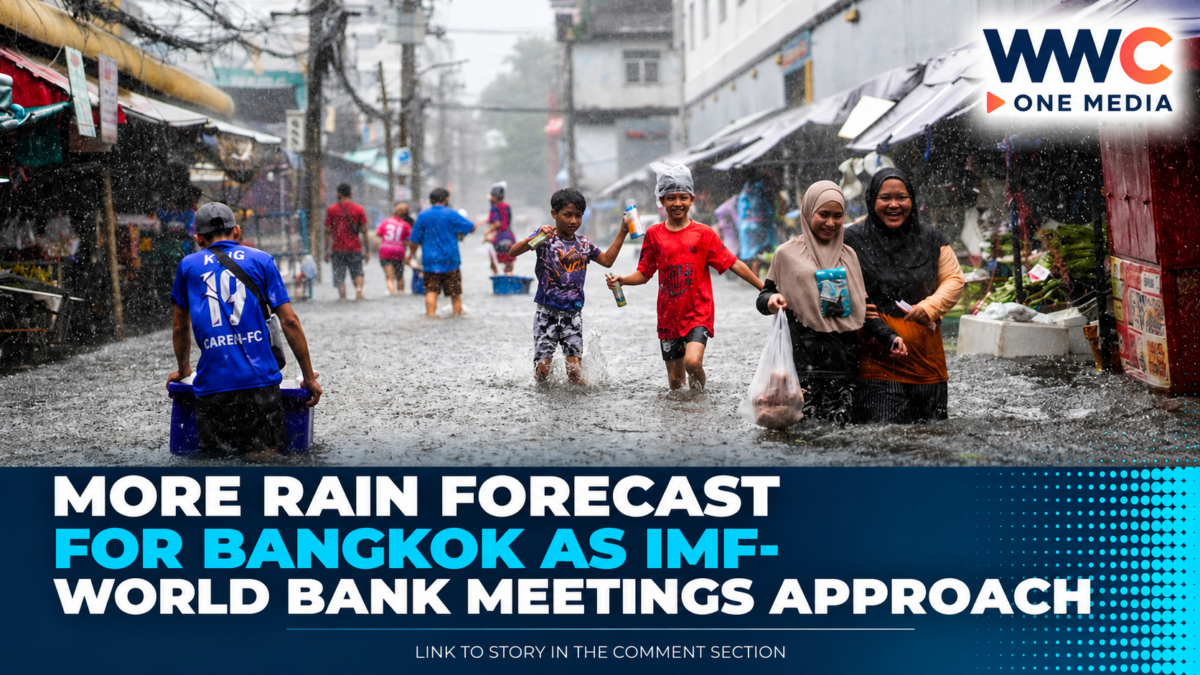
BANGKOK, Thailand — Bangkok is bracing for more thunderstorms and periods of heavy rain just days before thousands of global finance officials and delegates arrive for the 2026 annual meetings of the International Monetary Fund (IMF) and World Bank, raising fresh concerns about flooding and travel disruptions in Thailand’s capital.
Thailand’s weather agency forecast thundershowers and isolated heavy rain in and around Bangkok from Oct. 10 to 12, with the risk coming after severe flooding hit the city late last month.
The IMF and World Bank meetings are scheduled to take place in Bangkok from Oct. 12 to 18, bringing about 15,000 participants from more than 190 countries, according to the Thai government. The main venue will be the Queen Sirikit National Convention Center.
Bangkok faces renewed flood risk
The latest forecast comes at a sensitive time for Bangkok, which was hit by exceptionally heavy rainfall in late September.
Nearly 300mm of rain fell over the capital within three days, prompting Bangkok authorities to declare the city a disaster-affected area. Floodwaters inundated roads and homes, disrupted transportation and left some neighbourhoods dealing with prolonged standing water.
The city has since worked to drain affected areas and restore normal conditions, but officials warn that the ground and drainage system remain vulnerable to another major downpour.
Bangkok Governor Chadchart Sittipunt said the capital’s capacity to absorb additional rainfall remains limited because water levels in canals and retention areas are still elevated. Residents in flood-prone communities have been advised to keep belongings in higher places until the situation improves.
Heavy rain could coincide with arrival of delegates
The timing of the forecast has added pressure on authorities preparing for one of Thailand’s biggest international events of the year.
The annual meetings will bring together finance ministers, central bankers, business executives, economists and other officials from around the world.
The meetings are expected to focus on major global economic issues, while Thailand is using the event to showcase its ability to host large international gatherings.
However, heavy rainfall could create practical problems for delegates, particularly if roads become flooded during peak travel periods.
Earlier flooding in Bangkok caused major traffic disruptions, with vehicles becoming stranded on inundated roads and some areas becoming difficult to access.
Authorities prepare contingency measures
Thailand has been stepping up preparations to reduce the risk that flooding will disrupt the meetings.
The government has ordered relevant agencies to prepare measures covering flood management, transportation, emergency response and the movement of delegates.
Authorities have also conducted a multi-agency disaster-response exercise ahead of the meetings, testing their ability to respond to flooding, power outages, cyber threats, disease outbreaks and other emergencies. A 24-hour command and control centre is planned during the event.
Contingency arrangements include additional monitoring of roads around key venues and preparations for alternative transportation if flooding affects normal routes.
Reports have also indicated that authorities are preparing larger vehicles, including trucks and four-wheel-drive vehicles, that could be used to move delegates if some roads become impassable.
More rain expected across Thailand
The risk is not limited to Bangkok.
Thailand’s weather agency has forecast periods of heavy rain across parts of the central, eastern and lower northeastern regions, while southern provinces are also expected to receive significant rainfall.
Such conditions could increase the possibility of flash floods and localised flooding, particularly in areas that have already received substantial rainfall.
Authorities are therefore monitoring weather conditions closely as the meetings approach.
The latest forecast does not mean that the IMF-World Bank meetings will be disrupted, but it increases the need for contingency planning given Bangkok’s recent flooding.
September floods caused widespread disruption
The renewed concern follows one of Bangkok’s most disruptive rainfall events in recent years.
The late-September downpour left roads submerged and cars partly underwater in several areas. Some residents were stranded in their homes, while businesses and infrastructure were affected by floodwaters.
The flooding also had economic consequences beyond the capital.
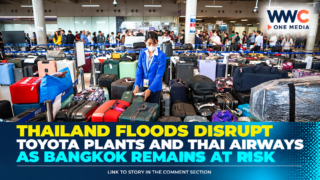
Several factories temporarily suspended operations, while Thai Airways suspended some cargo operations during the wider disruption. The country’s agricultural sector was also affected, with the government later asking companies to reduce egg exports after flooding caused significant losses among poultry farms.
That experience has increased the urgency of ensuring that Bangkok’s drainage and transportation systems can cope with another spell of heavy rain.
Thailand seeks to avoid repeat of travel chaos
The Thai government has stressed that preventing transport disruptions is a priority during the international meetings.
Prime Minister Anutin Charnvirakul has instructed agencies to ensure that flooding does not interfere with the movement of participants and that transportation services can continue operating normally.
For Bangkok, the challenge is particularly important because thousands of delegates will be moving between hotels, meeting venues and other locations throughout the week.
Even localised flooding can cause significant traffic delays in the capital, where road congestion can quickly spread from one affected area to another.
IMF and World Bank meetings begin Oct. 12
The 2026 annual meetings represent an important international event for Thailand.
The IMF and World Bank said the meetings will take place from Monday, Oct. 12, through Sunday, Oct. 18, with Bangkok hosting the gatherings for the first time since 1991.
The Queen Sirikit National Convention Center will serve as the main venue, with the campus bringing together meeting spaces, participant services, exhibition areas and transport connections.
With the city still recovering from last month’s floods, weather conditions are now becoming another factor authorities must manage alongside the logistics and security demands of the event.
Bangkok remains on alert
For now, Bangkok is not facing a repeat of the September disaster, but the combination of saturated drainage systems, elevated water levels and another period of heavy rain has kept the risk of flooding high.
The next several days will be closely watched as officials monitor rainfall forecasts and water levels.
The priority for Thailand is to keep the capital’s transport network functioning and protect residents while ensuring that the arrival of more than 15,000 international participants proceeds as smoothly as possible.
With thunderstorms and isolated heavy rain forecast just before and during the opening of the meetings, Bangkok’s ability to manage another round of severe weather will be put to an important test.