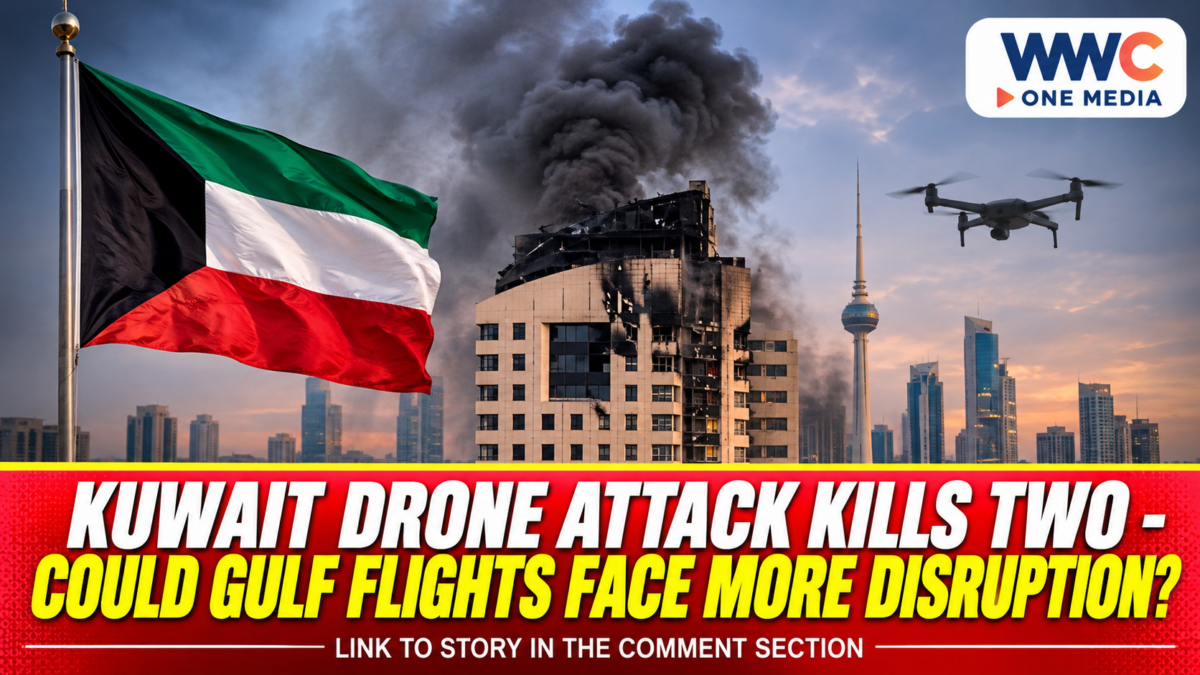
A drone attack in Kuwait has killed two Italian technicians working on military air-defence equipment, adding a deadly new development to the security crisis affecting the Gulf.
Kuwait’s military said on November 26 that it detected and engaged several hostile drones inside the country’s airspace. The country’s Defence Ministry initially reported four people injured after the attack targeted what it described as a vital site, with falling debris causing injuries and material damage.
Italy subsequently confirmed that two of its nationals had died. The technicians were employed by Rheinmetall Italia and were maintaining detection antennas for the Skyguard air-defence system used by the Kuwaiti Armed Forces.
The incident raises questions beyond the immediate casualties. Kuwait sits along important international aviation and maritime corridors, and the possibility of further military activity creates additional uncertainty for airlines, passengers, shipping operators and governments across the region.
The central issue is no longer simply whether Kuwait can intercept incoming drones. It is whether the region’s civilian infrastructure and international transport networks can remain protected as military threats continue.
Two Italian Technicians Die at a Military Site
The Kuwaiti Defence Ministry’s initial announcement identified four people injured by falling shrapnel: one Kuwaiti national, two Italian nationals and one Pakistani national.
The injured were transferred to a hospital for treatment. The ministry also confirmed material damage but did not publicly identify the targeted site or provide a detailed assessment of the damage.
Italy’s Foreign Ministry later confirmed that the two Italian technicians had died. They were working at a site where maintenance was being carried out on detection antennas belonging to the Skyguard air-defence system.
The system is used by the Kuwaiti Armed Forces. The technicians’ work involved maintaining equipment connected to the detection of potential aerial threats.
The distinction is important. The public statements identify the military function of the site, but do not provide a complete operational account of how the drones reached the area, what specific equipment was damaged or how the explosion occurred.
The available official announcements also do not establish the subsequent medical condition of the two other people initially reported injured.
Kuwait’s military spokesperson, Staff Colonel Saud Abdulaziz Al-Atwan, said the armed forces would continue carrying out their duties and taking measures to protect the country’s sovereignty and security.
The deaths also bring attention to the risks faced by civilian technical personnel working on military infrastructure during an active conflict.
Why the Skyguard Maintenance Site Matters
The involvement of Rheinmetall Italia gives the incident an additional international dimension.
Rheinmetall is a German defence group with operations in several countries. Its Italian subsidiary, Rheinmetall Italia, was responsible for the technicians identified in the Italian government’s announcement.
The Skyguard system is part of Kuwait’s air-defence infrastructure. Its detection antennas support the identification and monitoring of aerial threats, making maintenance work important to the reliability of the wider defence network.
A functioning air-defence system is not dependent only on interceptors and launch platforms. Detection equipment, communications, trained personnel and maintenance are also essential parts of the process.
The attack therefore raises a wider security question: how can countries protect the technical facilities and specialist personnel needed to keep defensive systems operating?
Analysis: Damage or disruption at a maintenance site could have consequences beyond the immediate location, particularly if repairs or replacement equipment are required. However, the available official statements do not establish that Kuwait’s overall air-defence capability was reduced or that the Skyguard system was disabled.
The incident also illustrates how attacks involving unmanned aircraft can expose personnel who are not necessarily operating on a conventional frontline.
WWC previously examined the vulnerability of military personnel and support facilities in Kuwait in its report on the Port Shuaiba drone attack investigation and the military records sought by US lawmakers.
Flight Diversions Put Gulf Aviation Under Scrutiny
The incident has also drawn attention to the safety of civilian aviation across the Gulf.
Kuwait occupies a strategically important position between Iraq, Saudi Arabia and the northern Gulf. International routes connecting Europe with destinations in the Gulf and Asia operate through a region where military activity can affect flight planning.
Aviation authorities and airlines must account for several risks during periods of heightened conflict. These include missile launches, drone activity, air-defence interceptions, falling debris and sudden changes to available airspace.
Even when an aircraft is not directly threatened, a precautionary route change can affect flight duration, fuel planning, connections and airline operating costs.
The Euronews report that prompted this article described civilian aircraft changing course before reaching Kuwait’s airspace. However, the primary civil-aviation notice or airspace directive establishing the extent and duration of those changes was not located in the official records reviewed for this report.
That distinction matters. An observed flight-path change is not automatically proof that a country’s entire airspace has been formally closed. Nor does it establish that every airline operating in the region has suspended flights.
Passengers travelling through Kuwait and neighbouring Gulf hubs should therefore check directly with their airlines and relevant aviation authorities for current operational information.
WWC has also examined the wider security environment affecting the region in its report on Bahrain’s latest aerial attacks and the continuing risks around the Strait of Hormuz.
The Gulf’s Security Crisis Extends Beyond Military Bases
Kuwait’s latest incident forms part of a wider regional security environment in which drones, missiles and threats to strategic infrastructure have become central concerns.
The Gulf is important not only because of its military facilities but also because of its role in international energy supplies and commercial transport.
The Strait of Hormuz, located between Iran and Oman, is a critical route for international oil and gas shipments. Security concerns in the surrounding waters can influence shipping decisions, insurance assessments and energy-market expectations.
Aerial threats can create a similar problem for aviation. Airlines must consider whether a route remains safe, whether an alternative corridor is available and whether additional fuel or operational precautions are necessary.
These pressures can reinforce one another. Military escalation may increase aviation and maritime risk assessments, while transport disruption can add uncertainty to regional trade and business operations.
WWC has previously reported on the continuing tanker attacks around the Strait of Hormuz, where incident reports have highlighted the importance of distinguishing confirmed attacks from claims about weapons and responsibility.
The wider confrontation involving Iran and Gulf states has also raised questions about the security of military and strategic facilities. WWC examined that regional picture in its coverage of Iranian strikes and the growing security pressure across the Gulf.
For Kuwait, the immediate challenge is protecting its territory while maintaining the infrastructure that supports its economy and international connections.
What Happens Next
Several questions remain unanswered.
Kuwait has confirmed that its armed forces detected and engaged hostile drones and that the attack caused casualties and material damage. Italy has confirmed the deaths of its two technicians and identified the maintenance work they were performing.
However, the public statements reviewed do not provide a complete account of the attack’s operational sequence, the exact extent of the damage or whether any additional defensive systems were affected.
Further clarification from Kuwait’s Defence Ministry could establish the location of the targeted site, the scale of the damage and the condition of the other people initially reported injured.
Civil aviation authorities also need to provide clear information about any formal airspace restrictions, flight diversions and the conditions under which normal operations can continue.
For airlines and passengers, the practical concern is whether security conditions will require additional route changes or temporary restrictions. For defence operators, the incident highlights the importance of protecting the technical infrastructure needed to maintain air-defence readiness.
The deaths of the two technicians demonstrate that the consequences of aerial attacks can extend beyond the intended military target. They can affect specialist workers, civilian transport and the confidence of businesses operating across the Gulf.
Kuwait’s interception of hostile drones shows that its armed forces responded to the threat. Whether the country can prevent further attacks on vital infrastructure remains a much larger test.
Frequently Asked Questions
1. What happened in Kuwait on November 26, 2026?
Kuwait’s military said it detected and engaged several hostile drones in its airspace. The Defence Ministry reported that an attack on a vital site caused material damage and initially injured four people.
2. Who died in the Kuwait drone attack?
Italy’s Foreign Ministry confirmed that two Italian technicians employed by Rheinmetall Italia died. They were maintaining detection antennas for the Skyguard air-defence system used by Kuwait’s armed forces.
3. What is the Skyguard system?
Skyguard is an air-defence system used by the Kuwaiti Armed Forces. The Italian government identified the technicians’ work as maintenance of its detection antennas.
4. Did Kuwait officially close its airspace?
The reports reviewed describe civilian flight diversions, but a primary civil-aviation directive establishing the extent and duration of any formal airspace closure was not located. A flight-path change should not automatically be described as a complete airspace closure.
5. Were all four people initially reported injured killed?
No. The initial Kuwaiti announcement reported four people injured. Italy subsequently confirmed that two Italian technicians died. The official records reviewed did not establish the later condition of the other two people.
6. Why does the attack matter to international aviation?
Drone activity and air-defence interceptions can create risks for aircraft operating near affected airspace. Airlines may need to reassess routes, fuel requirements and contingency plans when security conditions change.