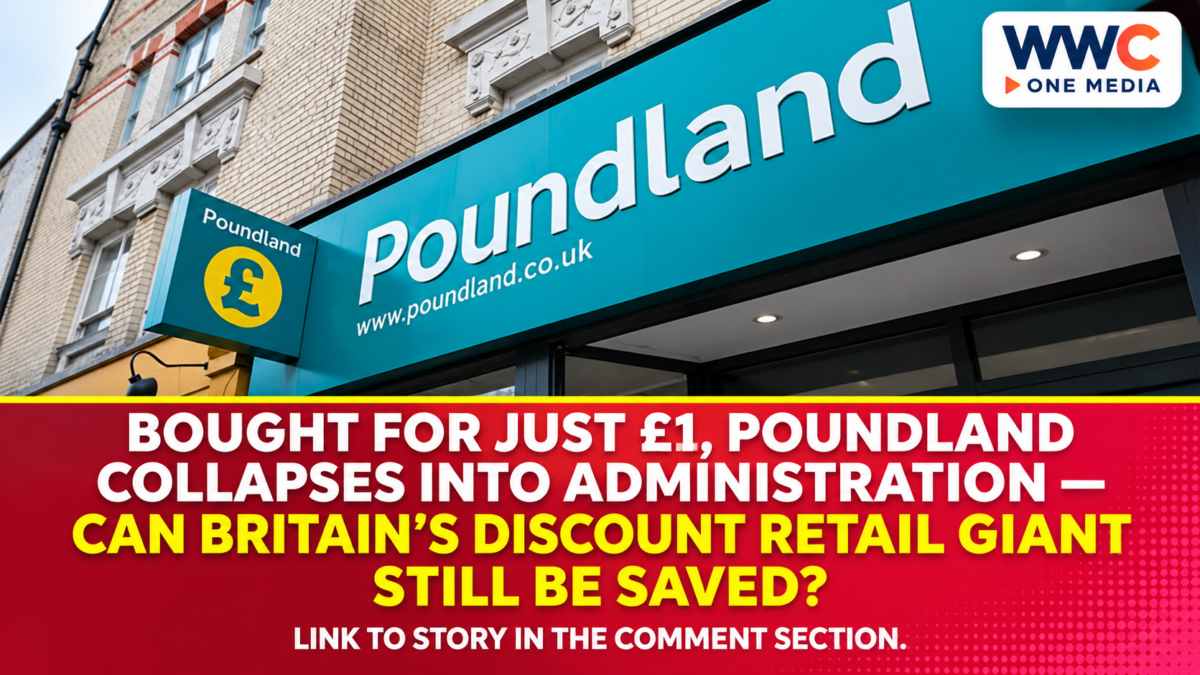
LONDON, UNITED KINGDOM | November 26, 2026 — The Poundland administration has raised fresh concerns about the future of Britain’s discount retail industry after the company entered formal insolvency proceedings on November 25, approximately 17 months after being acquired by American investment firm Gordon Brothers for a symbolic £1.
Clare Kennedy, Daniel Imison and Kevin Wall of AlixPartners have been appointed joint administrators of Poundland Limited and Poundland Elgin Limited.
The development follows an extended sale process that failed to produce a viable solvent rescue for the entire business.
Although stores and distribution centres remained operational when the administrators were appointed, the long-term future of the retail chain remains uncertain.
For employees, suppliers, landlords and customers, the immediate question is whether a new investor can preserve the business or whether its operations will ultimately be divided among different buyers.
Poundland Administration: How a £1 Acquisition Ended in Financial Distress
Founded in 1990, Poundland built its business around affordable merchandise and everyday household products.
On June 12, 2025, European retailer Pepco Group completed the sale of Poundland to 1903 Peach Bidco Limited, an entity established by affiliates of Gordon Brothers.
The nominal £1 purchase price attracted attention, but the transaction involved considerably more complex financial arrangements.
At the time, Poundland employed approximately 16,000 people and operated more than 800 stores across the United Kingdom, Ireland and the Isle of Man.
The acquisition was intended to support a restructuring programme capable of restoring the retailer’s long-term commercial viability.
Gordon Brothers announced financing of up to £80 million to support working capital and management’s turnaround strategy.
However, the subsequent entry into administration demonstrates that acquiring a financially distressed company at a nominal price does not eliminate the costs of restoring its operations.
The purchase price represents only one part of a transaction that may also involve substantial existing liabilities, financing requirements and operating expenses.
Why Poundland’s Financial Performance Was Already Under Pressure
Poundland’s financial challenges existed before Gordon Brothers acquired the business.
Pepco’s June 2025 corporate announcement revealed that Poundland accounted for 33% of its group revenue during the preceding financial year but contributed only 5% of earnings before interest, taxes, depreciation and amortisation, measured before IFRS 16 adjustments.
The difference illustrated the retailer’s relatively weak earnings contribution despite its substantial sales operations.
Pepco decided to concentrate on its higher-margin clothing and general merchandise business while reducing its exposure to fast-moving consumer goods.
Retail businesses operating with narrow margins can be particularly sensitive to changes in merchandise costs, wages, property expenses and consumer demand.
Even substantial sales volumes may not generate sufficient cash if operating expenditure and financing commitments absorb most of the revenue.
Similar financial challenges involving retail property exposure and restructuring were examined in WWC ONE MEDIA’s coverage of Vista Land’s debt obligations and retail portfolio restructuring.
Although the companies operate under different financial and regulatory arrangements, both situations highlight the importance of balancing retail operations with sustainable financing.
What Happened to Poundland’s £80-Million Turnaround Plan?
The June 2025 acquisition included a broader financing and restructuring package.
Following approval of Poundland’s restructuring plan by the UK High Court in August 2025, Pepco announced several financial arrangements.
These included an overdraft facility of up to £30 million and an extension of the maturity date of an existing £30-million secured loan from September 2025 to September 2030.
Certain unsecured loans were also converted into a minority investment interest in Poundland’s parent company.
Pepco’s subsequent annual report identified that minority stake as 30% and assigned it a carrying value of nil.
These arrangements were designed to give Poundland additional financial flexibility while its management pursued a turnaround.
Nevertheless, financing commitments and loan extensions do not automatically establish that a business has achieved sustainable profitability or sufficient liquidity.
The £80-million financing announcement should also not be interpreted as proof that the entire amount was ultimately drawn, spent or lost.
Determining the precise financial circumstances behind the administration will require further insolvency documentation and examination of the company’s liabilities.
Thousands of Workers Face Uncertainty Before Christmas
The timing of Poundland’s collapse has intensified concerns among employees and their families.
During parliamentary proceedings on November 3, UK employment minister Kate Dearden referred to approximately 12,000 Poundland employees and thousands of suppliers whose interests were at stake.
That figure provides an indication of the workforce’s scale before the administration, rather than a confirmed number of employees facing immediate redundancy.
Retail trade union Usdaw has requested urgent discussions with the administrators to explore options for protecting employment and preserving stores.
The union maintains that employees contributed to improvements in the business and believes that viable opportunities for its future may still exist.
Administrators, however, have confirmed that the preceding sale process did not identify a viable solvent solution for the entire company.
These positions illustrate the competing assessments surrounding Poundland’s commercial prospects.
The eventual employment impact will depend on whether buyers emerge, which operations remain viable and how any proposed transactions are structured.
UK Parliament Demands Further Answers From Gordon Brothers
The administration has also prompted renewed parliamentary scrutiny.
On November 25, the House of Commons Business, Innovation, Science and Trade Committee requested that Gordon Brothers director Mark Newton-Jones attend a public hearing.
The committee also sought assurances concerning whether Gordon Brothers or related entities would participate in any insolvency capacity involving Poundland.
Newton-Jones previously provided evidence to the committee in private on November 11.
The committee has given him until noon on November 27 to respond to its latest correspondence.
The parliamentary inquiry could provide additional information about the decisions preceding the administration and efforts to secure a rescue transaction.
However, parliamentary concerns and questions do not constitute a judicial finding of corporate misconduct.
Any conclusions concerning directors’ conduct, creditors’ rights or potential conflicts of interest must be based on properly established evidence.
Will Poundland Stores Close Immediately?
Entering administration does not automatically mean every Poundland store will close.
The administrators confirmed that the business would continue trading while potential rescue options were examined.
These options include selling the company or its assets either in their entirety or in separate transactions.
For customers, Poundland has announced changes to its voluntary returns arrangements effective November 26, 2026.
The company has distinguished discretionary returns from statutory consumer rights while warning that some claims relating to purchases made before administration may be handled as unsecured claims.
The situation creates uncertainty not only for shoppers but also for commercial landlords and suppliers.
Comparable questions concerning creditor exposure and store closures have emerged in the restructuring of Australian department store chain David Jones.
Retail insolvency outcomes depend on the financial position of individual operations, the availability of buyers and applicable insolvency laws.
What Poundland’s Collapse Could Mean for Global Retail
Poundland’s difficulties highlight the financial challenges associated with maintaining large physical retail networks.
Discount retailers must balance affordable prices with operating expenses, merchandise availability and sufficient working capital.
Consumer spending conditions remain another important consideration, as examined in WWC ONE MEDIA’s coverage of Australia’s declining consumer confidence and household cost-of-living pressures.
For businesses across Asia-Pacific markets, the broader commercial relevance lies in the relationship between sales volumes, profitability and financial resilience.
However, general retail pressures alone cannot establish the specific cause of Poundland’s insolvency.
That determination requires closer examination of the company’s financial records and decisions preceding the administration.
What Happens Next?
AlixPartners will examine acquisition proposals and other options for Poundland’s operations and assets.
The next important developments could include announcements concerning prospective buyers, employment arrangements, store closures and reports to creditors.
The parliamentary request for further evidence could also provide greater clarity about the circumstances surrounding the retailer’s collapse.
Poundland’s future is not yet settled.
The immediate challenge is whether its remaining operations can attract sufficient investment to preserve a substantial part of the business before further financial deterioration occurs.
Frequently Asked Questions
Why did Poundland enter administration?
The administrators confirmed that an extended sale process failed to identify a viable solvent solution for the entire company. A comprehensive determination of the financial causes remains outstanding.
Who bought Poundland for £1?
An entity affiliated with American investment firm Gordon Brothers acquired Poundland from Pepco Group on June 12, 2025, for a nominal £1 consideration.
Is every Poundland store closing?
No. Stores and distribution centres remained operational at the time administrators were appointed. Future closures will depend on the administration process.
How many Poundland jobs are at risk?
A UK government minister referred to approximately 12,000 employees on November 3, 2026. The final number of redundancies has not been established.
Can Poundland still be rescued?
Potentially. Administrators are considering the sale of the entire business or selected operations and assets, but a successful rescue is not guaranteed.