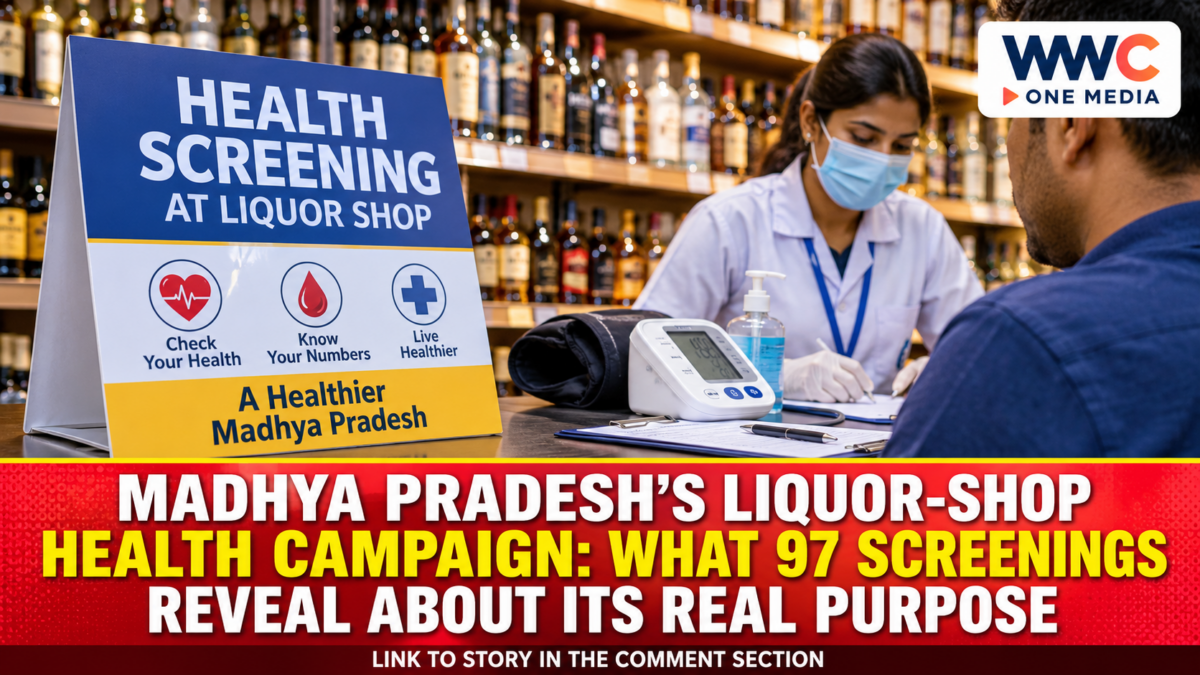
SAGAR, India — Health and excise department teams in Sagar district, Madhya Pradesh, screened 97 people in a public-health campaign targeting excessive and habitual alcohol consumption, with medical consultations conducted across five areas on November 23, 2026.
The district’s public-information announcement said the activity covered Sagar city, Deori, Rahli, Bina and Khurai. Participants received health advice and counselling, while the campaign was described as an effort to identify people who may need medical attention and encourage healthier decisions.
The initiative puts a practical question at the centre of the public-health response: can health services reach people who may not otherwise seek medical advice, particularly those whose drinking habits could be affecting their wellbeing?
Sagar Health Screening Focuses on Habitual and Excessive Drinking
The November 23 announcement described the target group as people who consume alcohol excessively or habitually. It said the joint team had examined 97 individuals across the five locations and provided health-related advice.
The campaign was carried out by teams from the district’s health and excise departments under the direction of Collector Dilip Kumar Yadav. The district’s official administrative information identifies Yadav as Sagar’s Collector and District Magistrate.
A separate public-information update dated November 22 described health examinations and counselling involving habitual drinkers in the district. It identified locations in Banda and Sagar city where medical teams were providing examinations, blood-sample collection and immediate medical assistance.
These announcements describe a health intervention, not a new medical licensing process for alcohol purchases. The November 23 notice does not state that customers must undergo a blood test before buying liquor.
That distinction matters because a public-health screening programme should not be confused with a legal restriction on retail sales.
Why the Campaign Extends Beyond a Routine Check-Up
The approach attempts to bring health advice closer to people who may be difficult to reach through conventional clinic-based services.
For someone who regularly consumes alcohol, a medical consultation may provide an opportunity to discuss symptoms, existing health concerns and the possibility of seeking further treatment. Counselling can also help health workers explain why excessive consumption deserves attention.
The district announcements describe screening, counselling and necessary treatment as parts of the initiative. They do not provide a detailed clinical protocol, a complete list of tests performed or a breakdown of individual diagnoses.
That limitation is important. A screening result is not automatically a confirmed diagnosis, and the number of people examined does not reveal how many require long-term treatment.
WWC ONE MEDIA has previously examined the importance of separating confirmed findings from unresolved questions in its report on the Manipur suspected liquor incident and the need for forensic evidence. The same reporting principle applies here: public-health interventions should be assessed through documented results, not assumptions about what screening may have found.
The Difference Between Alcohol Awareness and Liquor Regulation
The campaign also raises a broader policy distinction.
Health screening seeks to identify possible health concerns and connect people with advice or care. Liquor regulation, by contrast, concerns the legal production, distribution, licensing and sale of alcoholic products.
These responsibilities may involve different government departments, even when they intersect during a public-health emergency.
Madhya Pradesh’s Excise Department maintains official information about liquor production, retail licensing and departmental orders. Its published records include a circular concerning certificates that establish whether liquor sent from manufacturing units to warehouses is fit for human consumption.
That regulatory process addresses product quality. It is separate from the individual health assessments described in Sagar’s district campaign.
The distinction is especially relevant in discussions of suspected adulterated liquor. Testing a person’s health cannot establish the chemical composition or safety of a particular bottle. That requires appropriate product testing and laboratory evidence.
WWC’s coverage of suspected liquor poisoning in Manipur explains why chemical confirmation and public-health messaging must remain separate questions.
What 97 Screenings Can — and Cannot — Tell the Public
The figure of 97 provides an initial measure of the campaign’s reach on November 23. It does not establish how many people in the district have alcohol-related illnesses, how many have been diagnosed with alcohol dependence or whether the campaign has reduced alcohol consumption.
Those questions require additional information, including follow-up examinations, referrals, treatment records and longer-term monitoring.
For a campaign of this kind, the next useful public updates would include the number of people who completed follow-up consultations, how many were referred for further medical assessment and what services are available to people who want help reducing or stopping alcohol consumption.
It would also be useful to know whether the programme is reaching people beyond those already identified through local outreach.
The broader idea of bringing preventive services closer to everyday settings is not unique to Sagar. WWC previously examined how retail health checks can make basic screening more accessible. But access to a screening opportunity is only the first step; people also need reliable follow-up and appropriate medical care.
Why Follow-Up Matters More Than a Single Screening Figure
A one-time check can identify a reason for further assessment, but it cannot replace a full medical evaluation.
People who receive concerning results need clear guidance on where to seek care and how to access it. Those who receive counselling may also need continued support, particularly when changing long-established drinking habits is difficult.
For public authorities, the value of the programme will therefore depend not only on the number of people reached but also on whether the campaign creates a pathway from initial screening to sustained healthcare.
Transparent reporting can help the public understand what the programme is achieving without exaggerating its early results.
The November announcements establish that joint health and excise teams conducted examinations and counselling in Sagar district. They do not yet provide enough information to measure the campaign’s long-term health impact.
What Happens Next?
The district’s November 23 announcement said the joint health and excise campaign would continue.
The next important information to watch is whether the administration publishes further screening totals, details of medical referrals and evidence of continued counselling or treatment.
A clearer account of the services offered would also help residents understand how to access assistance and what a screening appointment involves.
For now, the documented result is an initial outreach effort involving 97 people across five areas. Its significance will depend on whether that contact leads to appropriate medical support and sustained public-health engagement.
Frequently Asked Questions
How many people were screened in Sagar’s alcohol-awareness campaign?
The district’s November 23 public-information announcement reported that 97 people were screened across Sagar city, Deori, Rahli, Bina and Khurai.
Is a blood test compulsory before buying alcohol in Sagar?
The November 23 campaign announcement does not state that a medical test is required before purchasing liquor. It describes health screening and counselling for people who consume alcohol excessively or habitually.
Which departments are involved in the campaign?
The district announcement identifies a joint effort involving the Health Department and Excise Department.
What is the purpose of the screening?
The stated purpose is to raise awareness, examine the health of people with excessive or habitual alcohol consumption and provide necessary medical advice or treatment.
Does screening mean a person has been diagnosed with alcohol-related disease?
No. Screening can identify concerns that may require further medical assessment. A diagnosis must be made through appropriate clinical evaluation.