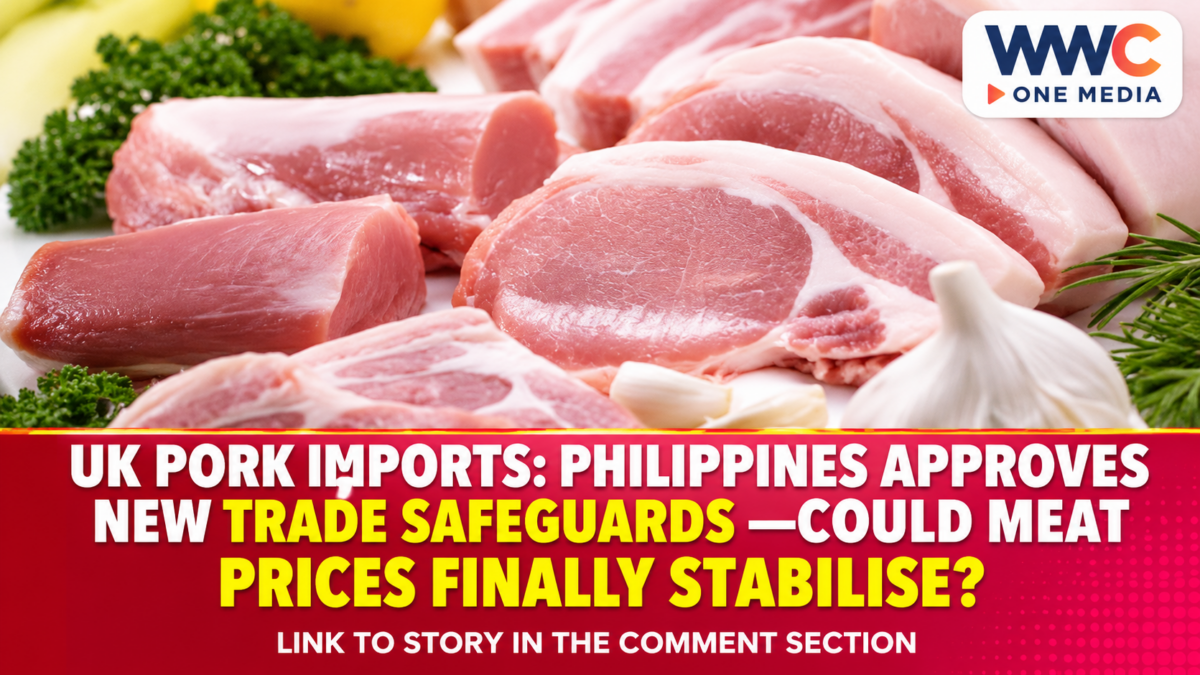
MANILA, PHILIPPINES — The Philippines has approved a new animal disease regionalisation arrangement with the United Kingdom, protecting a British pork export market estimated to be worth £172 million over the next five years while introducing safeguards against potential African swine fever outbreaks.
Department Circular No. 58, Series of 2026, signed by Agriculture Secretary Francisco P. Tiu Laurel Jr. on Nov. 9, is scheduled to take effect on Dec. 10, 2026.
The policy establishes a framework under which eligible British agricultural products can continue entering the Philippine market from recognised disease-free areas if an African swine fever outbreak occurs elsewhere in the United Kingdom.
However, the development comes at a particularly sensitive time for Philippine agriculture, as domestic hog producers face substantial financial losses and the government pursues separate restrictions on selected pork imports.
For consumers, livestock farmers and international meat suppliers, the challenge is balancing reliable food supplies with the protection of domestic agricultural production.
UK Pork Imports Receive New Animal Health Safeguards
The Philippine government has formally recognised the United Kingdom’s approach to African swine fever regionalisation for imports involving live swine, pork and genetic materials.
Regionalisation allows authorities to distinguish between areas affected by an animal disease and locations that remain eligible for international trade.
Rather than automatically excluding an entire exporting country because of a geographically limited outbreak, authorities can assess individual zones under agreed veterinary conditions.
The Bureau of Animal Industry evaluated documentation submitted by British veterinary authorities before the recognition was granted.
Its technical assessment concluded that the United Kingdom maintains effective veterinary supervision and disease-control measures that reduce the risk of African swine fever transmission through eligible imports.
The assessment establishes a low-risk finding, not a guarantee that animal disease transmission is impossible.
The development builds upon the bilateral agreement examined in WWC ONE MEDIA’s earlier coverage of the UK’s pork export safeguards and Philippine import restrictions.
British Pork Exporters Gain Protection for a £172-Million Market
The United Kingdom estimates that the agreement could protect British pork exports to the Philippines valued at £172 million over five years.
The Philippines has become the United Kingdom’s second-largest pork export destination outside the European Union.
For British producers, the arrangement reduces uncertainty surrounding future disease-related interruptions to an important international market.
However, the projected export value does not represent a guaranteed purchase agreement or a commitment by Philippine importers to acquire a specified volume of British meat.
Actual shipments will depend on commercial demand, regulatory compliance, prevailing import restrictions and international market conditions.
The Philippines has also developed trading relationships with other major agricultural exporters, including Brazil’s expanding presence in the Philippine meat market.
Maintaining access to multiple suppliers could help importers manage disruptions affecting individual exporting countries.
Local Hog Producers Face ₱27.9 Billion in Estimated Losses
The agreement arrives as Philippine livestock producers confront significant financial pressure.
A preliminary government investigation estimated that domestic hog producers lost ₱27.9 billion between January and July 2026.
Average farmgate prices declined from ₱198.30 per kilogram in 2025 to ₱175.75 during the first half of 2026.
Meanwhile, Philippine pork imports increased from 589,675 metric tonnes in 2023 to 836,240 metric tonnes in 2025.
The government responded by issuing Department Order No. 33 on Nov. 7, establishing a provisional 60-day restriction on specified imported pork products under the Safeguard Measures Act.
The regionalisation agreement and the temporary safeguard measure address different regulatory objectives.
The former concerns animal disease management, while the latter responds to the government’s preliminary findings concerning economic injury to domestic producers.
Consequently, recognition of British disease-free areas does not automatically exempt covered shipments from separate import restrictions.
The difficulties facing local livestock producers have also emerged in Cebu’s declining farmgate hog prices ahead of the holiday season.
Veterinary Inspections Remain Essential
The Philippines established its broader African swine fever regionalisation guidelines through Administrative Circular No. 12, Series of 2025.
Under that framework, participating countries must satisfy veterinary accreditation and reporting requirements.
Live pigs intended for export must come from recognised disease-free areas, display no clinical signs of African swine fever and avoid restricted locations during transportation.
Eligible meat products must undergo applicable veterinary inspections before and after slaughter.
The framework also requires recognised exporting countries to provide annual information about disease surveillance and control activities.
These safeguards remain important because the economic value of international meat trade depends partly on maintaining confidence in animal health controls.
Department Circular No. 58 specifically requires transactions involving British swine products to comply with the bilateral import conditions, existing regionalisation guidelines and other applicable agricultural regulations.
The recognition therefore does not create unrestricted access to the Philippine market.
Could the Agreement Bring Down Pork Prices?
Greater geographical flexibility in import arrangements could help meat suppliers manage disruptions caused by future disease outbreaks.
For food processors, restaurants and retailers, maintaining access to eligible sources of imported pork may provide additional supply options.
However, lower retail prices are not an automatic consequence of regionalisation.
International purchase prices, transportation expenses, tariffs, exchange rates and domestic production conditions can influence the final cost of meat.
Separate import restrictions may also affect the volume of products available to Philippine buyers.
From an agricultural policy perspective, the challenge involves two legitimate but potentially competing objectives: maintaining affordable food supplies and preserving the financial viability of domestic livestock production.
The broader implications extend across Asia-Pacific economies, where agricultural trade arrangements must accommodate animal disease risks alongside the commercial requirements of producers and consumers.
What Happens Next for British Pork Imports?
Department Circular No. 58 takes effect on Dec. 10, 2026, establishing the formal regulatory basis for the recognised British regionalisation arrangements.
Importers will still need to satisfy applicable veterinary requirements and determine whether individual consignments are affected by other trade restrictions.
For domestic hog producers, the outcome of the government’s safeguard investigation will remain an important development.
For British exporters, the agreement offers protection against potential nationwide restrictions arising solely from future geographically contained African swine fever outbreaks.
The policy could strengthen long-term agricultural trade resilience, but its immediate effect on Philippine meat availability and consumer prices will depend on how the different regulatory measures operate together.
Frequently Asked Questions
Has the Philippines approved UK pork import regionalisation?
Yes. Department Circular No. 58, Series of 2026, formally recognises the United Kingdom’s African swine fever regionalisation framework.
When do the new UK pork import rules take effect?
The circular takes effect on Dec. 10, 2026.
How much British pork trade could the agreement protect?
The British government estimates that the agreement could protect £172 million in pork exports to the Philippines over five years.
Does the agreement override the Philippine pork import suspension?
No automatic exemption is established by the regionalisation circular. The animal health agreement and the separate economic safeguard measure serve different purposes.
Will pork prices become cheaper?
Lower prices are possible under favourable supply and market conditions, but no specific retail price reduction has been established or guaranteed.