
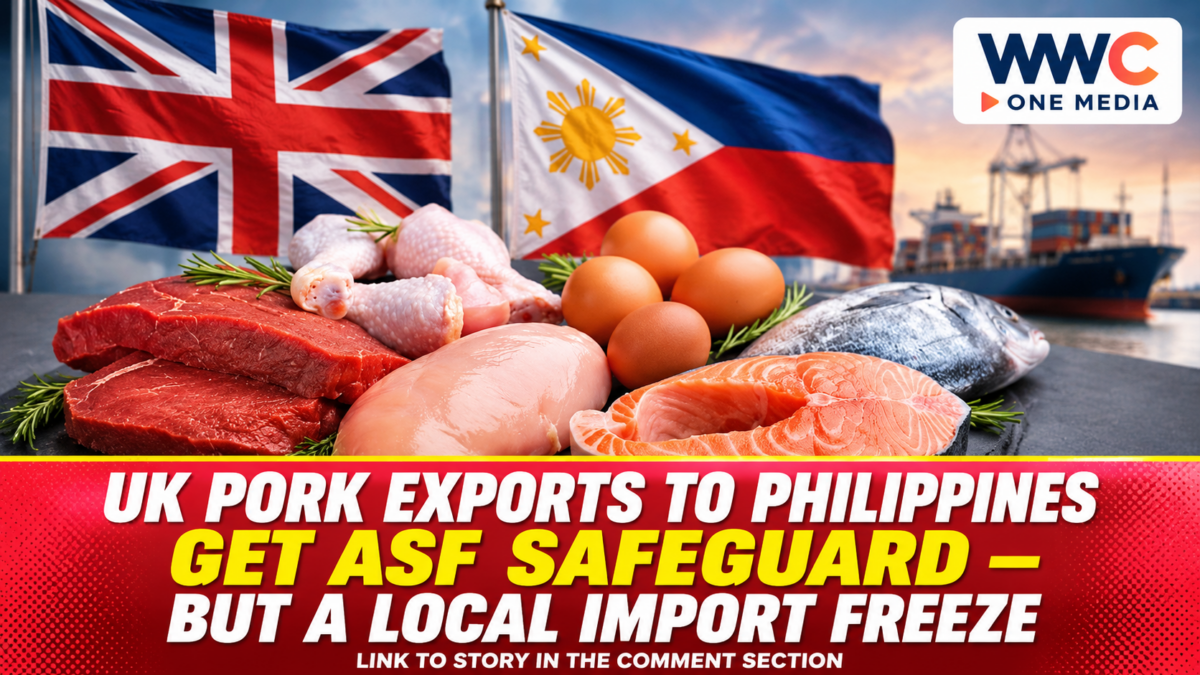
The Philippines has formally recognised the United Kingdom’s regionalisation system for African swine fever, creating a route for pork imports from designated disease-free British areas under the Department of Agriculture’s conditions. The development comes as the UK government estimates that the arrangement could protect £172 million in British pork exports to the Philippine market over five years.
The Philippine Department of Agriculture issued Department Circular No. 58, Series of 2026, on November 9, with an effective date of December 10. But the opening is arriving alongside a separate Philippine safeguard measure that temporarily suspends certain pork imports, placing an important qualification on the commercial outlook.
The two measures address different issues. Regionalisation concerns animal-health controls and the geographic scope of restrictions during an African swine fever outbreak. The safeguard measure concerns the impact of rising pork imports on domestic producers. Their interaction will matter to exporters, importers and local hog raisers.
UK Pork Exports Gain a Formal Regionalisation Framework
The Philippine circular formally recognises regionalisation for African swine fever in imports of live swine and their products, including pork and genetic materials, from the United Kingdom.
The Bureau of Animal Industry evaluated technical documentation supplied by the UK’s competent veterinary authorities. The circular states that the assessment found the United Kingdom maintained effective veterinary oversight and appropriate control and risk-mitigation measures.
This recognition does not mean every British pork shipment can enter automatically. The circular requires import transactions to comply with the bilateral terms and conditions on regionalisation, the Department of Agriculture’s Administrative Circular No. 12, Series of 2025, and other existing department rules.
The distinction is important. Regionalisation allows a trading partner to apply restrictions to affected zones rather than treating an entire exporting country as a single risk area. If African swine fever is detected in one designated area, exports from that affected area can be stopped while eligible products from recognised disease-free areas may continue, subject to the agreed controls.
For background on how international meat suppliers compete for Philippine buyers, WWC previously examined Brazil’s expanding position in the Philippine meat market.
Why Britain Values the Philippine Market
The UK Department for Environment, Food and Rural Affairs said the Philippines had become the United Kingdom’s second-largest pork market outside the European Union.
The British government estimates that the regionalisation agreement will protect future UK pork exports to the Philippines worth £172 million over five years. That figure is an estimate of export value at stake, not a record of completed sales or a guaranteed revenue stream.
The agreement followed a November trade mission led by Biosecurity and Trade Minister Baroness Hayman of Ullock. The delegation included 14 British business representatives from seafood, meat, animal protein and whisky sectors. The mission covered cities from Manila to Hanoi between November 9 and 14.
The commercial interest is broader than fresh or frozen pork. The British government identified pork, animal feed, whisky and processed foods among the United Kingdom’s existing exports to the Philippines.
The development also follows a September 22 meeting of the UK-Philippines Joint Economic and Trade Committee in Metro Manila. Its joint statement identified cooperation on agricultural market access, animal and plant health, fisheries, food safety and the development of Philippine regionalisation guidelines for African swine fever.
That wider engagement provides context for the latest circular. It shows that market access is being pursued alongside technical cooperation on standards and disease controls. A similar distinction between announced commercial opportunities and confirmed business outcomes matters in other trade relationships, including the British Chamber’s new partnership with the ASEAN Business Advisory Council Philippines.
The Philippine Pork Import Suspension Creates a Separate Test
The new regionalisation framework does not erase the Philippines’ domestic industry concerns.
On November 7, Agriculture Secretary Francisco P. Tiu Laurel Jr. issued Department Order No. 33, imposing a provisional 60-day suspension of pork imports under AHTN codes 0203 and 0206. The Department of Agriculture said the measure followed a preliminary determination that increased imports from 2021 to August 2026 had substantially injured the domestic pork industry and that critical circumstances justified intervention.
The department’s notice states that the suspension takes effect for 60 days from the date the Bureau of Customs issues an implementing order, or 15 days after publication of the department order in two newspapers of general circulation, whichever comes first. The order was published on November 11.
That means the safeguard measure has a separate timetable from the UK regionalisation circular. The department’s published notice does not establish that the regionalisation recognition overrides the safeguard suspension, nor does it explain how UK shipments will be treated while the provisional measure is in force.
This is a critical distinction for businesses. A country can meet animal-health requirements and still face a separate trade restriction. Importers will need to confirm the applicable customs and Department of Agriculture rules before treating the new recognition as permission to ship.
The Philippine government’s concerns also reflect the pressure on local producers. The department reported that pork imports rose from 589,675 metric tons in 2023 to 836,240 metric tons in 2025. It also said domestic self-sufficiency fell to 54% in January to August 2026.
These figures help explain why the government is balancing market access with a safeguard action intended to give the domestic hog sector relief.
Vietnam Adds Another Export Opportunity for British Animal Protein
The Philippines is only one part of the UK’s Southeast Asian trade push.
The British government also announced that Vietnam had reopened its market to UK processed animal protein, a meat-sector by-product used in animal and fish feed. It estimated that the opportunity could be worth £70 million to exporters over five years.
This is a different product category from pork for human consumption. Processed animal protein is used in feed production, so the reopening expands an industrial market rather than simply adding another retail meat supplier.
The UK government also reported that wider agricultural trade between the United Kingdom and Vietnam was valued at £779.2 million a year. It identified Vietnam as the United Kingdom’s sixth-largest destination for seafood exports.
The developments in the two countries show how trade access can depend on separate technical approvals. Exporters need more than a commercial agreement: they must satisfy the importing country’s requirements for animal health, product handling, documentation and permitted uses.
For readers following the wider UK trade strategy, WWC has also examined how the UK-India trade agreement’s tariff changes affect Scotch whisky imports. The same broad lesson applies: market access on paper does not automatically guarantee that every shipment qualifies for entry or preferential treatment.
What Happens Next
The immediate date to watch is December 10, 2026, the effective date listed by the Philippine Department of Agriculture for Circular No. 58.
Before shipments can benefit, exporters and Philippine importers must work within the bilateral regionalisation terms and the country’s existing import controls. They must also establish how the separate provisional safeguard measure applies to particular pork consignments.
The next practical questions are whether the Bureau of Customs has issued an implementing order for Department Order No. 33, how long the provisional suspension remains in force, and whether the Department of Agriculture publishes additional guidance for UK-origin shipments.
For British producers, the agreement offers a more resilient framework for trade if an outbreak occurs in a limited area. For Philippine hog raisers, the government’s safeguard measure signals that import competition remains a policy concern.
The value of the new arrangement will therefore depend not just on the export estimates announced in Britain, but on how Philippine authorities implement animal-health recognition alongside domestic industry protections.
Frequently Asked Questions
What is the UK-Philippines pork regionalisation agreement?
It is the Philippines’ formal recognition of the United Kingdom’s regional approach to controlling African swine fever for specified imports, including live swine, pork products and genetic materials.
How much could the agreement protect in UK pork exports?
The UK government estimates that the arrangement could protect British pork exports to the Philippines worth £172 million over five years. This is a projection, not guaranteed sales.
When does Philippine Department Circular No. 58 take effect?
The Department of Agriculture’s circular listing gives December 10, 2026, as its effective date.
Does regionalisation mean all UK pork can enter the Philippines?
No. Shipments must come under the recognised regionalisation arrangements and comply with bilateral import conditions and all applicable Philippine regulations.
Will the Philippine pork import suspension affect UK shipments?
The Department of Agriculture has issued a separate provisional 60-day suspension covering pork under AHTN codes 0203 and 0206. The public records reviewed do not clarify how the safeguard measure will apply to UK shipments under the new regionalisation recognition. Importers should confirm the applicable rules with the authorities before shipping.










