HANOI, Vietnam — Vietnam’s ambition to establish a major industrial and energy hub in the Dung Quat Economic Zone could require between US$16.1 billion and US$20.5 billion in investment, positioning central Vietnam for a significant industrial transformation.
Binh Son Refining and Petrochemical Corporation (BSR) presented the investment estimates during a national industrial and energy seminar in Hanoi on Nov. 18, 2026, with US$14 billion to US$17.5 billion potentially needed by 2030.
The proposed development extends beyond conventional petroleum refining. It seeks to connect fuel production, petrochemicals, industrial manufacturing, energy storage, logistics and emerging fuel technologies within an integrated economic ecosystem.
At stake is Vietnam’s ability to strengthen its energy security, attract international capital and expand its position within Asia-Pacific industrial supply chains.
Vietnam Energy Hub Targets Multibillion-Dollar Investment
Located in Quang Ngai Province, the Dung Quat Economic Zone is being positioned as a foundation for Vietnam’s integrated energy and industrial development strategy.
Government planning has outlined two investment phases:
- 2025–2030: US$14.1 billion to US$17.5 billion.
- 2031–2045: US$2 billion to US$3 billion.
- Total estimated investment: US$16.1 billion to US$20.5 billion.
The estimates represent projected investment requirements rather than confirmed financing commitments.
The initiative complements PetroVietnam’s broader multibillion-dollar infrastructure investment programme, although the respective investment figures should not automatically be combined.
Developing the hub will require coordination between government agencies, industrial operators, infrastructure developers and potential investors.
Dung Quat Refinery Becomes the Industrial Foundation
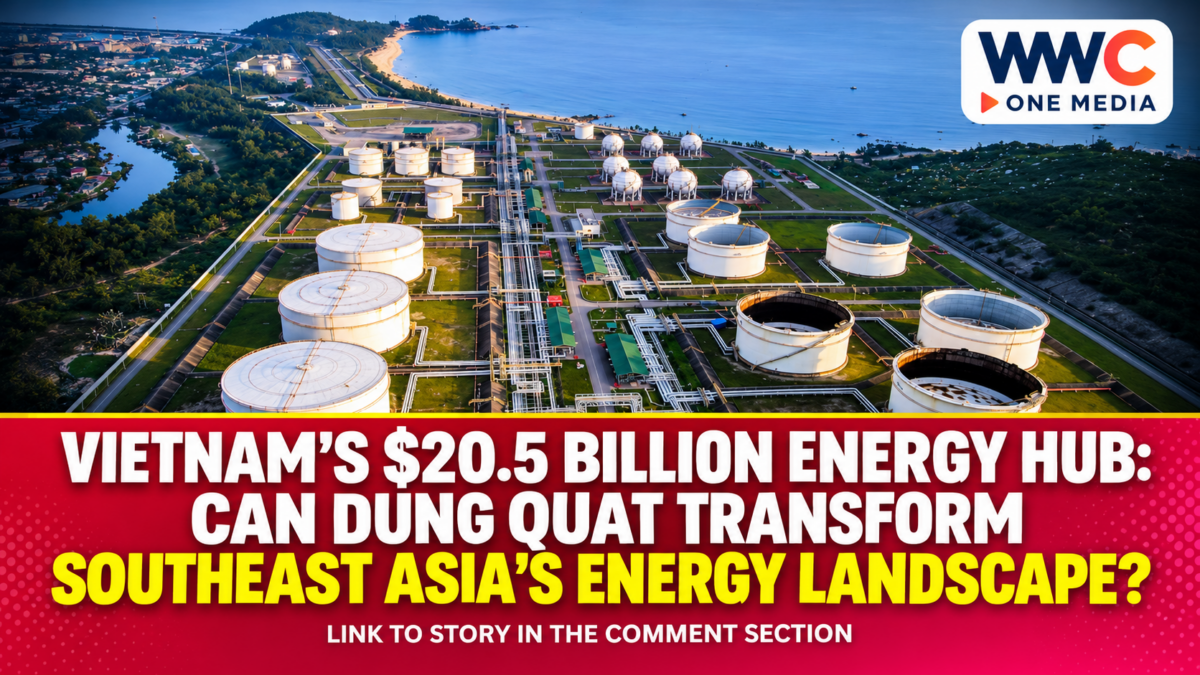
The existing Dung Quat refinery provides an operational starting point for the proposed development.
Its planned upgrade and expansion carries an investment value of VND36.397 trillion and targets a processing capacity of 171,000 barrels per day.
PetroVietnam has also outlined plans to increase the refinery’s annual crude oil processing capacity from 6.5 million tonnes to 7.5 million tonnes.
The expansion is intended to support a wider industrial network rather than simply increase petroleum production.
By connecting refinery operations with downstream manufacturing, Vietnam could create opportunities for businesses involved in chemical processing, industrial materials, engineering and specialised technical services.
The development is particularly relevant alongside Vietnam’s broader energy infrastructure and investment agenda.
Vietnam Looks Beyond Traditional Petroleum Products
BSR is exploring opportunities to expand its product portfolio into higher-value industrial materials and emerging fuel markets.
One proposal involves studying a petrochemical complex with an annual production capacity of six million to seven million tonnes.
Sustainable aviation fuel, biofuels and synthetic fuels are also among the areas being considered as part of the company’s long-term development direction.
These initiatives remain at different stages of assessment and development. Their inclusion in corporate planning does not mean that every proposed facility has received final investment approval.
Vietnam’s growing interest in new energy technologies also extends internationally, as illustrated by its renewable energy development cooperation with Azerbaijan.
The commercial challenge will be determining which technologies can operate competitively while meeting evolving environmental requirements and industrial demand.
Shared Infrastructure Could Reshape Industrial Investment
A central feature of the Dung Quat development concept is the integration of industrial facilities.
Rather than requiring every company to establish independent infrastructure, a coordinated industrial hub could allow participating enterprises to access shared logistics, utilities and technical services.
Such arrangements could potentially reduce unnecessary infrastructure duplication and improve coordination between manufacturers and suppliers.
However, shared facilities also require clear commercial agreements, investment responsibilities, safety standards and long-term maintenance arrangements.
The effectiveness of the model will depend on how these responsibilities are distributed and whether participating businesses can generate sufficient demand to support infrastructure investment.
What the Project Could Mean for ASEAN and APEC Economies
The Dung Quat proposal carries implications beyond Vietnam’s domestic fuel market.
A successfully implemented industrial hub could create additional opportunities for Asia-Pacific businesses involved in engineering, petrochemical technology, energy infrastructure, equipment manufacturing and maritime logistics.
It could also provide another avenue for regional companies seeking to participate in Vietnam’s industrial expansion.
Energy infrastructure remains an important component of Southeast Asia’s economic development, particularly as the region confronts increasing electrification and power-grid requirements.
Vietnam’s industrial energy ambitions also sit within a wider regional environment of cross-border cooperation, including its expanding trade and energy partnership with Indonesia.
Nevertheless, Dung Quat’s potential regional influence will depend on actual production capacity, commercial competitiveness, environmental performance and the successful completion of individual projects.
What Happens Next for Dung Quat?
The next major test is translating the development concept into commercially viable investments.
Vietnam has been examining dedicated policy arrangements for the proposed centre, including its governance structure, investment environment and implementation responsibilities.
PetroVietnam is also researching a national crude oil reserve facility at Dung Quat, with an indicative strategic storage capacity of one million tonnes, subject to further project development.
The refinery expansion, potential petrochemical facilities and energy storage projects will each require appropriate financing, approvals and implementation arrangements.
For prospective investors, the most important developments to monitor include formal investment decisions, construction milestones, commercial partnerships and the final regulatory framework.
Vietnam’s US$20.5 billion energy ambition offers a potentially significant opportunity for industrial expansion. Whether Dung Quat ultimately becomes a major Asia-Pacific energy centre will depend not simply on the size of its proposed investment, but on the country’s ability to deliver commercially sustainable projects.