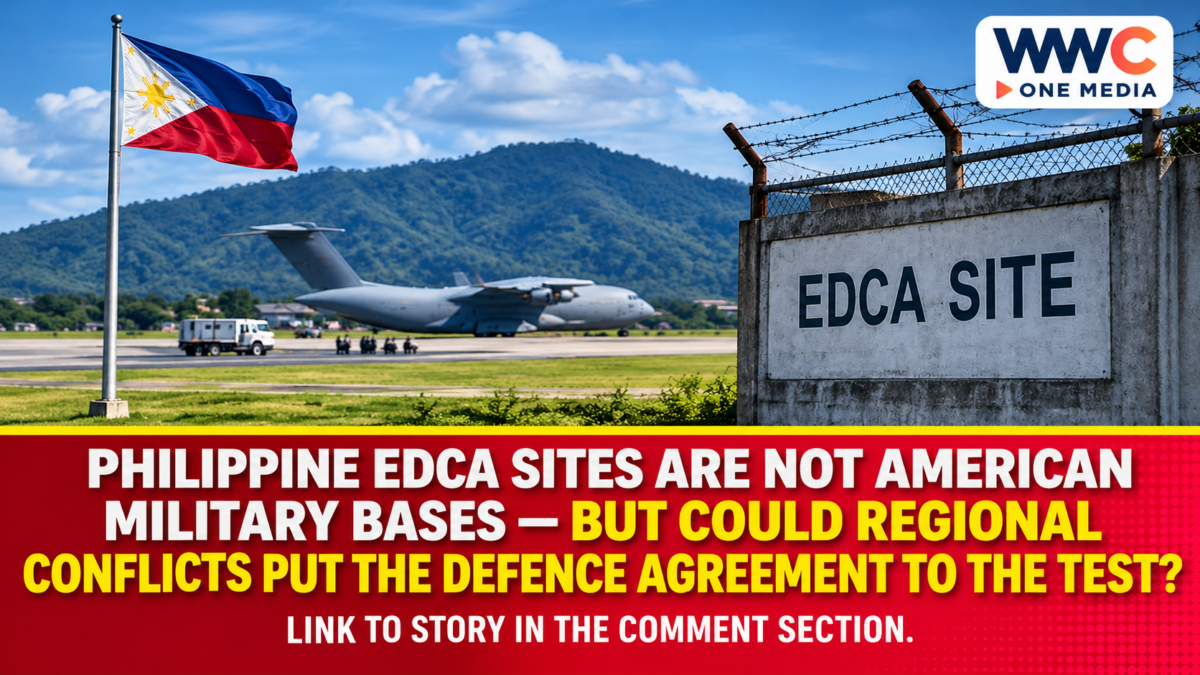
MANILA, PHILIPPINES | November 26, 2026 — Philippine EDCA sites remain under Philippine ownership despite granting American military personnel access under the Enhanced Defense Cooperation Agreement (EDCA), a security arrangement that continues to raise important questions about national sovereignty, military cooperation and exposure to international conflicts.
The agreement establishes a framework for strengthening Philippine and American defence capabilities without authorising the establishment of permanent United States military bases in the country.
However, the distinction between ownership and operational access has become increasingly important in discussions about the Philippines’ security relationship with Washington.
While the Philippine government maintains sovereignty over the facilities, the agreement grants American forces specific rights involving military activities, infrastructure development and logistical support.
The central question is whether these arrangements can strengthen national defence while managing the risks associated with international military tensions.
Philippine EDCA Sites: Who Really Owns and Controls Them?
Signed on April 28, 2014, the Enhanced Defense Cooperation Agreement entered into force on June 25 of the same year.
The agreement builds upon the existing security relationship between the Philippines and the United States, including the Mutual Defense Treaty and Visiting Forces Agreement.
Article V establishes that ownership and legal title to the designated locations remain with the Philippines.
Permanent buildings and structures attached to the land, including those improved by American forces, also remain Philippine property.
However, the agreement provides the United States with defined operational rights.
These include authority over specified construction activities and infrastructure improvements undertaken through bilateral security arrangements.
The distinction is important because ownership of military facilities does not necessarily mean that every activity within them is exclusively managed by Philippine personnel.
The agreement establishes shared arrangements for particular activities without transferring Philippine territorial sovereignty to the United States.
EDCA Is More Than a Military Training Agreement
Although humanitarian assistance and disaster response are important components of EDCA, the agreement establishes a broader framework for military cooperation.
Article III authorises activities involving military training, transportation, temporary personnel accommodation, logistical support, maintenance and the deployment of personnel and supplies.
It also permits additional activities that the two governments mutually approve.
Article IV separately establishes arrangements for storing defence equipment and supplies at designated locations.
American forces must provide advance notification to the Armed Forces of the Philippines concerning planned deliveries covered by the agreement.
The agreement expressly prohibits the inclusion of nuclear weapons among stored military materials.
However, its provisions do not establish a blanket prohibition on all conventional military equipment.
This distinction matters when evaluating public descriptions of EDCA as exclusively a training or disaster-response arrangement.
The complete legal framework provides for wider defence cooperation, subject to its applicable conditions and bilateral arrangements.
Similar distinctions between military cooperation and ownership arise in other regional security partnerships, including the recently established Philippines–Australia Defence Cooperation Arrangement.
What Did the Philippine Supreme Court Decide About EDCA?
The constitutional status of EDCA was challenged before the Philippine Supreme Court following its signing.
Opponents questioned whether the agreement effectively reintroduced foreign military bases without obtaining the Senate concurrence required under the Philippine Constitution for certain military arrangements.
On January 12, 2016, the Supreme Court dismissed the consolidated petitions challenging EDCA’s constitutionality.
The majority concluded that the agreement was a valid executive agreement implementing existing defence arrangements between Manila and Washington.
The Court recognised that providing access to Philippine facilities did not automatically transfer ownership or sovereignty over those locations.
It subsequently rejected motions seeking reconsideration of its decision on July 26, 2016.
However, the constitutional debate was not unanimous.
Dissenting justices questioned whether the operational rights granted under EDCA extended beyond the scope of existing treaties and should therefore have required separate Senate concurrence.
The majority ruling remains the controlling judicial determination.
Understanding both positions is important because the legal debate involved not merely the name given to the facilities, but also the practical significance of the rights granted to foreign military personnel.
Could EDCA Drag the Philippines Into an International Conflict?
The possibility of international hostilities expanding beyond their original geographical boundaries raises legitimate questions about military partnerships.
However, participation in a defence agreement does not automatically make a country a participant in every conflict involving its military partner.
EDCA establishes arrangements for access and cooperation within the context of existing Philippine–American defence commitments.
It does not itself constitute advance approval for every military operation the United States might undertake elsewhere.
The Philippine government’s publicly stated position is that EDCA locations remain Philippine military facilities.
Earlier official security assurances also emphasised Philippine ownership and the government’s monitoring of developments in the Middle East.
Nevertheless, a declaration of ownership or peaceful intent cannot establish that a military facility will never face an external security threat.
Actual risks would depend on the circumstances of a particular conflict, the activities undertaken at the facilities and the decisions of the governments involved.
WWC ONE MEDIA previously examined the scope and limitations of the US–Philippines defence alliance.
The distinction between diplomatic reassurance, legally defined commitments and actual military operations remains essential.
Why EDCA Matters Across the Asia-Pacific Region
The agreement’s stated objectives include improving military coordination, supporting Philippine defence modernisation, strengthening maritime awareness and enhancing humanitarian assistance capabilities.
These objectives have implications beyond bilateral military training.
For regional economies, international security conditions can influence commercial shipping, investment decisions, energy transportation and supply-chain reliability.
Military partnerships may contribute to deterrence and emergency preparedness, while critics may question whether expanding foreign military access creates additional geopolitical exposure.
Neither outcome should be treated as inevitable.
The effectiveness of defence cooperation depends on how agreements are implemented, how governments communicate their intentions and whether regional disputes are managed through diplomatic channels.
These considerations also intersect with the continuing South China Sea Code of Conduct negotiations between ASEAN and China.
The proposed maritime code and EDCA are separate legal and diplomatic instruments.
However, both illustrate the wider challenge of maintaining regional security while protecting national interests and preventing unnecessary escalation.
What Happens Next?
Future assessments of EDCA should distinguish between its legal provisions, actual implementation and government assurances concerning particular international conflicts.
Relevant developments include official bilateral decisions, infrastructure agreements, government oversight proceedings and documented changes to defence policy.
The continuing importance of Philippine sovereignty also makes transparency and accountability significant considerations when evaluating the agreement’s implementation.
The legal position is clear: EDCA locations remain Philippine property, while the United States receives specific access and operational rights under the agreement.
The more complex question is how those rights will be exercised during periods of international tension.
For Manila and Washington, the enduring challenge is maintaining effective defence cooperation while ensuring that military activities remain consistent with Philippine law, existing treaty obligations and the interests of regional stability.
Frequently Asked Questions
Are Philippine EDCA sites American military bases?
No. The agreement retains Philippine ownership of the designated locations and does not authorise permanent American military basing. It nevertheless provides American forces with specified access and operational rights.
What does EDCA stand for?
EDCA stands for Enhanced Defense Cooperation Agreement, a bilateral security arrangement between the Philippines and the United States signed on April 28, 2014.
Can American forces store military equipment at EDCA sites?
Yes. Article IV permits the storage of specified defence equipment and supplies under agreed arrangements. It expressly prohibits the inclusion of nuclear weapons.
Has the Philippine Supreme Court upheld EDCA?
Yes. The Supreme Court upheld the agreement in January 2016 and denied motions for reconsideration in July of the same year.
Does EDCA automatically involve the Philippines in every American military conflict?
No. EDCA establishes specific defence cooperation arrangements. Whether the Philippines becomes involved in a particular conflict depends on the circumstances, applicable legal obligations and governmental decisions.