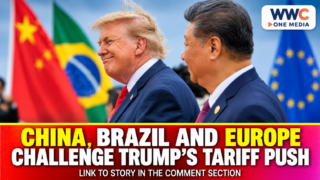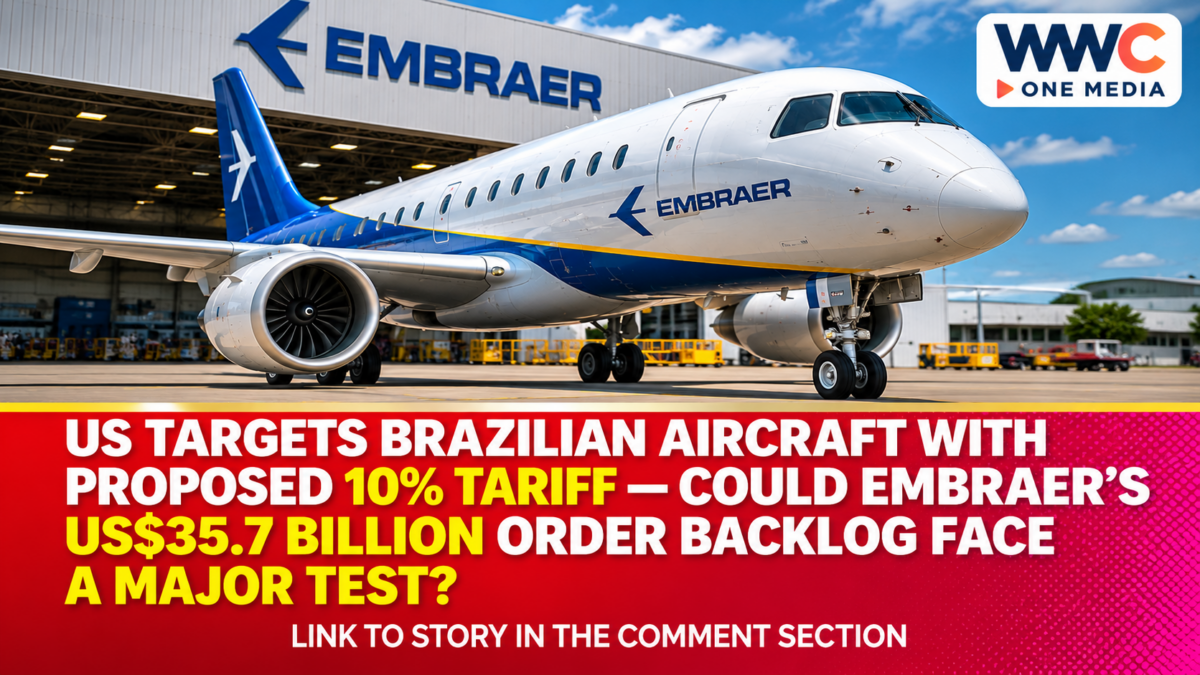
WASHINGTON — The United States has proposed a new 10% tariff on finished aircraft imported from Brazil, escalating a bilateral trade dispute that could introduce additional financial pressures on aircraft manufacturers, airline operators and international supply chains.
United States Trade Representative Jamieson Greer announced on November 25, 2026, proposed changes to existing Section 301 trade measures, including the removal of a tariff exemption covering finished Brazilian aircraft and additional duties on certain sugar imports.
The announcement comes just weeks after Brazilian aerospace manufacturer Embraer reported record third-quarter revenue of US$2.347 billion and an unprecedented US$35.7 billion order backlog.
Brazil’s government strongly rejected Washington’s proposal, describing the move as unacceptable within the ongoing bilateral negotiations and refusing to rule out reciprocal trade measures.
The latest development raises a consequential question for the international aviation industry: could escalating trade restrictions increase aircraft acquisition costs at a time when manufacturers are managing substantial order commitments?
US Brazil Aircraft Tariffs: What Washington Wants to Change
The United States previously announced a 25% tariff on certain Brazilian goods following an investigation under Section 301 of the Trade Act of 1974.
The original action, published on July 20, 2026, included exemptions for selected products, including finished aircraft.
Washington is now proposing to remove that particular exemption and impose a 10% duty based on the customs value of qualifying finished aircraft imported from Brazil.
The US government considers finished aircraft Brazil’s fourth-largest export category to the United States, making the aerospace industry a significant target within the wider trade dispute.
However, the proposed 10% tariff should not be interpreted as a blanket tariff on every Brazilian aerospace product or as confirmation that an additional 25% aircraft tariff will apply under the same action.
The November proposal concerns a specific change to the existing tariff framework.
Determining the precise treatment of individual imports will require examining the final tariff classifications, applicable exemptions and other customs requirements.
This distinction is particularly important for multinational businesses navigating increasingly complex trade regulations, as previously examined in WWC ONE MEDIA’s coverage of China–Canada tariff relief and product-specific eligibility requirements.
Embraer Faces Trade Uncertainty Despite Record Financial Performance
The proposed aircraft tariff arrives during a period of substantial commercial growth for Embraer.
The Brazilian aerospace manufacturer reported third-quarter 2026 revenue of US$2.347 billion, representing a 17% increase from the corresponding quarter in 2025.
Its order backlog reached US$35.7 billion, increasing 14% year-on-year and establishing another company record.
Embraer’s third-quarter financial and operational highlights included:
- Total revenue of US$2.347 billion.
- Commercial aviation revenue of US$696 million.
- Executive aviation revenue of US$655 million.
- Adjusted operating profit of US$254.8 million.
- Net income attributable to shareholders of US$71.1 million.
- Deliveries of 66 aircraft across its business segments.
- A total order backlog of US$35.7 billion.
The company also raised its full-year revenue guidance to between US$8.4 billion and US$8.6 billion, compared with its previous forecast of US$8.2 billion to US$8.5 billion.
Its commercial aircraft delivery guidance remained unchanged at between 80 and 85 aircraft for 2026.
These figures establish the scale of Embraer’s business before the November tariff announcement.
They do not establish the financial impact of the proposed duty.
The company’s worldwide backlog should not be interpreted as the total value of aircraft exposed to the proposed US tariff. Actual exposure would depend on aircraft destinations, production arrangements, contractual obligations and customs treatment.
Could the Proposed Tariff Increase Airline Acquisition Costs?
Aircraft acquisition involves substantial capital commitments, long-term financing arrangements and delivery schedules that may extend across several years.
An additional import duty could introduce unexpected costs into transactions negotiated before the tariff was proposed.
The potential commercial consequences could include contract renegotiations, adjustments to delivery arrangements or pressure on manufacturer and customer profit margins.
For illustration, a finished aircraft with a customs value of US$30 million would attract an additional US$3 million duty under a 10% tariff, assuming it qualifies for the proposed measure.
This hypothetical calculation excludes other applicable taxes, tariffs, exemptions and customs adjustments. It is not an estimate of the actual price of any Embraer aircraft.
The party legally responsible for paying the import duty and the party ultimately absorbing its economic cost may also differ.
Depending on contractual arrangements, additional expenses could be absorbed by importers, negotiated with manufacturers or reflected in subsequent commercial pricing.
Whether those costs would eventually affect passenger ticket prices remains uncertain.
Airline pricing also depends on competition, operating expenses, route economics and passenger demand.
The proposed tariff should therefore not be interpreted as an automatic increase in airfares.
Washington Also Proposes Higher Sugar Import Duties
The November 25 announcement extends beyond aviation.
The United States is also proposing to replace its existing 25% Section 301 tariff on certain Brazilian sugar imports with additional fixed duties on specified raw and refined sugar entering under higher-tier import rates.
The proposed additional duties are:
- US$0.44 per kilogram for qualifying raw cane sugar.
- US$0.60 per kilogram for qualifying raw beet sugar and refined sugar.
Unlike the proposed aircraft tariff, the sugar measure would apply on a nondiscriminatory basis to qualifying imports, rather than exclusively to Brazilian products.
The US government argues that applying the additional sugar duties more broadly would prevent changes in international sourcing patterns from undermining the intended trade pressure on Brazil.
The proposal could therefore have implications beyond the bilateral US–Brazil commercial relationship.
Agricultural exporters, food manufacturers and commodity traders would need to examine whether their products fall within the affected tariff classifications.
The importance of product-specific agricultural trade arrangements has also been highlighted in WWC ONE MEDIA’s coverage of Canada and China’s expanding bilateral trade agreement.
However, the proposed sugar measures do not establish that all sugar imports will become subject to the additional duties.
Brazil Rejects US Pressure and Keeps Retaliation Options Open
Brazil’s government responded forcefully on November 25, expressing indignation over the proposed tariffs and maintaining that it had participated in negotiations in good faith for more than a year.
Brazil confirmed that President Luiz Inácio Lula da Silva and US President Donald Trump discussed establishing a bilateral trade working group during a telephone conversation on August 21.
Further discussions took place between Brazilian government ministers and Greer on August 31 and September 30.
Brazil maintained that Washington had not delivered previously promised terms of reference for a possible economic and commercial agreement.
The Brazilian government also indicated that it would continue pursuing a negotiated solution while retaining the possibility of reciprocal measures and action through the World Trade Organization.
Washington’s position differs considerably.
The US government maintains that Brazil has made insufficient progress in addressing concerns identified during its Section 301 investigation.
Those concerns involve digital commerce, electronic payments, preferential tariffs, intellectual property, anti-corruption enforcement, ethanol market access and illegal deforestation.
The competing government positions demonstrate that the dispute extends well beyond aircraft and sugar.
It involves disagreements over domestic regulation, international market access and the limits of government trade policy.
Neither government’s position should be interpreted as an independent adjudication of the other country’s conduct under international trade law.
Why the Trade Dispute Matters Across the Asia-Pacific
The proposed measures illustrate the growing complexity of international trade relationships.
Aircraft manufacturing and agricultural commodity markets operate through cross-border commercial networks, making changes in major import markets relevant to businesses beyond the countries directly involved.
For aviation companies, tariff uncertainty may complicate procurement decisions and financial planning.
For agricultural businesses, additional import duties could influence sourcing arrangements and market access.
The wider international trend towards diversifying commercial relationships has also been examined in WWC ONE MEDIA’s coverage of India’s expanding trade negotiations with Canada and Mexico.
Businesses across Asia-Pacific economies should distinguish between announced tariff proposals and measures that have completed the regulatory process.
Commercial decisions based solely on headline tariff figures may overlook important exemptions, implementation dates and product classifications.
What Happens Next?
The United States has established a public consultation timetable before determining whether the proposed tariff modifications should proceed.
The comment period is scheduled to open on November 27, 2026.
Requests to testify at the public hearing are due by December 7, while written submissions must be received by December 30.
The Section 301 Committee is scheduled to hold a public hearing on January 14, 2027, with the possibility of continuing proceedings the following day.
These dates provide manufacturers, importers and other affected organisations an opportunity to present their views on the proposed measures.
No final implementation date for the new aircraft duty has been established in the November proposal.
For Embraer, the immediate challenge is managing potential trade-related uncertainty while maintaining its commercial commitments and record order backlog.
For Washington and Brasília, the larger challenge is determining whether further negotiations can prevent additional trade restrictions.
The proposed 10% aircraft tariff may ultimately become a bargaining instrument, an implemented trade measure or a policy modified through further consultation.
Its final form could determine how significantly the dispute affects international aircraft procurement, agricultural trade and business confidence.
Frequently Asked Questions
Has the United States imposed a new 10% tariff on Brazilian aircraft?
Not yet. The United States announced the proposed tariff on November 25, 2026. It remains subject to public consultation and a final government decision.
Could the proposed US tariff affect Embraer?
Yes. Qualifying finished Embraer aircraft imported from Brazil could be affected if the proposal is implemented. The company’s actual financial exposure has not yet been established.
How large is Embraer’s current order backlog?
Embraer reported a record US$35.7 billion worldwide order backlog for the third quarter of 2026, representing a 14% year-on-year increase.
What additional sugar tariffs is the United States proposing?
The proposal includes additional duties of US$0.44 per kilogram on qualifying raw cane sugar and US$0.60 per kilogram on qualifying raw beet and refined sugar imports entering at specified higher-tier duty rates.
When will the United States decide on the proposed aircraft tariff?
Written public comments are due December 30, 2026, and a public hearing is scheduled for January 14, 2027. No final implementation date has been announced.