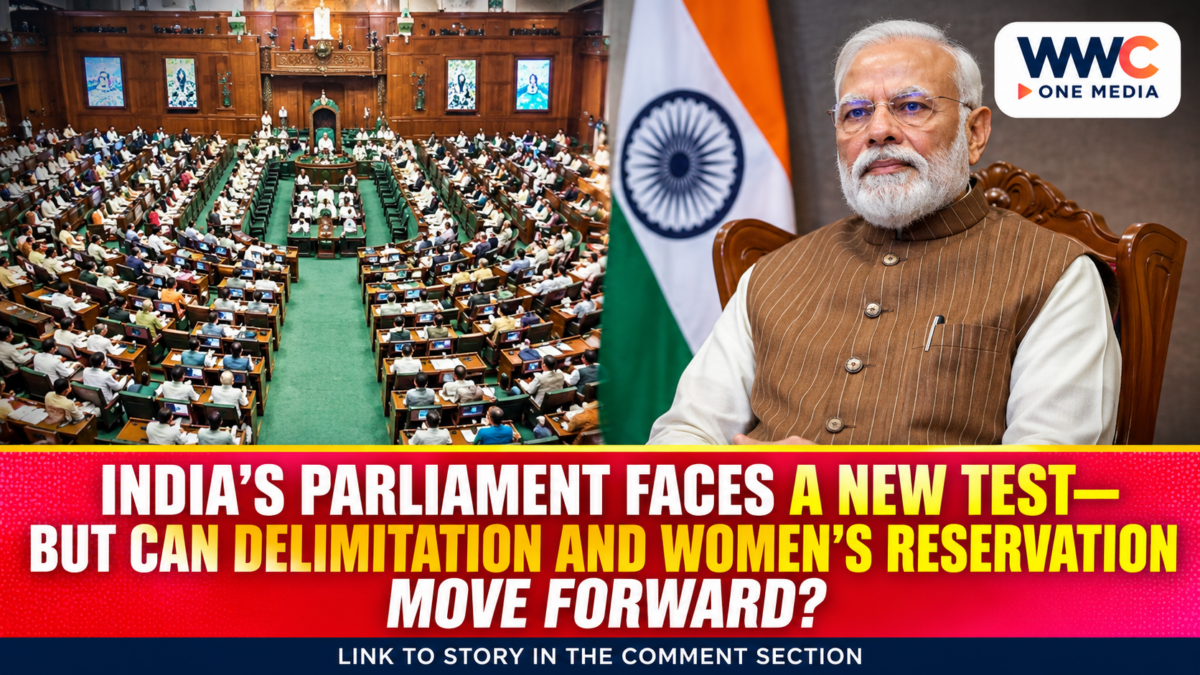
India’s next Parliament session could bring renewed attention to the country’s unfinished debate over constituency boundaries, legislative representation and women’s political participation. But as of November 26, 2026, the official parliamentary records reviewed for this report do not establish a confirmed date for the next sitting or a new legislative timetable for the proposed constitutional changes.
The bigger question is not simply when lawmakers will return to the chamber. It is whether the government can build sufficient parliamentary support for a major restructuring proposal that would affect how constituencies are drawn, how many seats the Lok Sabha can have and when the constitutional provision for women’s reservation takes effect.
India Parliament Session: The Constitutional Clock Is Still Running
The Monsoon Session of Parliament began on July 20, 2026, and was adjourned sine die on August 13. The Ministry of Parliamentary Affairs recorded 19 sittings over 25 days, during which 12 Bills were passed by both Houses.
Adjournment sine die means that the House has ended its sittings without setting a date for the next one. It is not the same as prorogation, which formally terminates a parliamentary session through a presidential order. The distinction matters because the two procedures have different effects on parliamentary business.
The Lok Sabha’s published procedural guidance explains that a House may be reconvened after being adjourned sine die if it has not been prorogued. In that situation, the reconvened sitting may be treated as another part of the same session rather than a completely new session.
Article 85 of the Constitution provides the central timing rule: no more than six months may intervene between the last sitting of one session and the first sitting of the next. With the last Monsoon Session sitting recorded on August 13, the constitutional interval places the next meeting within the period ending in February 2027.
That provision sets a legal limit. It does not, by itself, announce a December date or confirm the government’s preferred legislative agenda.
The Failed 131st Amendment Bill Remains a Major Political Test
The most consequential unresolved legislative issue is the Constitution (One Hundred and Thirty-First Amendment) Bill, 2026.
The Bill was introduced in the Lok Sabha on April 16. Its text proposed significant changes to the constitutional framework governing parliamentary representation. Among its provisions was an increase in the maximum permitted strength of the Lok Sabha to 850 members: up to 815 elected from the states and up to 35 representing Union territories.
The proposal also sought to change how the population used for delimitation would be determined. It would give Parliament a role in deciding, through legislation, which published census figures would be used for the exercise.
The Bill further proposed changes to Article 334A, which governs when women’s reservation in the Lok Sabha and state legislative assemblies takes effect. Under the proposed wording, the reservation would come into effect after a delimitation exercise undertaken for that purpose.
The proposal did not become law. The parliamentary archive records the April 17 proceedings on the Constitution amendment and related Bills as not passed. That means the provisions in the introduced Bill cannot be treated as current constitutional rules.
For readers following the wider consequences of constitutional amendments, WWC’s examination of Fiji’s constitutional review and the legal protections it places at stake explains why a proposal under parliamentary consideration must be distinguished from a change already enacted.
Why Delimitation Is More Than a Seat-Expansion Exercise
Delimitation is the process of redrawing electoral constituency boundaries and, where authorised by law, readjusting the allocation of legislative seats.
It affects how voters are grouped into constituencies and how communities are represented in elected institutions. A nationwide exercise can therefore carry consequences beyond the numerical size of Parliament.
The 131st Amendment Bill proposed changing the existing constitutional framework for determining population and allocating seats. Its implications would extend to the relationship between population figures, state representation and the boundaries within which members of the Lok Sabha are elected.
This is particularly important in a country with substantial differences in population growth between states. Any change to the allocation formula can raise questions about how regional representation is balanced within the national legislature.
The introduced Bill provides a documentary basis for examining the government’s proposed approach. It does not establish that the proposal has been accepted by Parliament, that a new delimitation formula has been finalised or that constituency boundaries are about to change.
The practical effect would depend on the final legislation, the applicable constitutional provisions and the work of the authority legally empowered to conduct delimitation.
Women’s Reservation Is Connected to the Delimitation Debate
The constitutional question also has direct implications for women’s representation.
The Constitution’s 106th Amendment, enacted in 2023, inserted provisions for reserving approximately one-third of seats for women in the Lok Sabha and state legislative assemblies. Article 334A sets out the conditions governing when those provisions take effect.
The current constitutional text links the commencement of the reservation to a delimitation exercise undertaken after publication of the relevant figures from the first census taken after the 2023 amendment commenced.
The 131st Amendment Bill proposed replacing that arrangement with a different trigger: a delimitation exercise undertaken for the purpose of implementing women’s reservation.
That distinction is important. The proposal could alter the sequence connecting census publication, constituency revision and the implementation of reserved seats. But because the Bill did not pass, its proposed wording has not replaced the existing constitutional provision.
The debate is therefore not simply about whether Parliament supports women’s reservation. It also concerns the legal and administrative steps required before the reserved seats can take effect.
WWC’s coverage of the role of parliamentary scrutiny in Nepal’s changing political balance examines how legislative representation and oversight remain important even when political forces have sharply unequal numbers.
What Parliament Must Resolve Before Any New Framework Takes Effect
A new parliamentary sitting could provide an opportunity for lawmakers to revisit the questions left unresolved in April. But the existence of a sitting would not automatically revive the defeated Bill or make its provisions enforceable.
Any renewed constitutional amendment would need to proceed through the required legislative process. A new Bill would have to be introduced, debated and voted on. Constitutional amendments also face the special-majority requirements set out in Article 368.
The government would need to present the actual text it intends to pursue. Lawmakers and the public would then be able to assess whether the proposal changes the census reference, the seat-allocation formula, the maximum size of the Lok Sabha or the commencement conditions for women’s reservation.
The experience of other parliamentary forums also shows why debate and adoption must be kept separate. WWC’s report on AIPA’s regional parliamentary discussions and the limits of legislative cooperation explains that political discussion does not automatically create binding law.
For India, the same principle applies: a government proposal, a parliamentary debate and an enacted constitutional amendment are three different stages.
What Happens Next?
The next verifiable milestones are an official parliamentary schedule, any formal notice or summons, and the publication of new legislative text if the government decides to revisit the delimitation framework.
As of November 26, the official records reviewed for this report do not confirm a date for the next sitting or establish that the 131st Amendment Bill has been reintroduced.
The key test will be whether the government presents a revised proposal capable of securing the required constitutional majority while addressing questions about state representation and the implementation of women’s reservation.
Until then, the constitutional provisions currently in force remain the governing framework. The proposed changes remain proposals, not law.
Frequently Asked Questions
When will India’s next Parliament session begin?
The official records reviewed as of November 26, 2026, do not establish a confirmed date for the next sitting. Article 85 requires that no more than six months pass between the last sitting of one session and the first sitting of the next.
When did the 2026 Monsoon Session end?
The Monsoon Session was adjourned sine die on August 13, 2026, after beginning on July 20.
What is the Constitution (131st Amendment) Bill, 2026?
It was a proposed constitutional amendment addressing delimitation, the maximum strength of the Lok Sabha and the conditions for implementing women’s reservation. The Bill was not passed in the April 2026 proceedings.
What is delimitation in India?
Delimitation is the process of redrawing electoral constituency boundaries and, where legally authorised, readjusting the allocation of seats in legislative bodies.
Has women’s reservation already taken effect in India’s Parliament?
The Constitution provides for women’s reservation through the 106th Amendment, but Article 334A sets conditions for when it takes effect. The 131st Amendment Bill proposed changing those conditions, but it was not passed.