
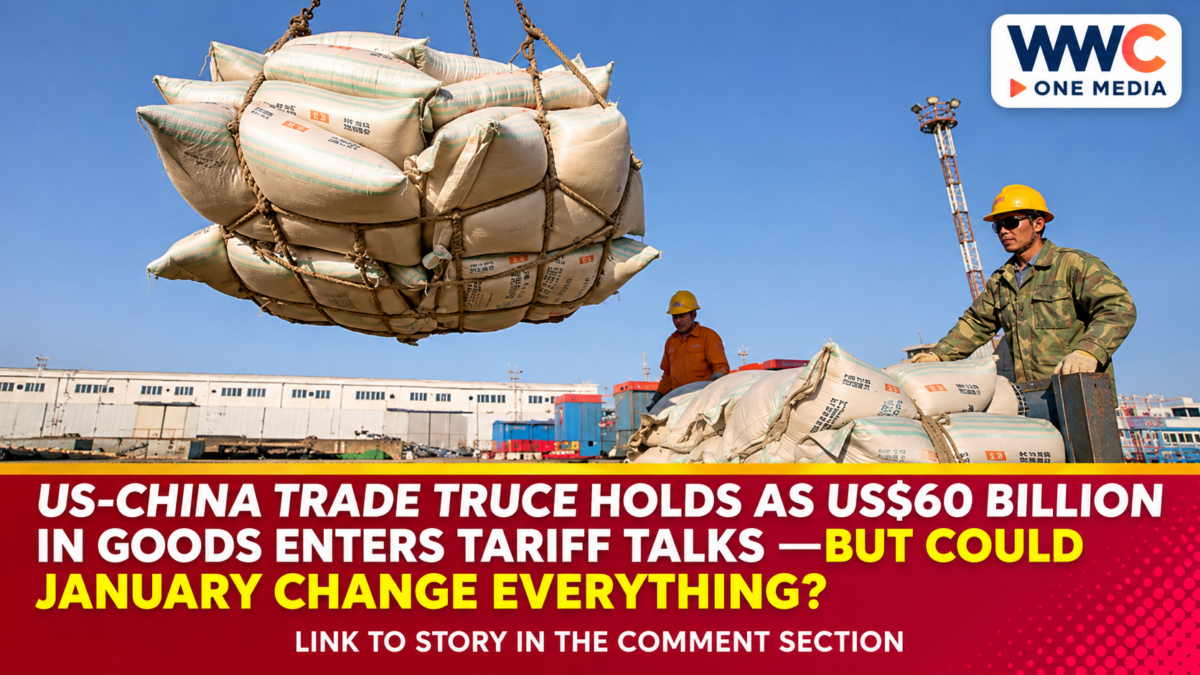
SHENZHEN, China — The US-China trade truce remains intact as Washington and Beijing pursue deeper economic cooperation, with selected trade restrictions suspended until January 10, 2027, and US$60 billion in combined bilateral goods identified for potentially more favourable tariff treatment.
US President Donald Trump and Chinese President Xi Jinping met in Shenzhen on November 19, 2026, during the Asia-Pacific Economic Cooperation (APEC) gathering, agreeing to develop an action plan aimed at maintaining constructive strategic stability.
However, the diplomatic progress has not eliminated outstanding disputes involving tariffs, critical minerals, technology access and national security.
For international manufacturers, agricultural exporters, retailers and logistics companies, the temporary reduction in trade tensions provides additional time to prepare for possible changes.
The bigger question is whether the world’s two largest economies can transform temporary economic cooperation into a durable commercial relationship.
US-China Trade Truce Faces a Crucial January Deadline
China’s State Council Customs Tariff Commission announced on November 9 that it would continue suspending an additional 24% tariff on American-origin imports for two months, effective November 10, 2026.
The measure retains the additional 10% tariff established under the relevant tariff arrangement.
This does not mean that every American product entering China faces a total tariff rate of only 10%. Other applicable duties and product-specific requirements may still influence import costs.
China’s Ministry of Commerce and General Administration of Customs also announced that six previously suspended export-control notices would remain suspended until January 10, 2027.
Meanwhile, the United States extended its suspension of selected measures targeting China’s maritime, logistics and shipbuilding industries until the same date.
These measures include certain maritime transport fees and duties involving Chinese cargo-handling equipment.
The temporary suspensions offer businesses greater near-term certainty, but they do not permanently remove the underlying trade restrictions.
The developments follow earlier negotiations examined in Washington’s decision to delay new China tariffs ahead of the Trump–Xi summit.
January 10 therefore represents an important policy deadline rather than a guaranteed date for renewed economic confrontation.
US$60 Billion in Goods Identified for Potential Tariff Relief
One of the most commercially significant developments emerged from the September 2026 meetings in Washington.
The United States and China reached agreement on recommendations for potentially more favourable tariff treatment covering US$30 billion in non-sensitive goods in each direction.
The combined value represents US$60 billion in merchandise under consideration.
| Trade direction | Value under consideration | Product categories |
|---|---|---|
| US exports to China | US$30 billion | Agricultural goods, seafood, wood products, cosmetics and medical devices |
| Chinese exports to the US | US$30 billion | Small appliances, toys, holiday decorations and children’s car seats |
| Combined merchandise value | US$60 billion | Selected non-sensitive products |
These figures represent the value of goods covered by tariff-treatment recommendations, not confirmed tariff savings, new purchase orders or completed trade transactions.
For importers and exporters, the actual commercial benefits will depend on the final tariff schedules, product classifications and implementation requirements.
Businesses should therefore distinguish between diplomatic agreement on recommendations and legally effective changes to customs duties.
New Trade and Investment Boards Could Reduce Uncertainty
Washington and Beijing have established two government-to-government mechanisms designed to address commercial issues more systematically.
The US-China Board of Trade focuses on trade-related concerns, including potential tariff adjustments and barriers affecting agricultural market access.
The Board of Investment provides a channel for discussing investment opportunities and obstacles facing businesses operating between the two economies.
Both mechanisms emerged from agreements reached during the May 2026 Beijing summit and were further developed during the September meetings.
Their establishment could make it easier for officials to address commercial disagreements without relying exclusively on presidential negotiations.
However, these institutions cannot guarantee that every outstanding dispute will be resolved.
Their effectiveness will depend on whether discussions lead to practical regulatory changes that companies can apply.
This distinction between diplomatic engagement and enforceable commercial policy was also examined in Trump–Xi discussions following the Shenzhen welcome ceremony.
For investors, greater predictability could support long-term planning, but actual investment decisions must account for existing national security and regulatory requirements.
Rare Earths and Agricultural Trade Remain Critical Issues
The bilateral economic relationship involves more than tariffs on consumer products.
The September US government statement acknowledged continuing discussions concerning shortages of rare earths and other critical minerals, with the objective of improving shipment availability.
The same negotiations addressed agricultural market access and future energy trade.
China committed to importing at least 10 million metric tonnes of American coal in each of 2027 and 2028.
That represents a combined minimum commitment of 20 million metric tonnes across the two years, rather than completed deliveries.
For manufacturers, reliable material supplies can be essential to maintaining production schedules.
For agricultural and energy exporters, dependable purchasing arrangements may support investment and production planning.
However, commercial commitments must eventually translate into actual orders and shipments.
The unresolved questions surrounding these sectors have previously been examined in US-China trade negotiations over rare earth supplies and American agricultural purchases.
Economic cooperation is more likely to remain sustainable when both countries can identify measurable commercial benefits.
Technology and National Security Could Complicate the Truce
The November 19 Shenzhen meeting also addressed artificial intelligence, economic cooperation and broader security concerns.
China reiterated its position concerning Taiwan, while both governments expressed interest in maintaining communication and avoiding unnecessary escalation.
The discussions illustrate how trade relations remain connected to wider strategic considerations.
Nevertheless, tariff cooperation does not automatically eliminate semiconductor export restrictions, investment screening requirements or national security investigations.
For technology companies, maintaining compliance with applicable regulations remains essential even during periods of improved diplomatic relations.
These competing considerations have already emerged in the Trump–Xi talks and the separate Nvidia-related semiconductor security questions.
The central challenge is whether Washington and Beijing can maintain commercial cooperation in mutually beneficial areas while managing disagreements involving sensitive technologies.
For APEC economies operating within international manufacturing networks, the outcome could influence sourcing strategies, investment decisions and access to advanced industrial equipment.
What Happens Next for the US-China Trade Truce?
Businesses approaching January 2027 should distinguish three separate developments: continued negotiations, formally adopted policy changes and actual commercial performance.
An extension of temporary restrictions could provide additional stability, while a more comprehensive agreement could improve longer-term planning.
Conversely, unsuccessful negotiations could create renewed uncertainty involving tariffs and regulatory requirements.
Neither outcome is guaranteed.
The December G20 meetings offer another opportunity for diplomatic engagement, but any subsequent commercial agreement must be assessed through its published provisions.
For Washington, maintaining access to critical supplies while addressing trade and security concerns remains an important objective.
For Beijing, protecting commercial access and advancing economic development remain central priorities.
The current truce demonstrates that cooperation and strategic disagreement can coexist.
Its long-term durability, however, will depend on whether temporary compromises produce enforceable agreements, dependable trade flows and credible mechanisms for resolving future disputes.
Frequently Asked Questions
When does the US-China trade truce expire?
Selected tariff suspensions and other trade measures have been extended until January 10, 2027, subject to subsequent government decisions.
What is the US$60 billion tariff arrangement?
It refers to recommendations for potentially more favourable tariff treatment covering US$30 billion in non-sensitive goods traded in each direction between the United States and China.
Have all US-China tariffs been removed?
No. The current arrangements suspend or modify selected measures. Other tariffs and regulatory requirements may remain applicable.
Did Trump and Xi sign a comprehensive trade agreement in Shenzhen?
The November 19 official meeting record confirms commitments to develop further cooperation and strategic stability, but does not establish a comprehensive new trade settlement.
Why does the US-China trade truce matter to APEC economies?
Changes in tariffs, export restrictions and investment policies could affect international supply chains, manufacturing costs, agricultural trade and regional investment decisions.










