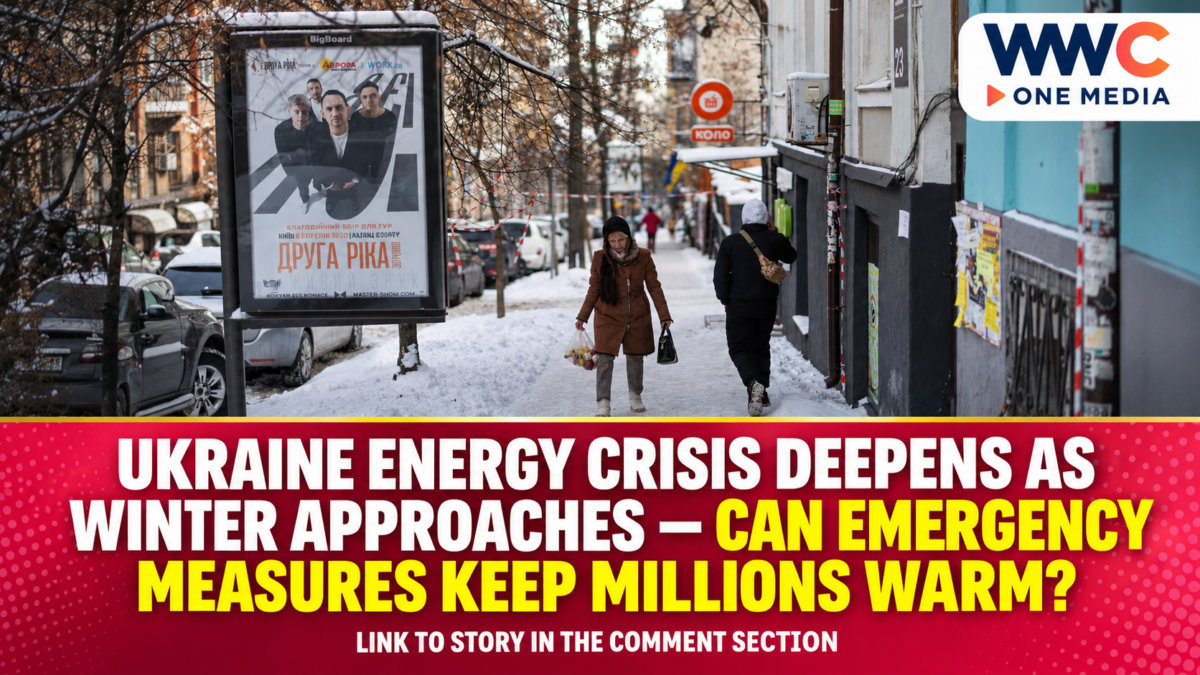
KYIV, Ukraine — Ukraine adopted emergency measures on Nov. 23, 2026, to safeguard essential urban services as Russian attacks on infrastructure threatened the country’s winter preparations. The Ukraine energy crisis had already left around 240,000 people in Odesa without heating as of a government briefing the previous day.
The new decisions put water, sanitation and the continuity of essential public services at the centre of the government’s response. For households facing another winter of war, the challenge is not simply getting electricity back but keeping the services that depend on it functioning reliably.
Ukraine energy crisis puts winter preparations under pressure
Ukraine had officially begun its heating season on schedule despite the attacks. On Nov. 17, Prime Minister Sergii Koretskyi reported that more than 96% of boiler houses were operating, with heating connected to almost 94% of residential buildings and 95% of social facilities.
Those figures represented progress at a particular point in time rather than a guarantee of uninterrupted service throughout winter. The subsequent disruption in Odesa illustrates why a heating connection and a reliable supply must be treated as different measures of recovery.
WWC’s earlier coverage of November damage to Kyiv’s electricity and transport infrastructure provides additional background on the country’s infrastructure challenges.
Odesa’s heating disruption highlights the civilian cost
At the Nov. 22 briefing, Koretskyi said most of Odesa had access to water, although restoring heating remained more difficult. He expected most residents to regain heat by the end of that day, but that expectation is not confirmation that restoration was completed.
The government also reported progress in restoring water services in Kyiv. Separately, it was preparing a digital reporting system through which residents could notify authorities about interruptions to utilities.
The distinction between announced repairs and confirmed recovery is important. A household’s experience cannot be inferred solely from a national operating percentage. The availability of heat over successive days is a more meaningful measure of winter resilience than a single announcement of reconnection.
WWC’s coverage of the Nov. 20 Kyiv attack provides context for the recent disruption to urban services.
Emergency measures extend beyond electricity
The Nov. 23 government package directs authorities to strengthen backup electricity provision for essential municipal services and plan alternative water deliveries if normal supplies are interrupted. Hospitals and other critical institutions are to receive priority.
These decisions recognise that electricity is only one part of a functioning city. A household may have enough stored power to charge a phone but still face difficulties if its building lacks water or heating.
From a public-policy perspective, resilience should therefore be measured across multiple services rather than by electricity restoration alone. Local governments will also need to distinguish between temporary improvements and sustained recovery when communicating with residents.
A US$358.4 million humanitarian response
Humanitarian organisations launched their 2026–2027 winter response on July 22, seeking US$358.4 million to assist 2.1 million people in Ukraine. The programme covers October 2026 through March 2027 and includes assistance for heating, housing repairs, healthcare, food and household expenses.
The amount is a funding appeal, not a declaration that all the money has been received or distributed. The number of intended beneficiaries also represents a programme target rather than the total population experiencing energy disruption.
The Ukrainian government separately announced a one-time UAH 19,400 winter payment in September for eligible vulnerable households in frontline communities. More than 380,000 households were expected to benefit. By Sept. 30, the government said funding had been allocated for 1,424 households.
The broader civilian challenges of the war also feature in WWC’s coverage of humanitarian aid facilities in Ukraine.
Why some households face greater risks
A UN Women assessment published on Sept. 23 found substantial differences in access to alternative power among surveyed adults. Some 73.8% of women reported having no backup energy source, compared with 51.5% of men.
The assessment drew on a telephone survey of 1,200 adults conducted in February 2026. Its findings describe reported circumstances during that period, not a fresh nationwide survey of conditions in November.
The UN Human Rights Office also documented lengthy interruptions to utilities during the previous winter, affecting homes and essential public institutions. Its June findings warned that the extent of damage would prevent a full recovery of generation capacity before the next winter.
Together, the findings suggest that household resources deserve as much attention as national infrastructure statistics. Financial assistance can help families meet individual needs, while reliable public utilities remain essential to a broader recovery. Neither intervention alone can resolve every difficulty caused by the war.
What happens next
The government’s immediate task is to translate its emergency decisions into working services. The important indicators will be whether heating remains available, whether residents can obtain water during interruptions and whether assistance reaches intended beneficiaries.
The outlook remains uncertain as further damage could reverse repair gains. As of Nov. 24, the records examined do not establish a definitive timetable for nationwide recovery or confirm that every affected household in Odesa has regained heating.
Ukraine has established a winter response framework. Its effectiveness will ultimately depend on implementation, available resources and the ability to maintain essential services throughout the colder months.