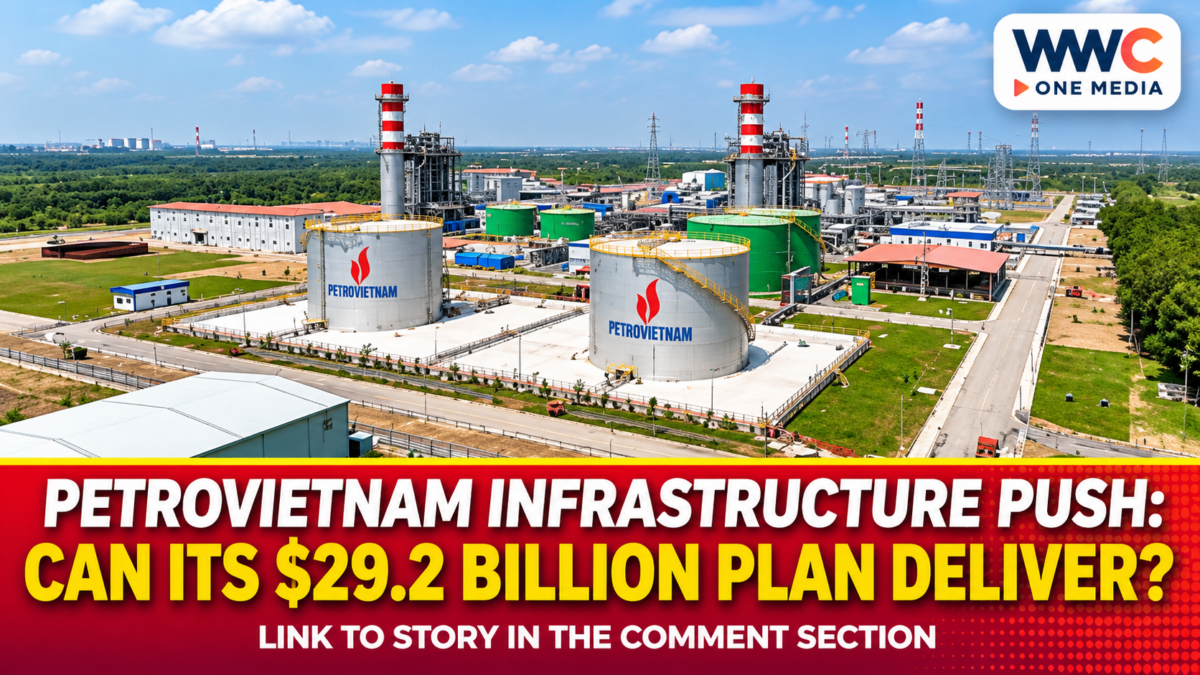
HANOI, Vietnam — Nov. 21, 2026. PetroVietnam is pursuing a broader industrial and energy strategy backed by a proposed investment pipeline of approximately US$29.2 billion for 2026–2030, covering 99 projects. The state-owned group’s published plans include oil and gas development, liquefied natural gas (LNG), refining, electricity and new technologies, while an upgrade to the Dung Quat refinery has moved into its engineering, procurement and construction (EPC) implementation phase.
The important question is not simply whether PetroVietnam can construct more energy assets. It is whether infrastructure spending can improve supply reliability, deepen Vietnamese engineering capabilities and produce competitive businesses without treating projected benefits as guaranteed returns.
PetroVietnam Infrastructure Plans: What the Numbers Mean
At a September 2026 meeting with US financial institutions and investors, PetroVietnam presented projected investment requirements of about US$29.2 billion across 99 projects for the five years ending in 2030. It described the planned programme as substantially larger than its 2021–2025 investment activity.
That headline amount needs careful reading. An investment requirement is an estimate of the capital needed to execute a strategy. It does not establish that financing is fully secured, that every project has regulatory approval, or that expenditure has already occurred.
The group identified investment areas including exploration and production, gas and LNG, refining and petrochemicals, and power and renewable energy. Those businesses have different development schedules and risks. An offshore field, an import terminal and a power plant cannot be evaluated using the same construction milestone.
PetroVietnam has also set out three strategic pillars: energy as its core business, industry, and high-tech services. This framework moves the discussion beyond annual fuel production to the capabilities and supporting networks required to run a diversified industrial group.
Dung Quat Provides a Concrete Delivery Test
One measurable initiative is the Dung Quat refinery upgrade. PetroVietnam’s refining subsidiary, BSR, signed an EPC contract with the Chengda–BPE consortium on July 9, 2026. Project participants held their implementation kick-off meeting on Aug. 21.
The project aims to lift the refinery’s processing capacity from 148,000 to 171,000 barrels per day, improve flexibility in the crude oil it can process and manufacture products meeting Euro V fuel standards. The stated targets explain the industrial purpose of the investment; they do not mean the additional capacity has already been delivered.
BSR retains overall responsibility as project owner. The WOOD–PVE consortium supports project management and supervision, while Chengda–BPE handles EPC work within its contractual scope. This division of responsibilities matters because construction quality, cost and schedule must be judged at the implementation level.
A wider Dung Quat energy-hub concept also links refining with petrochemicals, storage, logistics, power and other energy activities. Corporate workshop documents describe this as an envisioned development model, not a single completed complex. The difference between a refinery upgrade underway and a proposed industrial hub is central to accurate reporting.
Infrastructure Value Also Comes From Skills and Supply Chains
PetroVietnam’s official discussion of offshore floating storage and production vessels describes how capabilities can develop through multiple projects. Its technical-services operations have expanded from maintenance into investment, engineering, procurement, construction and supply-chain management for floating facilities.
Such expertise can be valuable beyond the immediate output of an offshore field. Analysis: When domestic companies perform more sophisticated engineering and operating functions, a larger portion of a project’s activity may be undertaken locally. But the net economic benefit depends on actual contracts, costs, competitiveness and performance, not the existence of those capabilities alone.
The group has also discussed potential cooperation with Huawei on digital systems, industrial connectivity, data infrastructure and energy technologies. The June discussions contemplated further technical evaluation, including possible pilot projects. They should not be reported as a signed deployment contract or as proof of achieved productivity gains.
WWC’s earlier coverage of Vietnam’s broader energy transition explores why technology and supporting infrastructure matter alongside new generating capacity.
Why Gas, Storage and Partnerships Matter
PetroVietnam’s corporate announcements also show interest in infrastructure that links fuels to end users. An October meeting involving Ho Chi Minh City officials and representatives from the United Arab Emirates examined possible cooperation in petroleum storage, LNG, logistics and finance around a proposed southern energy hub.
The talks identified prospective areas for investment. They did not establish that all projects had received funding, contracts or construction approvals. Storage facilities, import capacity and transportation links each require commercial and regulatory follow-through.
This is a useful distinction for understanding Vietnam’s electricity planning. A power plant can be technically capable of generating electricity but still depend on reliable fuel supply, port access, pipelines and electricity offtake arrangements. WWC has separately analysed Vietnam’s LNG supply pressures during a potential dry-season electricity test.
Cross-border partnerships are another part of the strategy. PetroVietnam’s disclosed discussions and frameworks may create routes to capital, fuel and technology, but their economic value will only become clear as specific obligations and projects progress. WWC has also examined Vietnam–Russia energy cooperation and the distinction between agreements and deliveries.
What This Could Mean for Vietnam’s Economy
Analysis: PetroVietnam’s infrastructure programme could strengthen Vietnam’s energy security and industrial supply chains if projects are completed efficiently and operated commercially. Refinery flexibility, fuel logistics and domestic technical services may help the economy manage supply disruptions and retain specialised work.
Those are possible outcomes, not verified returns on US$29.2 billion. Government and corporate decision-makers will need to track project-level spending, commissioning, utilisation and profitability. Environmental and safety compliance also remain part of whether infrastructure creates durable value.
For businesses, dependable fuel and electricity availability can be as important as the headline size of an investment programme. For the public, a bigger corporate asset base does not automatically mean cheaper energy or lower living costs.
What Happens Next
The clearest near-term test is whether Dung Quat’s refinery upgrade reaches verifiable construction and commissioning milestones. PetroVietnam’s broader investment programme will require further disclosures distinguishing proposed projects from approved budgets, signed contracts and operating assets.
The company’s development strategy is documented. Its larger promised industrial payoff remains a question for future financial, technical and operational evidence.
Frequently Asked Questions
How much does PetroVietnam plan to invest through 2030?
PetroVietnam presented approximately US$29.2 billion in investment requirements for 2026–2030 across 99 projects. That is a proposed investment requirement, not an amount already spent.
What is changing at the Dung Quat refinery?
The upgrade targets an increase in processing capacity from 148,000 to 171,000 barrels per day, more crude-processing flexibility and fuel products meeting Euro V standards.
Is PetroVietnam expanding beyond oil and gas?
Yes. Its published strategy identifies energy, industry and high-tech services as three pillars, including work connected with digital technology and newer energy fields.
Does the investment plan guarantee lower energy prices?
No. Consumer prices depend on fuel markets, operating costs, regulation and other factors. The strategy does not guarantee any reduction in household bills.