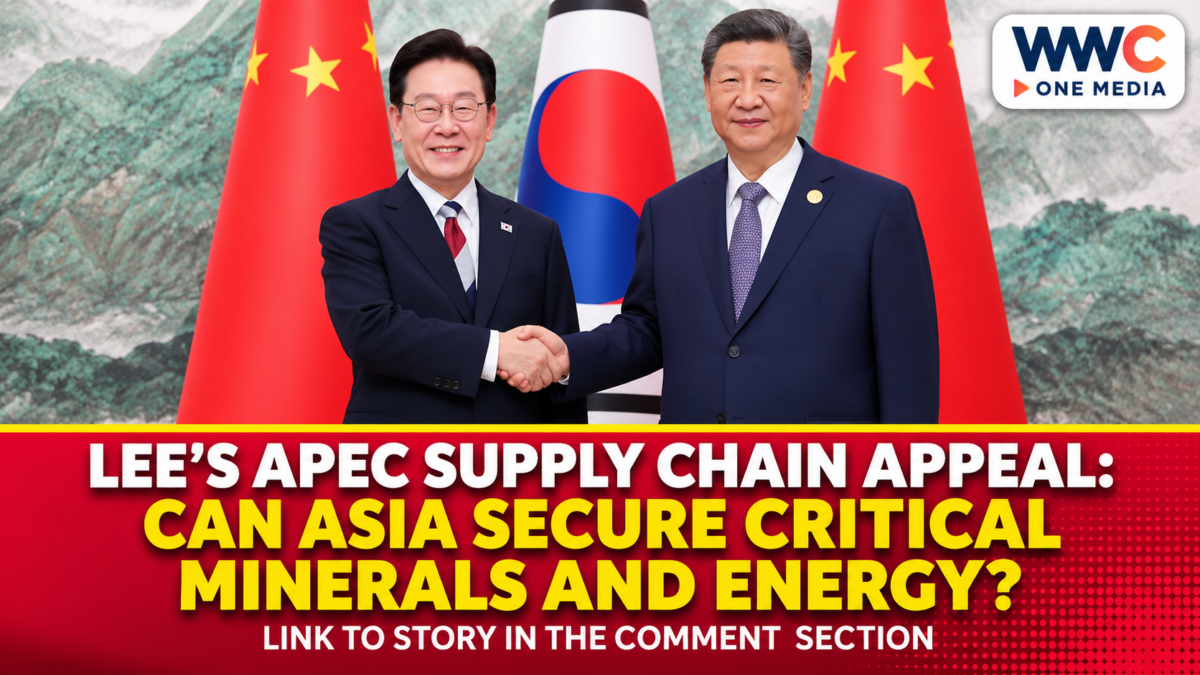
SHENZHEN, China — Nov. 21, 2026. South Korean President Lee Jae Myung called on Asia-Pacific economies to detect supply disruptions earlier and cooperate on reliable access to critical minerals and energy in a Nov. 18 address to business leaders in Shenzhen. His appeal at the APEC CEO Summit placed APEC supply chain security alongside trade openness and artificial intelligence as priorities for regional economic growth.
The speech was a policy call, not an announcement that a new mineral purchase agreement, emergency fuel reserve or cross-border energy project had been signed. A day later, Lee presented more specific cooperation proposals at the leaders’ meeting, creating a clearer test of whether the region can move from shared concerns to practical mechanisms.
APEC Supply Chain Security Begins With Earlier Warnings
Lee’s published speech argued that economic systems are interconnected: semiconductor manufacturing needs materials, equipment, technology and skilled workers from several economies, while AI-driven industries also require reliable electricity.
That interconnectedness creates exposure when transport, supply or political conditions change. Lee proposed international cooperation to identify supply-chain risks early and maintain access to critical minerals and energy.
What this could mean: Earlier warnings could give companies and authorities more time to identify alternative suppliers or organise a response. But the speech did not specify an operating platform, launch date, participating agencies or funding.
His emphasis also fits a prior APEC discussion. In September, the forum’s energy ministers supported resilient supply chains for the minerals used in energy technologies and encouraged open trade corridors. Those commitments establish a policy direction; they do not guarantee an uninterrupted supply of materials.
Why Energy and AI Belong in the Same Conversation
Lee connected the future of artificial intelligence to physical industrial inputs. Advanced software cannot be deployed at scale without semiconductors, and semiconductor production itself requires dependable energy and international inputs.
The speech therefore treated energy security as part of technology competitiveness rather than as an isolated issue for power companies. That distinction matters for economies trying to attract advanced manufacturing: digital infrastructure and physical infrastructure must develop together.
The September APEC energy-ministers statement also supported cooperation on energy technologies and supply-chain resilience, including voluntary trade and investment consistent with domestic legal requirements.
For the Philippines, this reinforces the need to distinguish a possible industrial opportunity from an approved commercial project. WWC has examined the unanswered questions surrounding the proposed Pax Silica industrial initiative. That proposal is separate from Lee’s APEC speech and is not an outcome of it.
From a Business Speech to Government Proposals
The South Korean presidential office confirmed that Lee addressed the CEO Summit on Nov. 18 and subsequently participated in the APEC leaders’ meeting on Nov. 19.
Its account of the leaders’ session described a more detailed energy agenda: exploring cooperation on shared stockpiles, joint response arrangements, emergency supply stabilisation, renewable energy expansion and electrification.
These are proposed areas for institutional cooperation, not evidence that a single regional reserve has been established. The distinction matters because shared stockpiles would require decisions on financing, ownership, access and procedures during shortages.
Similarly, emergency response mechanisms become meaningful only when participating economies define what information is shared and what actions follow when supplies are disrupted.
Why it matters: The next step is not another broad declaration. It is a record of actual arrangements, responsible institutions and operational timelines.
Manila Talks Show a Related but Separate Regional Track
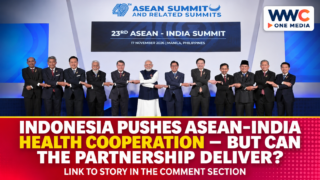
Before travelling to Shenzhen, Lee attended the ASEAN Plus Three Summit in Manila on Nov. 17. South Korea’s presidential office confirmed that leaders adopted statements on maritime trade and logistics, and on resilience in energy and food security amid external shocks.
ASEAN Plus Three and APEC are different diplomatic arrangements. Their statements should not be treated as one agreement or as proof that every participating economy has accepted the same implementation obligations.
Yet both meetings show why supply security is increasingly discussed alongside trade and investment. Transport links, electricity availability and stable access to industrial inputs can shape the practical costs of doing business.
WWC previously covered the Manila statements on trade, energy and food resilience, which provide the regional background to Lee’s subsequent remarks in Shenzhen.
The Commercial Test Is Implementation, Not Attendance
The presidential office reported that more than 2,000 people attended the Shenzhen business event, including leaders from 12 economies, and that around 40 representatives from 19 South Korean companies and organisations participated. Those figures describe engagement, not investment commitments.
Lee’s speech also encouraged greater trade and investment within APEC and argued for an approach that produces changes businesses can recognise. The practical standard should therefore be whether cooperation lowers uncertainty and gives firms reliable ways to respond to shortages.
For governments, clearer warning procedures and emergency coordination could be useful outputs. For businesses, evidence would include completed agreements, usable information channels or actual infrastructure investments.
The regional focus on energy has also appeared in separate bilateral diplomacy. WWC’s coverage of Japan and South Korea’s Manila discussion on energy security outlines another channel of cooperation. That meeting should not be mistaken for a binding APEC-wide agreement.
What Happens Next
The immediate question is whether governments follow Lee’s appeal with published procedures for identifying and responding to supply risks. South Korea’s Nov. 19 proposals provide possible areas to watch, including emergency cooperation and energy reserves.
Future announcements should be assessed for participating economies, assigned responsibilities, financing, legal commitments and dates. A declaration of shared goals is useful for diplomacy, but does not itself create an emergency reserve or make mineral deliveries more predictable.
For businesses across the Asia-Pacific, including Philippine exporters and manufacturers, the value of the initiative will lie in usable systems rather than summit language.
Frequently Asked Questions
What did Lee Jae Myung propose at APEC?
In his Nov. 18 CEO Summit speech, Lee urged economies to identify supply-chain risks earlier and cooperate on reliable supplies of critical minerals and energy.
Did APEC sign a new mineral-supply agreement during his speech?
The official speech does not announce a new purchase contract, supply volume or delivery schedule.
What did South Korea propose at the leaders’ meeting?
Its Nov. 19 official briefing discussed cooperation on energy stockpiles, joint emergency responses, supply stabilisation, renewables and electrification.
Why is energy security important to artificial intelligence?
Lee linked AI adoption and semiconductor production to reliable electricity and cross-border industrial inputs.
What could this mean for Philippine businesses?
More dependable regional supply information and energy cooperation could assist planning, but concrete benefits depend on agreements and implementation that have not yet been established by the speech.