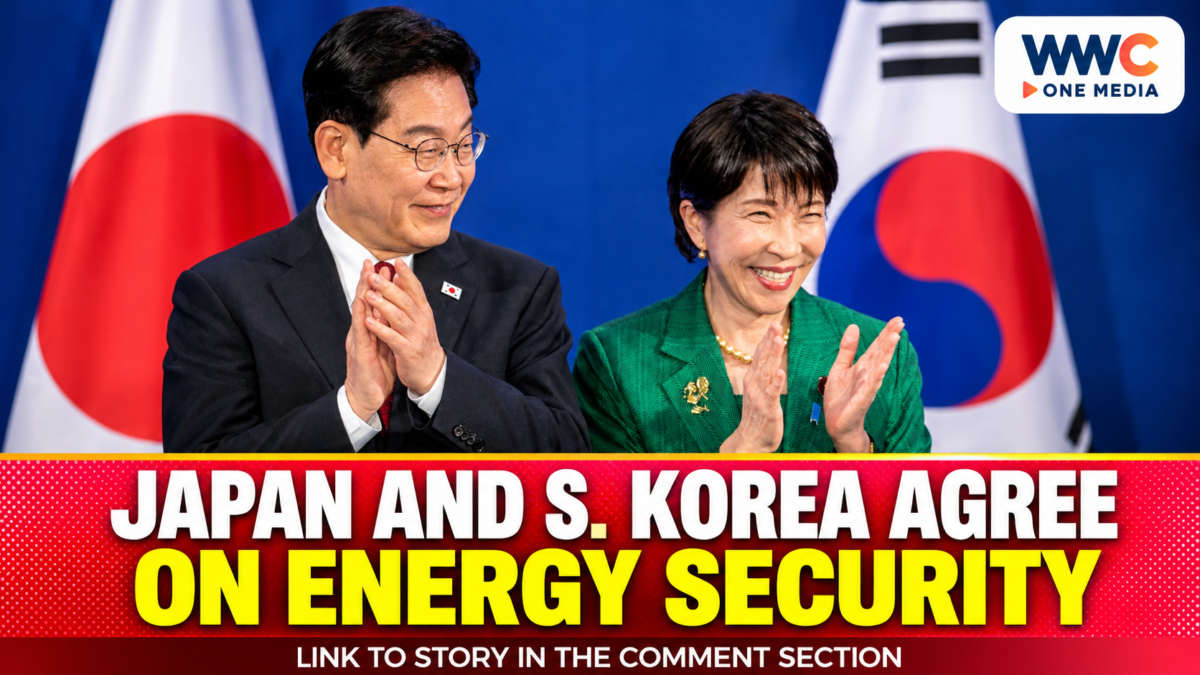
Japanese Prime Minister Sanae Takaichi and South Korean President Lee Jae Myung agreed to strengthen cooperation on energy security and supply chains during their meeting in Manila on Nov. 17, 2026. Their discussion also highlighted a broader challenge for both governments: maintaining closer strategic ties while continuing to address difficult issues that could constrain the relationship. 대한민국 청와대+1
The meeting took place while both leaders were in the Philippines for ASEAN-related summit activities. It was their first encounter since their May 2026 summit in Andong, South Korea, and came as regional governments faced continuing energy uncertainty and changes in the international security environment. 대한민국 청와대
For the Philippines, the discussion matters because Japan and South Korea are major economic partners in Asia. Their ability to coordinate on energy supplies, manufacturing networks and regional stability can affect the wider economic environment in which Filipino businesses operate.
Energy security moves to the centre of the discussion
The two leaders recognised that Japan and South Korea are important partners in supply-chain resilience and energy security, particularly amid continuing energy disruptions linked to the situation in the Middle East.
They agreed to strengthen cooperation in these areas, according to the South Korean presidential office’s account of the meeting.
The emphasis on energy is significant because both countries depend on stable access to imported resources and reliable international transport routes. Disruptions can affect industrial production, electricity generation, transport costs and the prices of goods.
Closer coordination could help the two governments exchange information and improve their ability to respond to supply risks. However, the announcement did not identify a new joint energy project, a specific supply agreement or a financial commitment.
The distinction is important: an agreement to strengthen cooperation establishes a policy direction, but it does not by itself guarantee additional fuel supplies or prevent future disruptions.
Leaders acknowledge difficult issues remain
The meeting was not limited to areas where the two governments already share common interests.
Lee highlighted the need to make progress on difficult issues that could restrict the development of bilateral relations. He also called for cooperation to produce results that people in both countries could recognise across different areas.
This signals that closer engagement does not mean every disagreement between Tokyo and Seoul has been resolved.
Japan and South Korea have a history of diplomatic disagreements, including issues connected to their shared past. The official meeting summary did not identify specific disputes or announce a settlement of any outstanding issue.
For now, the public record supports a more measured conclusion: both governments want to expand practical cooperation while continuing discussions on matters that remain difficult.
Strategic communication gains importance
The two leaders also discussed the changing international environment and the importance of communication between Japan and South Korea.
They agreed that strategic dialogue between the countries had become particularly important as discussions among major powers continued to shape security and stability in Northeast Asia.
The meeting also reaffirmed the value of exchanges beyond the leaders themselves. Lee welcomed the growth of contacts involving government agencies, legislatures and private-sector groups.
That wider engagement matters because diplomatic relationships are not sustained by summit meetings alone. Regular communication among officials, lawmakers, businesses and other institutions can help maintain cooperation even when political disagreements emerge.
Another meeting is expected in Japan
The two leaders agreed to meet again in Japan during their next round of shuttle diplomacy and continue discussions.
Shuttle diplomacy refers to regular reciprocal visits by national leaders. It provides an established channel for maintaining direct communication rather than relying only on formal multilateral meetings or occasional diplomatic exchanges.
The next meeting will provide another opportunity to assess whether the commitments made in Manila are translating into practical cooperation.
For now, the Nov. 17 discussion has established shared priorities in energy security, supply chains and strategic communication. It has not announced a comprehensive settlement of historical or political disagreements.
Why the meeting matters to the Philippines
Japan and South Korea are important participants in Asian manufacturing, technology, trade and investment networks. Their cooperation can influence regional supply chains that connect factories, suppliers and markets across Southeast Asia.
The Philippines has an interest in a region where major economic partners can maintain stable relations and coordinate responses to external disruptions.
Stronger Japan-South Korea cooperation could also complement wider regional initiatives discussed during the Manila meetings, including the ASEAN Plus Three framework involving China, Japan and South Korea.
However, the bilateral agreement should not be mistaken for a new commitment involving the Philippines. The official account described an understanding between Tokyo and Seoul, not a trilateral arrangement with Manila.
The practical value will depend on whether the two governments develop specific programmes, agreements and measurable outcomes after the leaders’ meeting.
The Philippines has also been strengthening its own regional economic and security partnerships. Japan’s wider economic agenda in Southeast Asia, including energy resilience and supply-chain cooperation, was discussed in WWC’s earlier coverage of Takaichi’s ASEAN economic priorities.
What happens next
The next stage will be the planned meeting in Japan, where Takaichi and Lee are expected to continue their discussions through shuttle diplomacy.
The key measures to watch are whether the governments announce concrete energy-security arrangements, expand supply-chain cooperation and make progress on difficult bilateral issues.
Their Manila meeting shows that both sides want to maintain direct engagement. Whether that translates into lasting progress will depend on what follows the diplomatic commitments.
For the Philippines and the wider region, the outcome could matter well beyond the relationship between Tokyo and Seoul.