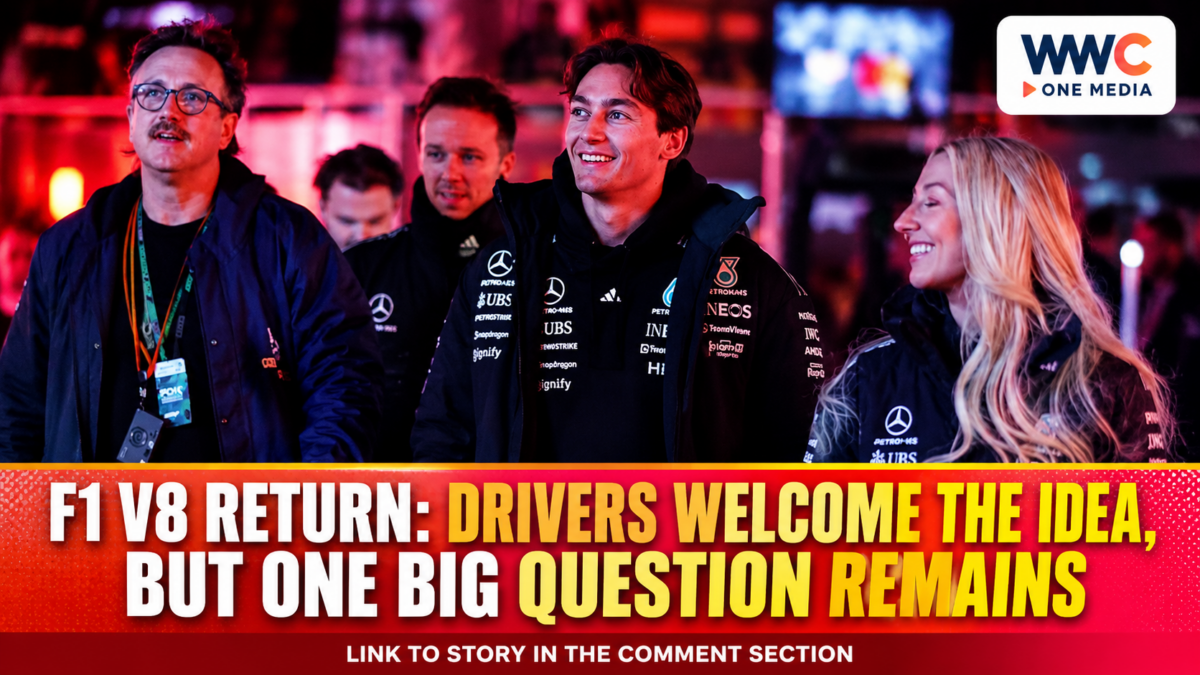
Formula 1 drivers have expressed support for a possible return to V8 engines, with the proposed change being discussed for the 2030 season. However, the sport has not yet published a final technical framework, leaving important questions about the future power unit unanswered.
The discussion moved into focus during the FIA’s Las Vegas Grand Prix press conference on Nov. 18, when drivers were asked about a brief announcement concerning the proposed engine direction. Their responses showed interest in the idea, but also caution: a new engine concept must be driven and evaluated before its benefits can be properly judged.
For Formula 1, the debate is bigger than engine sound. It concerns the balance between performance, technology, cost, manufacturer participation and the experience of watching a race.
The F1 V8 return remains a proposal, not a confirmed regulation
The FIA’s official press conference transcript records a question about an announcement concerning a possible V8 return in 2030. The question itself referred to the announcement as having appeared briefly, and asked drivers what the change could mean for competitors and the championship.
Williams driver Carlos Sainz gave a measured response. He said the concept was appealing and that the direction appeared positive, but added that he would need to drive the new machinery before deciding whether it represented a genuine improvement.
His point highlights a distinction often lost in early discussions about technical changes: support for an idea does not mean the final design has been approved or tested.
The FIA’s published 2026 technical regulations remain the operative reference for the current season. They specify a 1,600cc engine with six cylinders arranged in a 90-degree V configuration, alongside detailed requirements for the power unit and its electrical systems.
A future V8 formula would require a separate set of technical decisions and formal regulatory work. Until those details are published and approved, 2030 should be treated as a proposed target rather than a guaranteed introduction date.
Drivers see appeal in the sound and character of older engines
The emotional appeal of a V8 is difficult to separate from Formula 1’s history. The sound of naturally aspirated engines became part of the sport’s identity, and the possibility of hearing a different engine note has clearly caught the attention of current drivers.
McLaren’s Lando Norris said he was excited by the possibility. He recalled watching the V8-powered cars during the period when Sebastian Vettel and Lewis Hamilton were competing, and described the experience of driving those older cars during show runs as memorable.
Norris also acknowledged that the real experience of a future car would only become clear once drivers had the opportunity to use it.
Haas driver Nico Hulkenberg pointed to another attraction: a simpler power unit could bring back more sound and volume. He said the remaining details would become clearer over time.
These comments suggest that the proposed change is not being judged only through technical specifications. The sensory experience of the cars remains part of what drivers and fans value about Formula 1.
WWC has previously examined the business and team-building side of the championship in its coverage of Cadillac’s position as Formula 1’s newest entrant. The engine debate matters to that wider picture because power-unit rules influence the manufacturers and technical partners that can participate in the sport.
The current hybrid formula is built around more than engine capacity
Formula 1’s 2026 technical rules show why replacing one engine configuration with another is not a simple swap.
The current power unit combines a 1.6-litre V6 internal combustion engine with an energy recovery system. The regulations set detailed limits for electrical power, energy recovery, fuel flow, turbocharging and other components.
That means a future V8 proposal must answer several questions beyond the number of cylinders. These include how much electrical assistance would remain, whether turbocharging would continue, what fuel and efficiency requirements would apply, and how the complete package would affect car design.
The FIA’s regulations also show how closely the engine is connected to the rest of the car. Changes to the power unit can affect packaging, cooling, weight distribution and the way teams develop their chassis.
For manufacturers, the technical direction is also a long-term investment decision. Engine programmes require specialist staff, research, facilities and development time. A major change therefore needs enough clarity for manufacturers to plan their work and budgets.
The challenge is balancing nostalgia with modern performance
A return to V8 engines could appeal to supporters who miss the sound and character of earlier Formula 1 cars. But the sport also has to consider what it wants its power units to represent in the years ahead.
The current regulations place a significant emphasis on hybrid technology and energy management. Any move towards a different engine formula would need to establish how much of that technology remains relevant.
There is also a difference between a simpler engine and a better racing product. A less complicated power unit may be easier to understand, but the quality of the racing will still depend on the complete car, competition between teams, reliability and the ability of drivers to race closely.
That is why Sainz’s caution is important. The drivers can welcome the direction, but the final verdict will depend on the machinery they are eventually asked to race.
The discussion also comes at a time when Formula 1’s commercial and technical future is closely linked to the manufacturers supporting the championship. WWC’s earlier coverage of George Russell’s Mercedes season illustrates how engine performance and technical development remain central to a team’s competitive position.
What the proposed change could mean for fans and teams
Analysis: A successful V8 formula could give Formula 1 a more recognisable engine sound while potentially simplifying some areas of power-unit development. Those outcomes, however, depend on the final rules and cannot be assumed from the engine label alone.
For fans, the most immediate attraction may be the prospect of louder cars. For teams, the more important questions are likely to involve cost, reliability, performance and how much time they will have to prepare.
The proposed timeline also matters. If a new formula is intended for 2030, manufacturers and teams would need regulatory certainty well before the first race using the new engines. Designing a power unit is a multi-year undertaking, not a last-minute adjustment.
The wider Formula 1 calendar and its commercial identity are also part of the conversation. WWC’s report on Zandvoort’s place in the championship explored how the sport’s future depends on more than what happens on track. Engine rules are another part of that long-term positioning.
What happens next
The next significant step is the publication of a formal technical proposal and the completion of the necessary discussions among the FIA, Formula 1 and the power-unit manufacturers.
The FIA’s Las Vegas transcript documents the drivers’ reactions, but it does not provide a final V8 specification or a confirmed implementation schedule. Until a formal framework is made public and the relevant regulatory approvals are completed, the details remain open.
For now, the drivers’ comments indicate that the idea has an audience inside the paddock. Whether it becomes a workable Formula 1 engine formula will depend on the decisions still to come.
Frequently asked questions
Is Formula 1 bringing back V8 engines in 2030?
A V8 return has been discussed as a possible direction for 2030, but the final technical framework and formal approval have not been established in the public records reviewed for this report.
Which drivers commented on the proposed V8 return?
Carlos Sainz, Lando Norris and Nico Hulkenberg gave comments during the FIA’s Nov. 18 Las Vegas Grand Prix press conference.
What engine does Formula 1 use in 2026?
The FIA’s 2026 technical regulations specify a 1,600cc engine with six cylinders arranged in a 90-degree V configuration, together with hybrid electrical systems.
Would a V8 engine mean Formula 1 abandons hybrid technology?
Not necessarily. The final balance between combustion power and electrical assistance has not been confirmed in a published technical framework.
Why do some fans want V8 engines back?
The V8 era is associated with a distinctive engine sound and driving character. A return could restore some of that experience, although the actual sound and performance would depend on the final design.