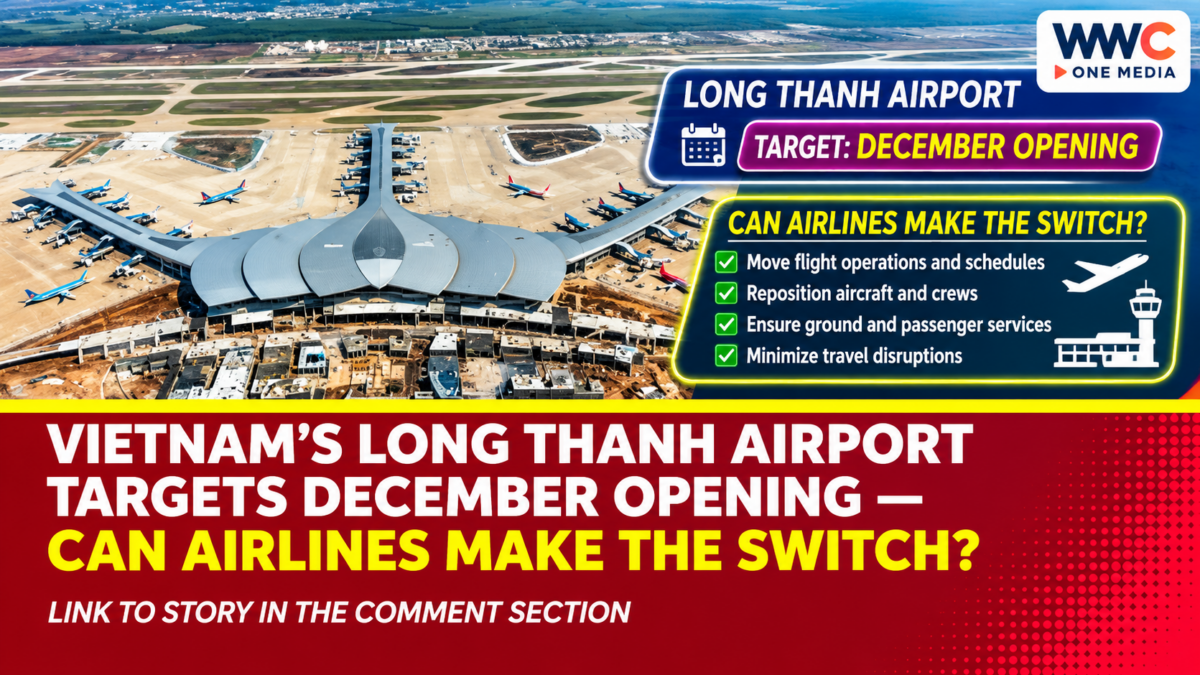
HANOI — Nov. 19, 2026. Vietnam’s Long Thanh Airport is preparing to start commercial operations on Dec. 24, with the national airport operator planning a gradual introduction of flights rather than an immediate transfer of the country’s southern international air network. The latest official preparations include terminal testing, ground services and coordination with airlines ahead of the opening target.
The key issue is not simply whether the runway and passenger building can receive aircraft. Airlines also need workable timetables, trained teams, baggage systems, fuel services and practical journeys between the new airport and Ho Chi Minh City. A reported request by foreign carriers to delay relocation has not been verified in a primary airline or government submission reviewed for this article.
Long Thanh Airport Has a December Target
Vietnam’s government announced on Oct. 30 that the airport operator, Airports Corporation of Vietnam (ACV), expected commercial operations to begin on Dec. 24, 2026. That is a target, not confirmation that scheduled passenger services have already begun.
ACV’s phased plan starts with the western wing and central section of the passenger terminal operating from December through March 2027. The operator estimates initial activity at about 6%–10% of planned terminal capacity, or roughly 20–30 flights daily.
The company has also described a maximum early operating plan of 366 flights a week, comprising 322 domestic and 44 international flights. These are proposed operating volumes, not proof that airlines have already published or begun flying every service.
The initial stage is therefore better understood as a controlled launch. Its success will depend on passenger processing, safe aircraft movements and the ability to resolve problems before substantially increasing traffic.
Why Moving Airline Services Takes Time
ACV’s published timetable envisages a second phase from April to October 2027, with traffic rising towards half of designed capacity. A third phase, beginning with the winter 2027 flight season in October, targets full planned operating capacity and a broader international network.
An airline cannot switch airports simply by changing the destination printed on a ticket. Flight schedules, sales systems, crew reporting points, aircraft maintenance, transfer arrangements and airport services must all align.
That is particularly relevant around Ho Chi Minh City, where Tan Son Nhat is an established gateway. Moving services to Long Thanh involves changes for passengers arriving from overseas, residents travelling to the airport and airlines managing connections.
The reported number of foreign airlines asking to wait until late 2027 was not authenticated from a first-party document. What the original operator plan does confirm is that a gradual transition extending into late 2027 was already part of the intended programme.
Vietnam Airlines and ACV Are Preparing the Operation
A Nov. 16 announcement published through Vietnam Airlines’ own corporate channel records a coordination meeting with ACV about the December target. The two companies discussed check-in positions, passenger lounges, ground-handling areas, crew facilities, fuel provision and technical services.
Vietnam Airlines also described preparations for trial flights before commercial operation. ACV said it was working to complete essential infrastructure and hand over areas where the airline and service providers need to install equipment.
These discussions establish active preparation, not a confirmed final route schedule or approval for every planned operation. The companies also agreed to maintain a regular coordination mechanism to address problems as they arise.
For Philippine readers, the transition matters because Vietnam is becoming more connected to regional travel networks. WWC previously covered Cebu’s new direct flights to Vietnam. Any future airport reassignment could change travel logistics, but no specific Philippine service has been verified as transferred.
Safety Testing Is More Important Than the Calendar
ACV’s operational-readiness programme covers passenger services, ground connections, baggage, aircraft-side operations, security, information technology and safety. The operator scheduled exercises across September–October, November and December 2026.
During an October inspection, the deputy prime minister stressed that safety and quality requirements must be satisfied before flights begin. The operator also outlined licensing and commissioning work for the aircraft fuel system.
A Nov. 11 ACV update described meetings with international airlines and the aviation industry’s operational partners. Such consultations can help uncover where arrangements require adjustment, but they are not the same as completed regulatory certification.
Vietnam’s government has separately directed agencies to review roads and access infrastructure serving Long Thanh. An airport may be operational internally while surrounding transport links still affect passenger convenience and the time required to reach a flight.
Why this matters: A smaller opening can help operators test real-world systems, but it also means travellers must check the actual airport named on each booking rather than assume every Ho Chi Minh City service will move together.
The Business Test Extends Beyond Construction
Government information places Long Thanh about 40 kilometres east of Ho Chi Minh City and describes a long-term three-stage project with an eventual capacity of 100 million passengers and five million tonnes of cargo annually. Those are full-development ambitions, not the capacity available at the December opening.
What this could mean: Airlines will consider whether shifting services improves passenger connections and operational efficiency without creating excessive costs or inconvenient transfers. Commercial success depends on dependable access, competitive schedules and sufficient demand over time.
That broader market matters to Philippine tourism and aviation. WWC’s account of Vietnam’s growing appeal to Filipino travellers provides regional demand context. Another WWC report examined Cebu’s regional airport gateway strategy, illustrating how connectivity depends on much more than terminal capacity.
The comparison is about airport economics, not a claim that Cebu and Long Thanh are identical projects. Each airport operates within different travel networks, regulatory systems and investment structures.
What Happens Next
The immediate milestones are completed operational trials, the necessary permissions and confirmed airline schedules before Dec. 24. The next major test is whether services can expand through 2027 as planned without disrupting passengers or airlines.
Any government decision changing the transfer timetable should be checked against the final published plan, not inferred from industry discussion. For passengers, the safest approach is to confirm the airport code, travel route and airline notice close to departure.
The verified picture is of a scheduled December launch followed by a lengthy transition. Whether every participating airline accepts the same timetable remains an open question requiring original documentation.
Frequently Asked Questions
When is Long Thanh Airport scheduled to open?
ACV’s current public target is Dec. 24, 2026, for initial commercial operations. The date remains subject to operational readiness and required approvals.
Will all international flights move from Tan Son Nhat immediately?
No immediate universal transfer is established in the official phased plan. The operator expects a gradual expansion from limited initial flights towards a broader network in late 2027.
How many flights are planned at the beginning?
ACV projects approximately 20–30 flights daily in the first stage, with an outlined maximum of 366 weekly movements, including 44 international flights.
Have foreign airlines officially delayed their move until late 2027?
The airline-specific requests reported elsewhere have not been authenticated in the original records examined. The operator’s published plan already envisages a phased transition through 2027.