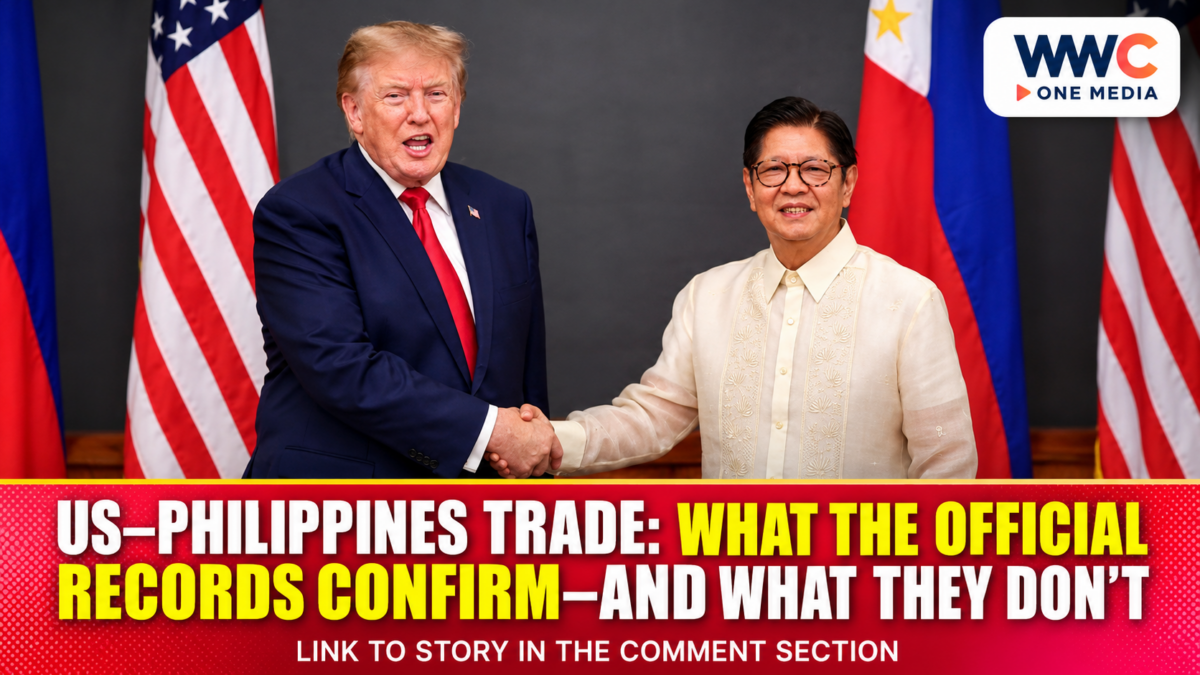
The Philippines and the United States have a long-running trade framework, but the public record still matters more than broad statements about a new agreement. As of Nov. 18, 2026, the documents available for review establish an active commercial relationship, an existing tariff dispute and expanding regional cooperation—not a published bilateral trade agreement with confirmed terms.
That distinction matters to Philippine exporters, manufacturers and investors. A completed agreement could change the conditions under which goods enter the US market, but businesses need the actual provisions, product coverage, effective dates and customs rules before they can calculate its impact.
US–Philippines trade already has an established framework
The two countries have not been starting from zero. The Office of the United States Trade Representative identifies the 1989 Trade and Investment Framework Agreement, or TIFA, as the main mechanism for regular discussions on bilateral trade and investment issues.
The framework has supported discussions on a wide range of subjects. At the July 2024 TIFA meeting, officials covered agriculture, labour, government procurement, intellectual property, environmental issues, automotive safety standards and supply chains. The two sides also reaffirmed the importance of strengthening their commercial relationship. United States Trade Representative+1
A TIFA is not the same as a comprehensive free trade agreement. It provides a structure for consultation and cooperation, but it does not automatically create new tariff preferences for Philippine products.
That difference is important when evaluating claims of a new deal. Businesses need to know whether governments have merely discussed a policy direction, reached a negotiating milestone, signed a binding instrument or completed the domestic steps needed to put new rules into effect.
The tariff question remains central for Philippine exporters
One of the most consequential issues in the relationship is the additional US duty imposed under Section 301 of the US Trade Act of 1974.
A Federal Register notice published in July 2026 describes the US investigation into whether economies had imposed and effectively enforced prohibitions on importing goods produced with forced labour. The notice lists the Philippines among 54 economies determined not to have effectively imposed and enforced such a prohibition. It sets a 12.5% additional Section 301 rate for economies outside the specified 10% category, subject to exemptions and the conditions in the notice. The additional rates apply to covered goods entered for consumption from July 24, 2026. Federal Register Public Inspection
This is a US government determination about the relevant import-prohibition policies and enforcement. It should not be misrepresented as a finding that every Philippine exporter uses forced labour.
The distinction is essential. The tariff measure concerns the US assessment of government rules and enforcement, while individual businesses and shipments may have different product coverage and customs treatment.
WWC has already examined how the US tariff issue returned to the Philippine trade agenda. Any reported progress should be checked against the actual US measure before exporters assume that the applicable rate has changed.
Manila has introduced its own supply-chain controls
The Philippine government has also taken action on forced-labour import controls.
A July 24 release from the Department of Labor and Employment says the departments of Labor, Trade and Industry, and Finance signed a joint administrative order creating an inter-agency committee. The committee is tasked with receiving reports about imported goods suspected of involving forced labour, investigating claims and advising the relevant authorities on appropriate action. Department of Labor and Employment
The order is relevant to the trade discussion because the US tariff framework places weight on whether an economy has an effective prohibition and enforcement system.
However, the existence of a Philippine administrative order does not itself prove that Washington has accepted the country’s enforcement measures or changed its tariff treatment. Those are separate decisions, and a change in US customs treatment would need to be reflected in an official US instrument.
For companies operating across several countries, the wider issue is supply-chain documentation. Labour standards, sourcing records and traceability can influence whether suppliers meet the requirements of overseas buyers and importing authorities.
Philippine export figures show why market access matters
The US market remains commercially significant.
The Philippine Statistics Authority’s preliminary September 2026 merchandise trade release recorded total Philippine exports of US$9.87 billion, up 35.6% from September 2025. Shipments to the United States reached US$2.63 billion, making it the country’s largest export destination for that month and accounting for 26.6% of total exports. Philippine Statistics Authority+1
The figures show why tariff treatment and predictable customs rules matter. Exporters need to price orders, plan production and meet delivery commitments while accounting for the conditions in their destination markets.
Electronics are particularly important to the country’s export structure. The PSA reported US$6.92 billion in electronic-product exports in September, equal to 70.1% of total exports. That concentration links a large share of export earnings to manufacturing networks that depend on international buyers, components and logistics.
WWC’s coverage of shifting ASEAN supply chains and the Philippines’ opportunity to attract production examines the wider competitive challenge. Better access to the US market could matter, but businesses also need reliable infrastructure, skilled workers and consistent regulatory conditions.
Regional cooperation is not the same as a bilateral trade pact
The Philippines and the US have also advanced economic cooperation through ASEAN.
A Philippine government release dated Nov. 18 says ASEAN and the United States reaffirmed their Comprehensive Strategic Partnership and welcomed an ASEAN–US Comprehensive Work Plan. Its listed areas include trade and investment, digital transformation, energy and critical minerals. Philippine Information Agency
That is a regional cooperation framework. It should not be confused with a separate Philippines–US bilateral trade agreement.
The distinction can be seen in the public documentation surrounding the US–Thailand trade negotiations. A White House joint statement dated Nov. 17 says the two governments had reached substantial conclusion in negotiations for an Agreement on Reciprocal Trade. It also says both sides would begin their internal processes to prepare the agreement for signature and entry into force. The White House
The Thailand statement provides a useful example of the type of official document that identifies a negotiating milestone and the next procedural steps. It does not establish that the Philippines has the same terms or status.
Analysis: For Philippine businesses, the most useful announcement would be one that identifies the products covered, the tariff treatment, the compliance requirements and the date the new rules would apply. Without those details, companies cannot reliably calculate savings or make investment decisions on the assumption that market access has changed.
What happens next
The next meaningful test is the publication of official documents setting out any bilateral trade outcome. These could include a joint statement, an agreement text, a tariff schedule, a formal US trade action or a Philippine government implementation notice.
Until such material is available, exporters should not assume that the existing US tariff treatment has been reduced or withdrawn. Businesses should continue checking the applicable product exemptions and customs requirements rather than treating a general political statement as an operational instruction.
The broader relationship remains active through the existing TIFA framework and ASEAN–US cooperation. But the commercial value of any new arrangement will depend on the details and whether the governments put them into effect.
For Philippine manufacturers, the issue is ultimately practical: access to the US market must be clear enough to support pricing, sourcing, production and long-term contracts. The next document—not the headline—will show whether the rules have actually changed.
Frequently asked questions
Does the Philippines already have a trade agreement with the United States?
The two countries have a 1989 Trade and Investment Framework Agreement, which provides a mechanism for regular discussions on trade and investment. It is not, by itself, a comprehensive free trade agreement. United States Trade Representative
Has a new US–Philippines trade agreement been published?
No signed bilateral agreement or official text confirming new terms was located in the government records reviewed for this update.
What is the US tariff issue affecting Philippine products?
A 2026 US Section 301 action established an additional 12.5% duty rate for economies outside a specified 10% category, subject to exemptions. The Federal Register notice lists the Philippines among the economies covered by the determination. Federal Register Public Inspection
Did the Philippines create a forced-labour import enforcement mechanism?
Yes. A July 2026 Department of Labor and Employment release says the Labor, Trade and Industry, and Finance departments signed an order creating an inter-agency committee to receive reports and investigate imported goods suspected of being produced through forced labour. Department of Labor and Employment
Why does the US market matter to Philippine exporters?
The PSA reported that the United States received US$2.63 billion in Philippine exports in September 2026, or 26.6% of the country’s total exports that month.