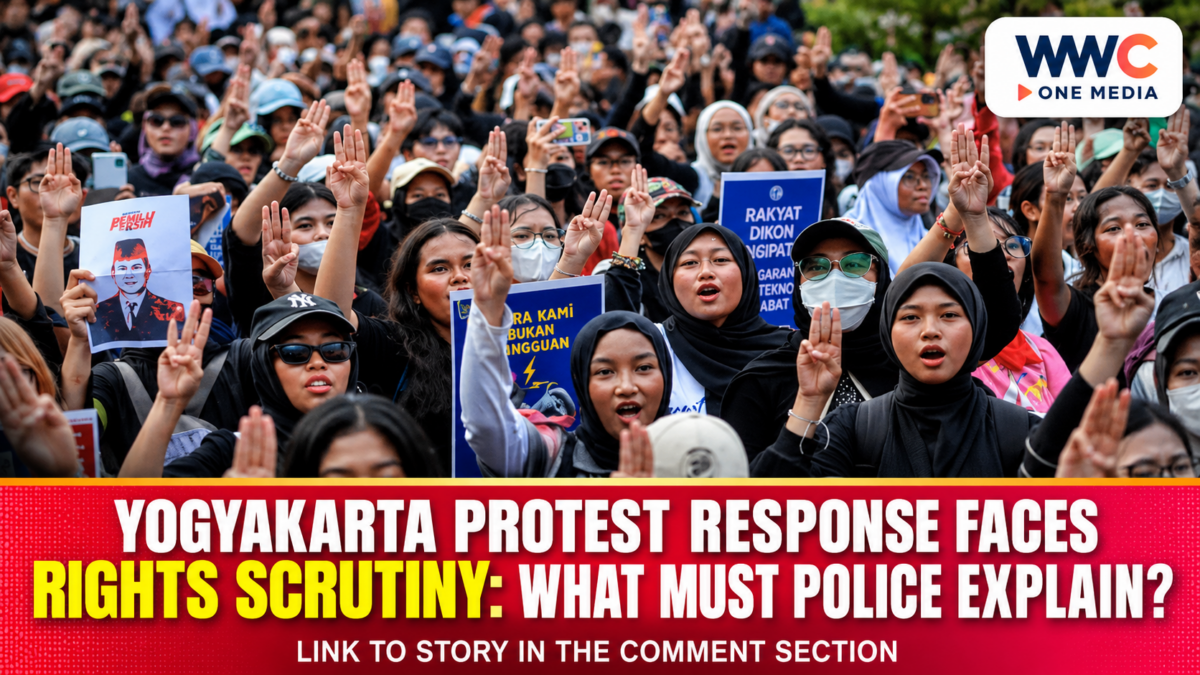
The response to a November 10 demonstration in Yogyakarta has drawn demands for greater accountability, with Indonesia’s Ombudsman and National Commission on Violence Against Women raising concerns about the treatment of people detained during the incident.
The two institutions have called for safeguards, fair investigations and scrutiny of alleged violence. Their statements put the focus not only on the protest itself, but also on how authorities exercise their powers when managing demonstrations.
The central question is whether the authorities can demonstrate that arrests, searches and the use of force were lawful, proportionate and supported by evidence.
Yogyakarta protest prompts Ombudsman warning on detainee rights
In a November 11 press statement, the Yogyakarta representative office of Indonesia’s Ombudsman called on police not to rush into criminal proceedings against demonstrators.
The institution urged law enforcement authorities to prioritise persuasive, dialogue-based and educational approaches when responding to public demonstrations. It also called for people who had been detained to be released if investigations found insufficient evidence of wrongdoing.
The Ombudsman said examinations should be objective, professional and accountable under Indonesia’s criminal procedure rules.
It also stressed that people still in police custody should receive humane treatment, without physical violence or psychological intimidation. Access to legal assistance, family visits and medical services should be guaranteed.
Ombudsman representative Muflihul Hadi said authorities should avoid an approach focused solely on punishment and ensure the fundamental rights of everyone detained are respected. ombudsman.go.id
The statement is significant because it addresses the standards that should govern police conduct after a demonstration, rather than treating the arrests as proof that every detained person committed an offence.
Komnas Perempuan raises allegations of violence and injuries
Indonesia’s National Commission on Violence Against Women, known as Komnas Perempuan, issued a separate statement on November 12.
The commission said it had received reports during consultations with partners in Yogyakarta on November 11 concerning arrests, searches, alleged physical and verbal violence, threats, and obstacles to medical assistance and legal support.
It also reported that more than 150 people had been detained, including 19 children, and that around seven injured people had received treatment at three hospitals. These figures and descriptions are claims reported by the commission in its statement; they should not be treated as independently established findings of a completed investigation.
The commission also said it had received information about a student whose whereabouts were reportedly unknown at the time of its statement.
Komnas Perempuan called on the national police chief and the Yogyakarta police chief to disclose the status and whereabouts of detained people to their families and legal representatives, investigate officers suspected of violence, and release anyone held without a legal basis.
It further urged the government to ensure medical recovery and support for victims and their families. Komnas Perempuan
These are serious allegations. They require transparent examination and responses from the relevant authorities, rather than conclusions based only on statements from either side.
Why the distinction between arrest and guilt matters
A person’s presence at a demonstration does not, by itself, establish criminal responsibility.
The Ombudsman’s November 11 statement specifically called for the release of people who could not be shown to have violated the law. Its position reinforces the need to assess each detainee according to evidence and individual conduct.
That distinction is important in any investigation involving a large number of people. Authorities must establish what each person is suspected of doing, what evidence supports the suspicion and whether the legal requirements for continued detention have been met.
The same principle applies to allegations against police officers. An allegation or video circulating online may justify an investigation, but it does not automatically establish misconduct by a particular officer.
A credible process must identify the individuals involved, examine available recordings and witness accounts, and explain the findings through an accountable procedure.
Independent oversight will be essential
The Ombudsman’s intervention and Komnas Perempuan’s statement establish that public accountability is now a central part of the Yogyakarta incident.
The two institutions have different roles, but their calls point towards common safeguards: transparent information for families, access to legal and medical assistance, fair examination of detainees, and investigations into alleged excessive force.
For authorities, publishing clear findings would help distinguish substantiated violations from claims that remain under investigation. It would also give affected people and the wider public a basis for assessing whether complaints have been properly addressed.
For the public, independent oversight matters because police investigations into police conduct must be capable of earning confidence beyond the institution conducting them.
WWC ONE MEDIA has previously examined questions around protest policing and accountability in the region. The broader issues are also relevant to public scrutiny of police and protester claims after a rally in Cebu and the accountability questions raised by protests in Jakarta.
What happens next
The next important development should be an authoritative account from the Yogyakarta police setting out the status of the investigations, the legal basis for any continuing detention and the steps taken to examine allegations against officers.
The November 11 Ombudsman statement sets out the safeguards it expects police to respect. Komnas Perempuan’s November 12 statement adds demands for investigations into alleged violence and support for affected people.
Neither statement, on its own, establishes the final findings of a police misconduct investigation or a judicial determination of criminal responsibility.
As of November 18, WWC ONE MEDIA has not verified an accessible primary police record confirming the widely reported figure of 11 officers questioned over the incident. That number is therefore not presented here as an independently confirmed fact.
The story should be updated when police publish a verifiable account of any internal investigation, including its scope, findings and disciplinary or legal outcomes.