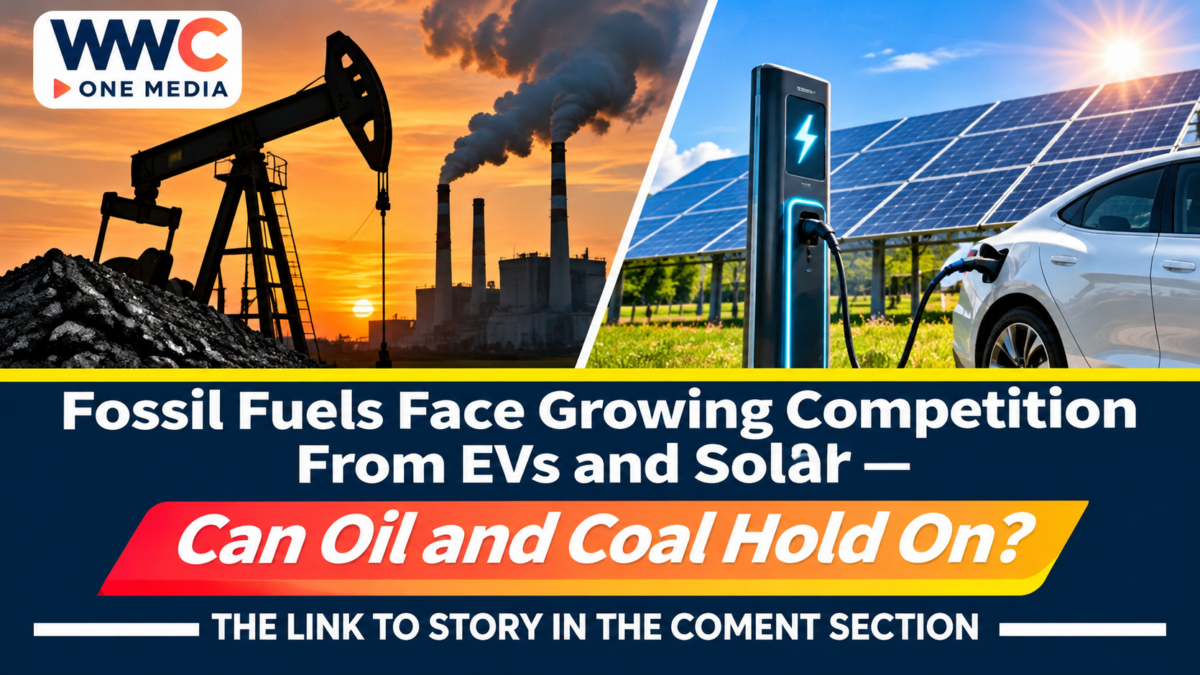
The global contest for electricity generation and road transport is changing as renewable power and electric vehicles expand. Fresh international energy assessments released in 2026 show fossil fuel demand facing measurable competitive pressure, although coal, oil and natural gas remain major parts of the world’s energy system.
Avoiding future fuel demand does not mean ending fossil-fuel use. The question is how quickly technology and infrastructure can meet rising energy needs.
Fossil Fuel Demand: What the New Data Actually Show
The International Energy Agency’s November 2026 renewable-energy assessment estimates that growth in renewable sources since 2010 prevented fossil-fuel demand in 2025 from being about 8% higher than it was. This is an estimate of avoided consumption, not an eight-percent drop in fuels actually burned.
The avoided demand covers several fuels. The same analysis estimates that renewable deployment prevented the consumption of 515 billion cubic metres of natural gas in 2025 and about 2.4 million barrels of oil daily. Its biggest effect has been on electricity, where wind, solar and hydro can replace generation that would otherwise burn coal or gas.
Demand varies by country and sector. A factory or airline has different alternatives from a power utility.
Renewable Power Is Taking a Larger Share
The IEA’s Renewables 2026 outlook projects renewable electricity’s share of world generation rising from 33% in 2025 to 43% in 2031. Solar is expected to account for more than three-quarters of the renewable capacity added over the forecast period.
That forecast is significant because electricity demand itself continues growing. A larger clean-power share can limit additional fossil-fuel generation even without an immediate reduction in every country’s existing coal- and gas-fired output.
Renewables also face practical constraints. Solar output varies with daylight, wind output changes with weather, and new generation must connect to reliable networks. The same outlook identifies grid connections, flexibility and storage as important implementation challenges.
For the Philippines, this is not just an overseas industry trend. The Department of Energy is targeting a 35% renewable share of electricity generation by 2030 and 50% by 2040. Its February 2026 announcement set out plans for competitive renewable-energy auctions covering at least 25 gigawatts of additional capacity through 2035.
Planned capacity is not delivered electricity. Financing and transmission will determine the result.
Electric Vehicles Challenge Oil in Road Transport
Oil’s position in road transport is becoming less secure as electric-car sales expand. The IEA’s Global EV Outlook 2026 records more than 20 million electric-car sales in 2025, equivalent to about one in four new cars sold worldwide.
The agency estimates that electric cars already on the road displaced approximately 1.2 million barrels of oil per day in 2025. That is an effect on petroleum use, not evidence that petrol and diesel vehicles disappeared. Most of the existing global vehicle fleet still requires conventional fuels.
Markets differ. EVs accounted for nearly 55% of car sales in China in 2025 but less than 10% in the United States. Prices, policy and charging matter.
WWC has separately examined changing regional patterns in electric-vehicle sales, an example of why the sales trend needs country-level context instead of a single global headline.
Why Fossil Fuels Still Have Important Customers
Oil is not consumed only by private cars. Aviation, freight, shipping and petrochemical production have different equipment and fuel requirements. Some alternatives are developing, but replacing the entire existing fleet or industrial system is not a near-term event.
Coal and natural gas also remain embedded in electricity markets. Some countries can add renewables rapidly but still need dispatchable generation, storage, demand management or additional transmission to cover periods when variable output is low.
These constraints do not negate clean-energy growth: displaced fossil demand and continuing dependence can coexist.
It is also important to separate energy consumption from emissions. WWC’s earlier examination of fossil-fuel emissions and total carbon pollution addressed a different measure: carbon released into the atmosphere. Changes in demand, generation and emissions may move at different speeds.
What This Could Mean for Philippine Consumers
The Philippine energy transition has two immediate dimensions. On the electricity side, solar, wind and storage projects can diversify generation, although improvements to transmission and approvals remain essential. On the transport side, drivers weigh purchase price, charging convenience, reliability and running costs when choosing between electric and conventional vehicles.
The Department of Energy has also simplified rules for eligible small solar systems used on site, reducing administrative obstacles for households and businesses seeking to generate some of their own electricity. This does not guarantee savings for every installation; financing, consumption patterns and technical suitability still matter.
WWC’s previous coverage of rooftop solar and battery-storage adoption in Philippine homes illustrates how the consumer decision extends beyond purchasing panels. Batteries, inverters, installation quality and support services affect whether a system suits a particular property.
Analysis: A diversified power system and growing electric transport market may reduce exposure to imported fuel-price shocks over time. But those benefits depend on projects actually operating, not merely being announced, and on consumers being able to afford the transition.
What Happens Next
The next useful indicators are not speeches predicting the end of fossil fuels. They are annual figures for electricity actually generated, electric vehicles actually sold and driven, petroleum consumption, and the pace of grid and charging investment.
The IEA’s projection of 43% renewable electricity generation in 2031 remains a forecast subject to policy and infrastructure risks. Likewise, increased electric-car sales can reduce oil demand relative to a world without those vehicles without making oil demand vanish.
For investors and policymakers, the essential test is delivery: how much clean electricity reaches customers, how much petrol or diesel is genuinely displaced, and whether energy remains affordable and reliable throughout the change.
Frequently Asked Questions
Are fossil fuels disappearing from the global economy?
No. Renewable generation and electric vehicles are reducing demand that would otherwise exist, but conventional fuels remain important in electricity, industry and transport.
How much electricity could renewables produce by 2031?
The IEA’s November 2026 outlook projects renewables supplying 43% of global electricity generation in 2031, up from 33% in 2025. This is a projection, not a completed result.
Do electric vehicles reduce oil demand?
Yes. The IEA estimates that electric cars displaced around 1.2 million barrels of oil per day in 2025 compared with a situation without those vehicles.
Does more solar power automatically mean lower electricity bills?
No. Actual bills depend on installation costs, financing, network charges, generation timing, storage and local electricity pricing.
What are the Philippines’ renewable-energy targets?
The Department of Energy targets 35% of electricity generation from renewable sources by 2030 and 50% by 2040. Meeting those targets requires completed projects and adequate grid infrastructure.